North Carolina’s U.S. Senate race is open. Who’s running, who’s not and who could jump in
Jun 29, 2025 | 4:45 pm ET
Description
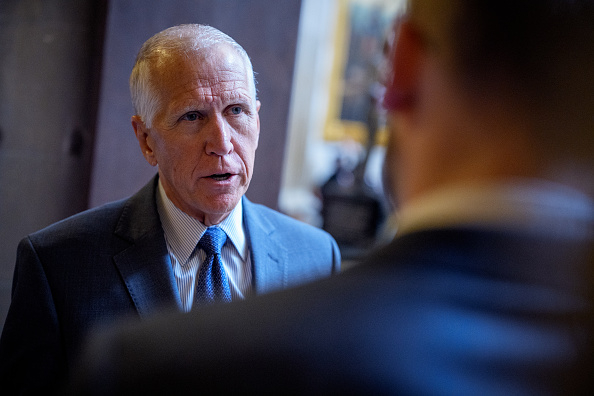
Sen. Thom Tillis (R-NC) speaks to reporters before a weekly Republican policy luncheon at the U.S. Capitol Building on June 3, 2025 in Washington, DC. Tillis announced on Sunday that he will not seek reelection in 2026. (Photo by Andrew Harnik/Getty Images)
North Carolina’s U.S. Senate race was already set to be one of the most closely watched elections in the country next year.
That attention reached new heights after U.S. Sen. Thom Tillis, a Republican who has held the seat since 2015, announced Sunday he would not seek another term.
“I still look forward to continuing to serve North Carolina over the next 18 months,” Tillis said in a statement. “I look forward to solely focusing on producing meaningful results without the distraction of raising money or campaigning for another election.”
North Carolina’s race will be crucial in a midterm cycle that will determine control of razor-thin majorities on Capitol Hill. While Republicans aim to hold the seat for another six years, Democrats are seeking to flip it and turn the state’s U.S. Senate delegation purple.
Multiple candidates have already made campaigns for the seat official. Now, with the incumbent stepping aside, North Carolinians can expect to see contested primary elections on both sides of the aisle.
The Cook Political Report on Sunday changed its rating for the North Carolina race — labeling it a “toss up.” Prior to Tillis’ retirement, it was rated as “lean Republican.”
Here’s who has announced their intention to run for the seat; who’s taken their name out of the running; and who could still throw their hat in the ring.
Who’s running
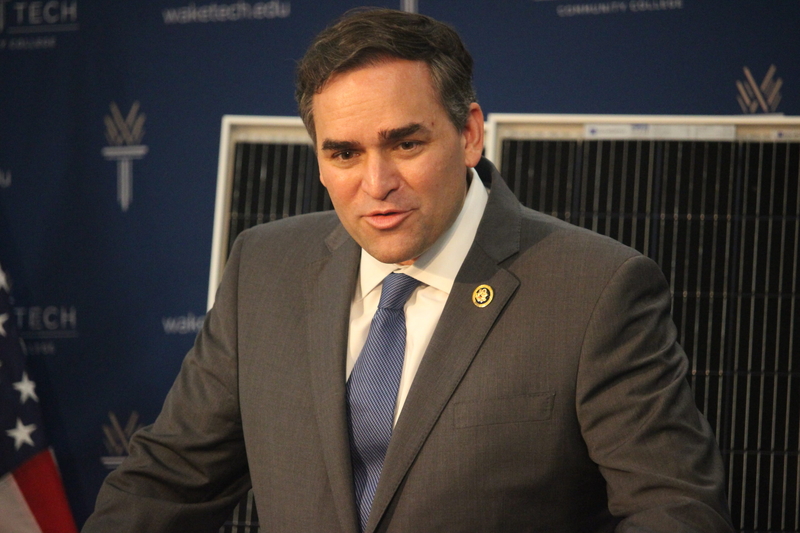
Former U.S. Rep. Wiley Nickel (D) — Nickel was the first major candidate to enter the race. He served one term in the U.S. House before Republican-friendly redistricting spurred him to drop his re-election bid.
Nickel is a criminal defense attorney who previously served in the state Senate. He’s repeatedly tied Tillis to President Donald Trump, and has proposed that Democrats form a “shadow cabinet” to monitor and respond to the Trump administration.
He has just over half a million dollars on hand as of April, according to campaign finance filings.
“It doesn’t matter what MAGA Republican Trump handpicks for North Carolina,” Nickel wrote on social media Sunday. “I’m the Democrat running because WE CAN flip our great state blue and win back the Senate majority.”
Don Brown (R) — Brown, a former U.S. Navy JAG Officer, author and attorney from Charlotte, provided aid to those who participated in the Jan. 6 Capitol riots. He has billed himself as “your America First candidate.”
He has done little fundraising thus far, raising just $21,600 as of April.
Who’s not running
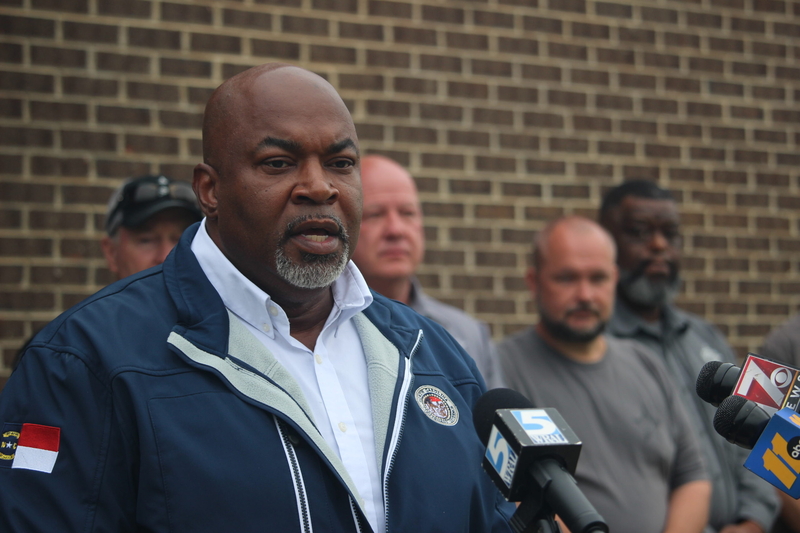
Mark Robinson (R) — Robinson’s campaign for governor in 2024 was derailed by a series of controversies and scandals, and he came up well short against Gov. Josh Stein.
He said in January he “will not run” for the seat, and that he did not intend to seek elected office in the future.
But he has remained an active voice online, frequently blasting Tillis and calling on conservative activists to oust him and other Republicans he deems not satisfactory. And it remains a possibility, however remote, that he could reverse course in the wake of Tillis’ retirement — though he would face major opposition from national party leaders if he chose to do so.
Robinson’s former campaign spokesperson, Matt Hurley, wrote online Sunday that Tillis’ retirement “is the end of a terrible era in North Carolina politics.”
“A new era of grassroots leadership in North Carolina is coming… you can count on it,” Hurley wrote.
Robinson shared the post and chimed in: “I couldn’t have said it better.”
On Sunday evening, Tillis himself remarked on a potential Robinson run. He shared a 2024 article about Trump’s prior embrace of the former lieutenant governor, and referenced an online username closely tied to Robinson.
“Thanks for the retirement wishes, Mr. President, looking forward to working with you for a successful 2026,” Tillis wrote. “Word to the wise, let’s avoid minisoldr.”
He made that sentiment even more explicit in remarks to Washington reporters Sunday night: “Not Mark Robinson, because he would probably lose by 20 points. Other than that, I’m open.”
Former U.S. Rep. Mark Walker (R) — Walker served in the House until 2021, and ran an unsuccessful Senate campaign in 2022.
He took himself out of the running Sunday evening, saying he was “solely focused” on his nomination process to be ambassador-at-large for international religious freedom under the Trump administration.
“President Trump has asked me to serve as ambassador, and I’m thankful for his confidence and trust,” Walker wrote. “Appreciate everyone reaching out but I am solely focused on the Senate confirmation process.”
Who could run
Former Gov. Roy Cooper (D) — The former two-term governor is widely viewed as the most prominent and formidable potential Democratic candidate.
Cooper is a familiar name in Democratic politics — a former attorney general and state senator. His name recognition, fundraising and political connections would make him an instant favorite for the party’s nomination if he chooses to run.
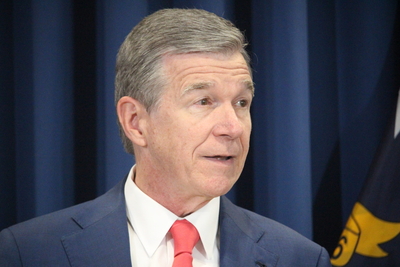
However, he’s yet to make an official decision. In the meantime, Cooper has served as a teaching fellow at Harvard University’s public health school.
Since 1986, 48% of governors who ran for U.S. Senate seats have been elected, according to data from Ballotpedia. Democrats have won 16 of those races, lost 12, lost six in the primary and had one withdraw before the primary.
Lara Trump (R) — The president’s daughter-in-law has for years been floated as a possible North Carolina U.S. Senate candidate. Tillis’ retirement provides an opening for her to make a run official.
She’s married to the president’s son Eric, grew up in Wilmington, and attended undergrad at NC State University. Last year, she was elected co-chair of the RNC along with another North Carolinian, Michael Whatley. She resigned from the post in December 2024, and currently hosts “My View with Lara Trump” on Fox News.
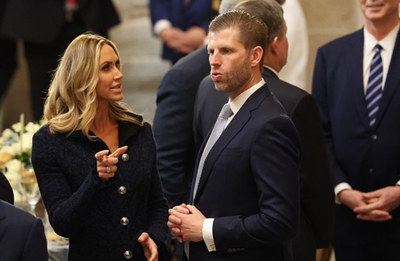
Trump’s strength as a candidate speaks for itself — sharing name recognition, connections and fundraising with the leader of the Republican Party and its most significant endorser.
But any rumors of her candidacy could once again be just that — as they were ahead of a North Carolina seat in 2022, and amid a Senate opening in Florida late last year. She stepped away from the field on both occasions.
Attorney General Jeff Jackson (D) — Jackson has run for the U.S. Senate before — he launched a campaign during the 2022 cycle, before later suspending his campaign and backing the eventual nominee, Cheri Beasley.
The open seat provides a path back to Capitol Hill for Jackson, who served a term in the U.S. House before winning the attorney general’s office last November.
But it remains to be seen whether he would choose to jump back into the political fray only a short time into his first term in the AG’s office, which has also been a stop for Cooper and Josh Stein before winning the governorship.
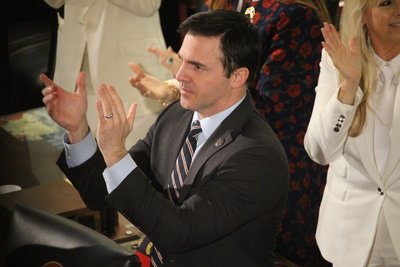
Jackson said Sunday he respected Tillis’ decision to end his tenure “when he felt the time was right,” and praised his vote against the Trump-backed budget mega-bill.
“I saw that he spoke about having the pure freedom to call balls and strikes over the next 18 months, and I genuinely look forward to that,” Jackson said. “It’s the approach that will serve North Carolina best and I’m glad to see that’s how he sees his mission with his remaining time in the Senate.”
Dan Bishop (R) — Bishop, a loyal Trump supporter, lost the state attorney general’s race to Jackson in November. Instead, the former congressman has remained in Washington — serving as deputy director of the U.S. Office of Management and Budget.
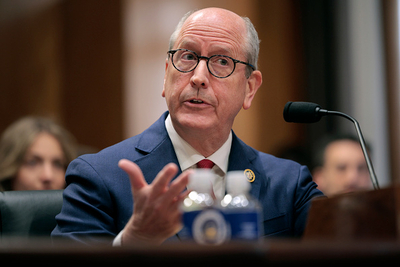
He served two districts across three terms in the U.S. House. And during his prior stints in the North Carolina legislature, he authored the controversial “bathroom bill” restricting transgender people’s access to public restrooms.
Michael Whatley (R) — The head of Republicans’ national elections machine could jump into a race himself.
Whatley formerly served as chair of the North Carolina GOP before being elected chair of the Republican National Committee last year, a position in which he still serves.
The nonprofit news outlet NOTUS reported Sunday that Whatley was considering running for the seat, citing an unnamed source.
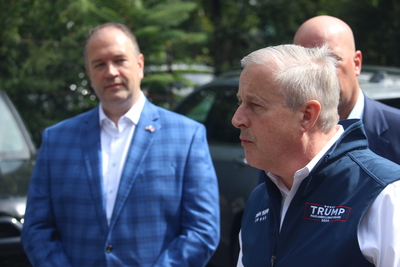
North Carolina’s U.S. House delegation (D & R) — Any of the state’s 14-member House delegation could aim to make the jump to the higher chamber.
Four of them are Democrats — including U.S. Rep. Don Davis, who represents one of the most closely contested districts in the country. U.S. Reps. Deborah Ross, Valerie Foushee and Alma Adams are also multiple terms into their House tenure.
Ross was the Democratic nominee in 2016, losing to then-incumbent Republican, former U.S. Sen. Richard Burr. She praised Tillis’ “moral courage” in a statement Sunday, and added: “It is imperative that our next senator is someone who will hold President Trump and his administration accountable.”
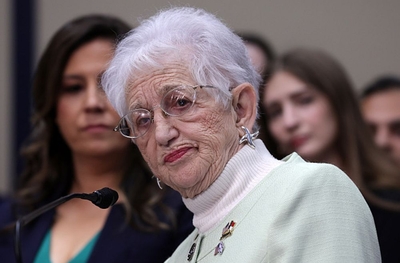
Of the 10 Republicans, U.S. Rep. Virginia Foxx is the most senior, having served since 2005. But if Foxx were to run, she’d be sacrificing significant power as the chair of the Rules committee. And she is one of the 10 oldest members of Congress, having turned 82 on Sunday.
Another possibility is U.S. Rep. Richard Hudson, who leads the campaign arm for House Republicans. NOTUS also reported the possibility of a Hudson campaign Sunday.
Spectrum News reported Sunday that U.S. Reps. Greg Murphy, Pat Harrigan and Tim Moore are also considering campaigns.
North Carolina’s legislative leaders (D & R) — The most prominent legislators on Jones Street could aim to make the jump to Washington.
Among them are Republicans Phil Berger, 72, who has been Senate leader for more than a decade, and Destin Hall, 37, the newly-ascended Speaker of the House.
The Democrats’ caucus heads are House leader Robert Reives, 54, and new Senate leader Sydney Batch, 46.
Other state lawmakers besides those in leadership could also seek to launch campaigns.
Updated at 2:10 p.m. on Monday, June 30.
Raleigh, NC