Hurricane Helene destroyed a Tennessee hospital. Officials knew it was at risk.
Dec 16, 2024 | 6:30 am ET
Description
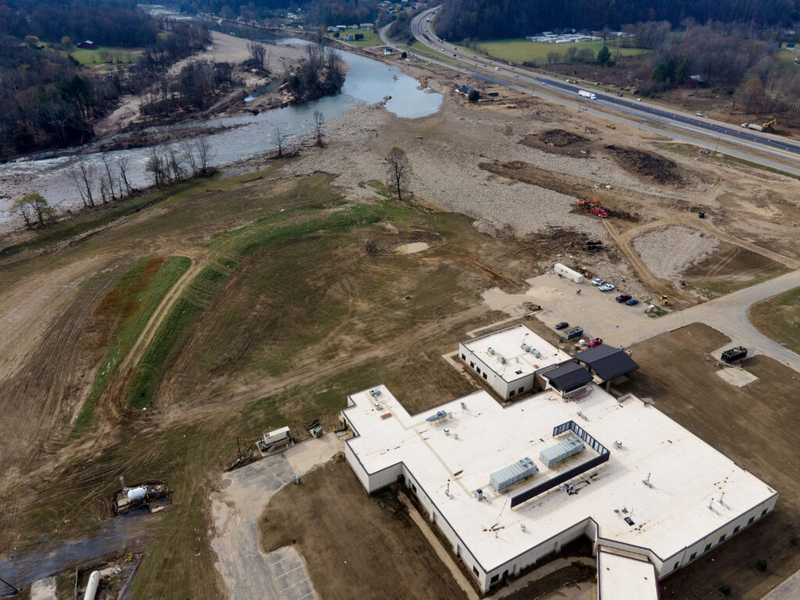
he rooftop of Unicoi County Hospital in Erwin, Tennessee, where dozens of patients, staffers, and
first responders were rescued by
helicopter after floodwaters from the nearby Nolichucky River
overwhelmed the building during Hurricane Helene. (Maddy Alewine for KFF Health News)
Erwin, Tennessee — April Boyd texted her husband before she boarded the helicopter.
“So, I don’t want to be dramatic,” she wrote on Sept. 27, “but we are gonna fly and rescue patients from the rooftop of Unicoi hospital.”
Earlier that day, Hurricane Helene roared into the Southern Appalachian Mountains after moving north through Florida and Georgia. The storm prompted a deadly flash flood that tore through Unicoi County in eastern Tennessee, trapping dozens of people on the rooftop of the county hospital.
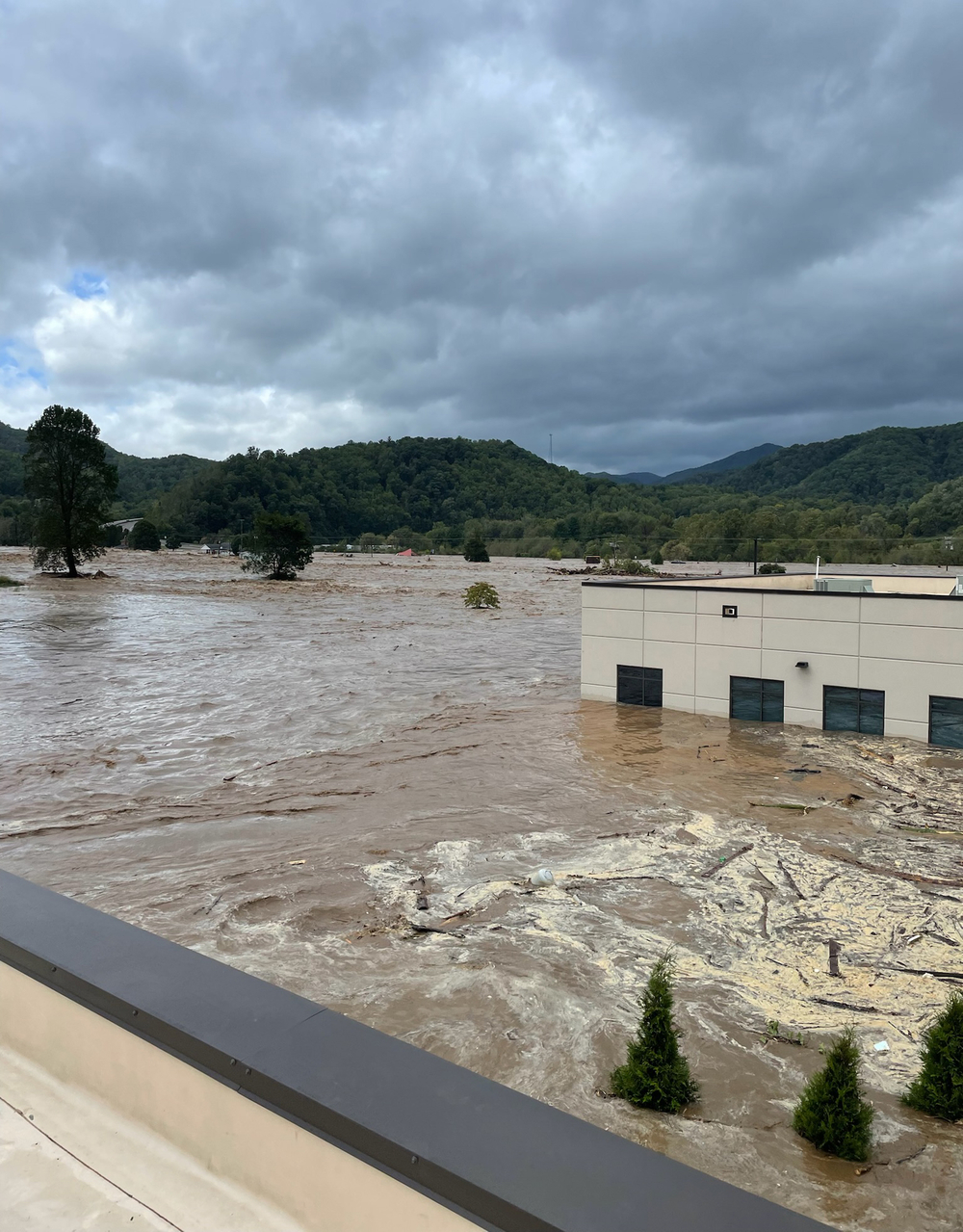
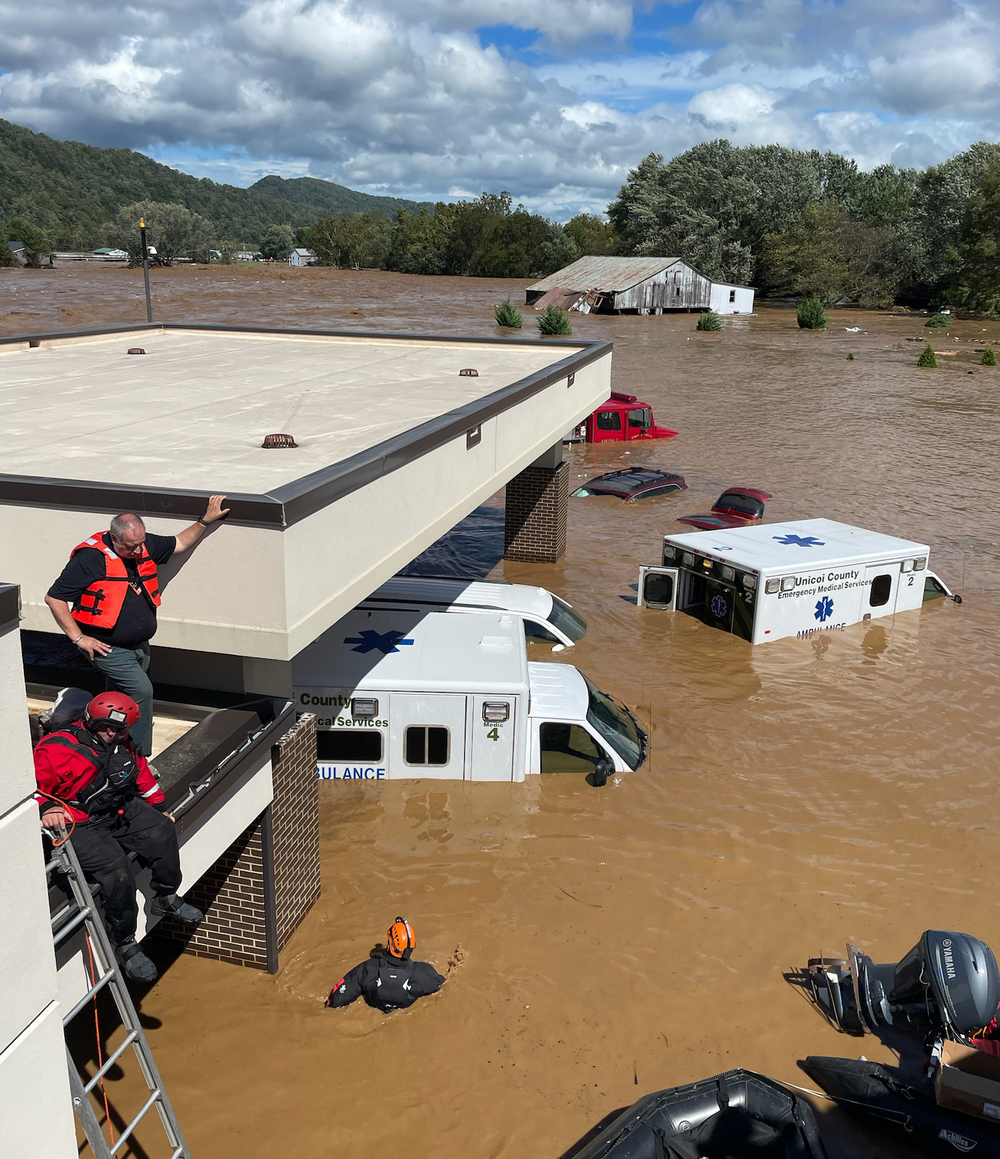
The fast-moving floodwaters had made earlier rescue attempts by ambulance and boat impossible. Trees, trailers, buildings, caskets, and cars swept past the hospital in murky, brown rapids that overwhelmed the one-story structure with 12 feet of water on all sides.
No one knew how long the hospital’s frame would hold or if the rising water would breach the top of the 20-foot-tall building. Little more than a mile downstream, six people at a plastics plant in Erwin’s industrial park died in the flood.
“I do not feel good about this,” Boyd, a flight nurse for Ballad Health, texted her husband at 1:41 p.m., just before takeoff.
She wrote that she loved him. “If anything goes wrong,” she wanted him to tell her daughters “how much I love them,” too.
Her fears were well-founded.
In 2018, Unicoi County Hospital relocated from higher ground in the heart of Erwin to the southern edge of town, between Interstate 26 and the Nolichucky River. The new hospital was built in a known flood plain, but the facility wasn’t designed to accommodate helicopter landings on its roof. Boyd and her team weren’t sure the roof could bear the weight of their 7,200-pound Eurocopter in good weather, let alone during a flash flood.
“I had a horrible feeling about it,” she said.
By many accounts, the evacuation of 70 people, including 11 patients, by helicopter that day was a stunning success. The hospital was destroyed, but no one died. No one was even physically injured by the ordeal.
Yet, earth scientists, emergency management officials, and others who spoke to KFF Health News describe the narrow escape from Unicoi County Hospital as a cautionary tale. As climate change forces health care leaders and public officials to prepare for severe storms in landlocked parts of the country — where residents haven’t historically paid much attention to hurricane warnings — they must be strategic about both the infrastructure design and the locations selected for new projects, like hospitals.
The Biden administration finalized a rule this year designed to make the construction of such projects that receive funding from the Federal Emergency Management Agency more resilient to flooding. But a review by KFF Health News identified about 20 other Tennessee hospitals already built in, or near, flood plains.
Patrick Sheehan, director of the Tennessee Emergency Management Agency, said past weather patterns can lull people into a false sense of security. But, he added, “past is not always prologue. We’re going to experience novel, new ways of having disasters.”
Historically, the Southern Appalachian Mountains have been the place “where hurricanes go to die,” said Ryan Thigpen, an earth and environmental sciences professor at the University of Kentucky whose research focuses on flooding in the region. But as the Gulf of Mexico becomes warmer and storms, like Helene, that move northward into the mountains carry more moisture, weather events will become more severe.
“It’s apocalyptic,” said Thigpen, of the damage in Erwin. “The next storm may come before they are finished recovering from this. And that’s kind of scary.”
Hospitals in flood plains
All week, Michelle Matson had been worried about Unicoi County Hospital in the oncoming storm.
As a district coordinator for the Tennessee Emergency Management Agency, Matson works with local officials to plan for worst-case scenarios.
Leading up to Hurricane Helene, she’d been in regular communication with the county’s emergency management director. The hospital’s vulnerability next to the river kept coming up.
“That was the only place we were worried about,” Matson said.
But concern over the hospital’s location wasn’t new.
In November 2013, Unicoi County Memorial Hospital, which opened in 1953, was acquired by Mountain States Health Alliance on the condition that Mountain States would construct a hospital in Erwin to replace the old one.
Two years later, Mountain States purchased a 45-acre tract of land next to a bend in the Nolichucky River, just off Interstate 26. A hospital system news release at the time explained that due diligence had been conducted to ensure, among other things, that the hospital building would not be in a flood plain. It also presented the location as desirable because it was near the interstate and the landscape would provide "a healing environment by taking advantage of the natural beauty of Unicoi County, with the river running along the east side of the property."
Dating back decades, though, flood maps published by FEMA put the entire property in a flood plain. The building itself was in a 500-year flood plain (meaning a 0.2% chance of flooding in any given year), while the only road on and off the property was in a 100-year flood plain (meaning a 1% annual risk).
But it wasn't only FEMA maps that forecast this possibility. In 2001, a report published by Unicoi County marked this land as being in a "flood hazard" area. The report warned of "considerable pressure" to develop flood hazard areas across the county "due to population increase and the need for vacant land."
The same report acknowledged a history of destructive flooding in the county and the risks it faced being situated along "three major streams," including the Nolichucky River, which flows northward out of the Blue Ridge Mountains of western North Carolina straight through Erwin.
"If you start looking at the river's history, there are a number of these notable flood events, and quite a few in the 20th century. They just did not reach this magnitude," said Philip Prince, a geologist with Appalachian Landslide Consultants. His YouTube videos about mountain flooding during Helene have been viewed hundreds of thousands of times. "People should have been expecting more than they did. But again, we have not seen anything like this."
Matthew Rice, a former Unicoi County commissioner, served as chair of the Hospital Visioning Committee for the new hospital in 2015. He said some committee members raised questions during the planning process about the location, but he conceded there weren't many large, flat places to build a hospital in Erwin.
Amid a wave of rural hospital closures across the United States, Erwin residents celebrated when the new hospital opened in 2018. One lawmaker told the Johnson City Press it was "the most modern facility on the planet."
Alan Levine was CEO of Mountain States Health Alliance during that time and later became the head of Ballad Health, when Mountain States merged with a competing hospital system in 2018 to form the largest state-sanctioned hospital monopoly in the country.
If you start looking at the (Nolichucky) river's history, there are a number of these notable flood events, and quite a few in the 20th century.
Levine said Mountain States was aware the property carried flood risk but noted that the hospital system added levees to protect the building from river flooding at the recommendation of outside consultants. One levee already existed along the river's edge. And the hospital itself was deliberately constructed on a high point of the land, at the same elevation as the interstate, Levine said.
"I feel like everything we did when we built it was done the right way," said Levine, a former health care leader in Louisiana and Florida.
Even so, Matson, who lives in Kingsport, about 45 minutes northwest of Erwin, said some residents were quietly critical of the new hospital's location.
"We all thought that it was a stupid idea to build a hospital in a flood plain. It's like, who does that?" Matson said. She said her opinion doesn't represent an official position of the Tennessee Emergency Management Agency.
But Unicoi isn't the only Tennessee hospital built in a flood plain. Eight others across the state were built in moderate- or high-risk flood zones, and a dozen other hospitals are situated just outside them, KFF Health News found.
The hospitals at risk span the length of the state, from Memphis on the western edge to Knoxville in the east, and include big-city general hospitals, smaller rural hospitals, and behavioral health facilities.
Some of the hospitals are decades old. Parkridge East Hospital in Chattanooga, for example, was built in the 1970s inside a high-risk flood zone. Others are more recent — like Creekside Behavioral Health in Kingsport. That building, which opened in 2018, straddles high- and moderate-risk flood zones.
Then there are facilities like Pinewood Springs in Columbia. The 60-bed mental health facility, which opened in 2020, is in a low-risk area, but the main road leading in and out of the hospital lies in a high-risk flood area.
To identify these hospitals, KFF Health News looked for licensed facilities in or near areas that, according to FEMA, have either a high flood risk (with a 1-in-100 chance of flooding in any given year) or moderate risk (a 1-in-500 chance in any given year).
But FEMA's maps likely underestimate the true flood risk, researchers and government watchdogs agree, because they're largely outdated and don't account for current or future conditions, including more frequent and more intense storms and flooding associated with climate change.
Those maps are updated on an ongoing but slow and piecemeal basis. Meanwhile, the federal regulation finalized this year to expand areas considered at risk for current and future flooding also sets more stringent building standards for critical infrastructure projects located in 100-year flood plains and funded by federal taxpayers.
The rule became effective on Sept. 9, less than three weeks before Hurricane Helene ravaged the Southern Appalachians, but it is unclear whether the incoming Trump administration will preserve it.
After he took office in 2017, President Donald Trump revoked federal flood protection standards set up under the Obama administration. Karoline Leavitt, a spokesperson for the incoming Trump administration, did not respond to emailed questions for this article.
An "antiquated and broken" system
On Sept. 24, three days before the hospital evacuation, the National Hurricane Center issued the first of several warnings predicting significant river flooding and landslides in the Southern Appalachians. Two days before the flood in Erwin, a satellite office of the National Weather Service in Morristown, Tennessee, predicted "life-threatening flash flooding" near the Tennessee-North Carolina state line.
The warnings kept coming. The National Weather Service in upstate South Carolina forecast on Sept. 26, a Thursday, that Helene would amount to one of the region's most significant weather events "in the modern era."
"I don't think people knew what that meant," said Prince, the geologist. "We just didn't have a precedent."
Ballad Health didn't anticipate that Unicoi would flood during the storm, Levine said, even though a hazard vulnerability assessment conducted annually for the hospital identifies external flooding as the second-highest risk facing Unicoi County Hospital, behind only a civil disturbance. The same 2024 assessment rated the hospital's preparedness for a flood as a "3" or "low," the worst possible score.
"I'm not sure anyone can prepare for flash flooding," said Ballad spokesperson Molly Luton.
A document outlining the hospital's emergency alert procedures makes no mention of flood risk. If anything, hospital leaders said they were anticipating a surge of patients during Hurricane Helene if Erwin and the surrounding area experienced widespread power outages.
"There was no conversation I had with anybody, anywhere about the risk of flooding before Friday morning," Levine said.
The day before, Jennifer Harrah, the hospital's administrator, had called a meeting to discuss the storm. Sean Ochsenbein, an emergency medicine physician and the hospital's chief medical officer, recalled that the group gathered "just to kind of circle the wagons, make sure everybody was on the same page."
Later that day, Harrah spoke to Unicoi County's emergency management director. But "let me be very clear," Ochsenbein said. "Nobody gave us — as Ballad or our hospital — any kind of indication that we would have floodwaters."
And yet little more than 24 hours after their planning meeting, both Harrah and Ochsenbein were stranded on the hospital roof, literally praying to God for their rescue.
"I called my husband, and I called my sons," Harrah said. "I told them that I loved them."
One reason the impact of the storm seemed to catch people off guard was a disconnect between the strong warnings issued by the federal agencies and the low expectations that many people in the region, including Ballad Health leaders, had of the potential flood risk.
It was sunny outside when people were evacuated from the hospital roof, Thigpen pointed out. It had rained about 5 inches in Erwin over several days, but that was nothing compared with places in the North Carolina mountains that received more than 20 inches over the same period. Rainfall at those higher altitudes eventually drained into the rivers and streams that ultimately destroyed places like Erwin.
Let me be very clear: Nobody gave us — as Ballad or our hospital — any kind of indication that we would have floodwaters.
But residents in Unicoi County had no clue what was coming their way, Thigpen said, because there weren't river gauges upstream to sound alarms about dangerous water levels.
"I think that our warning systems are antiquated and broken," he said. "These people in Erwin have seen floods — and a lot of big floods — and it's never been anywhere close to this."
Tennessee state climatologist Andrew Joyner is one of several experts now calling for more river gauges to monitor water levels and a network of weather stations in every county designed to collect live precipitation data.
Thirty-eight states already operate similar systems, he said, estimating that setting up and staffing weather stations across Tennessee would cost less than $4 million in the first year.
But the state has failed to act before. Following a catastrophic flood in Waverly, Tennessee, that killed 20 people and destroyed hundreds of homes and businesses in 2021, the Tennessee General Assembly denied a $200 million request to relocate 14 public schools across the state that had been deemed vulnerable to future flooding.
"Might not make it back"
On the morning of the flood, Matson had stood with the county's emergency management director behind Unicoi County Hospital and watched the rising river. "We both had this, like, sick feeling in our stomach that said we've got to evacuate," she remembered. "I said to him, worse comes to worst, we evacuate, nothing happens. Just blame it on me."
They made the call to start moving patients out of the hospital just before 9:45 a.m. Less than 30 minutes later, the river had breached its banks, cutting a new channel in front of the hospital and eliminating access to the only road on or off the property.
When an ambulance evacuation became untenable, the Tennessee Emergency Management Agency called in swift-water teams, specially designed to rescue people in turbulent waters. But the flash flood had become so violent and the river was so full of debris that the boats couldn't safely carry patients away. Meanwhile, dangerous wind conditions prevented helicopters located to the east or west from immediately flying that morning to rescue everyone by air.
"To be honest, I really thought we may not make it back" from the rescue mission, Boyd, the flight nurse, said.
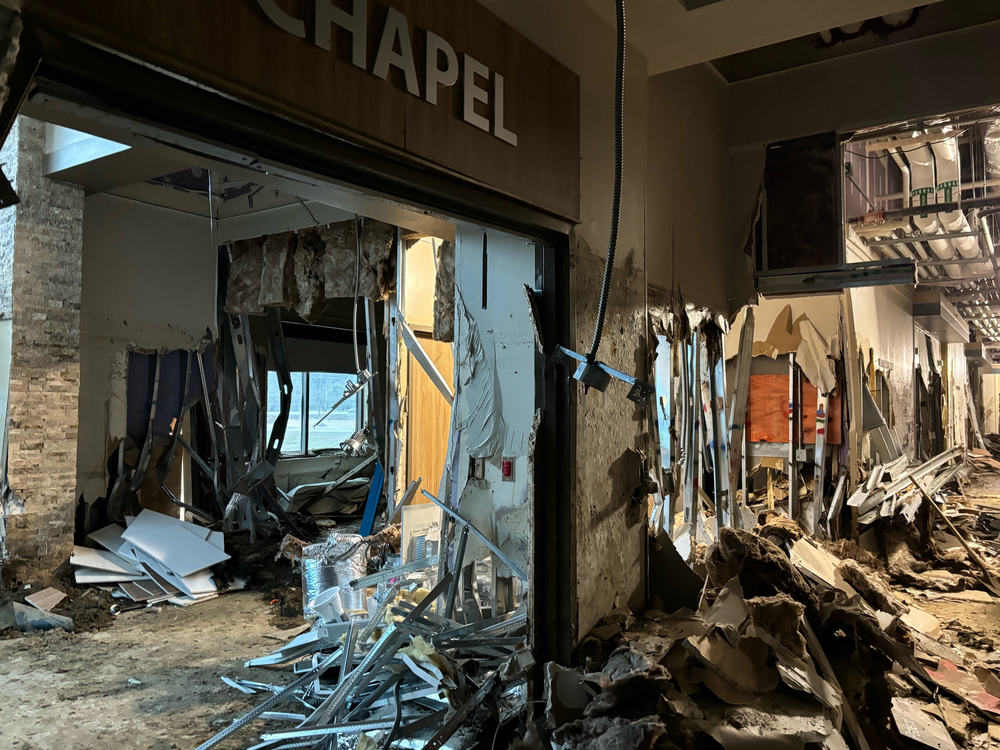
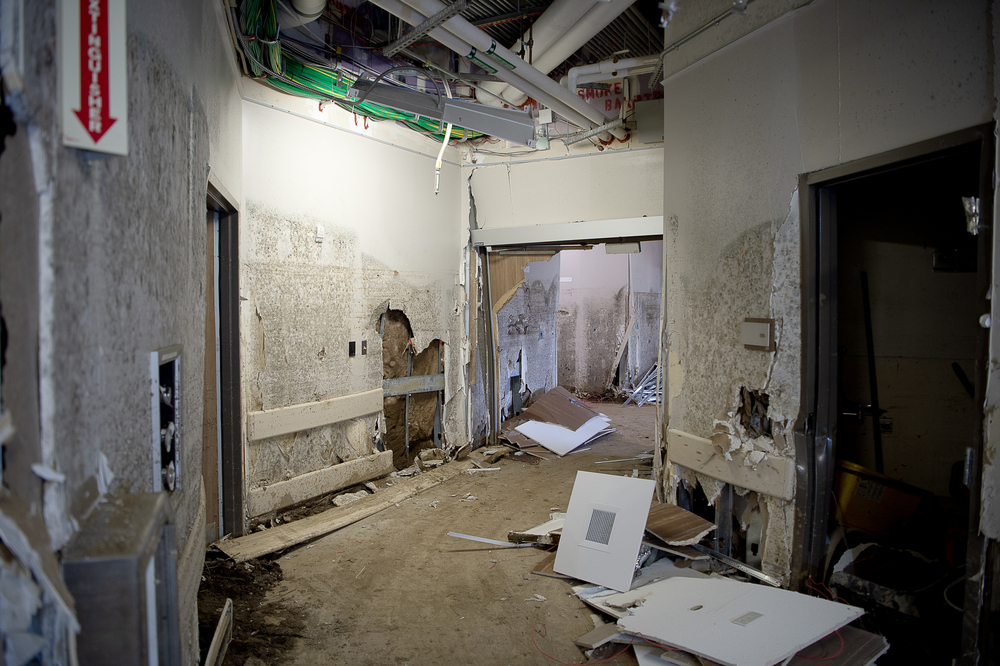

When the wind started to die down that afternoon, Virginia State Police deployed two helicopters to rescue patients. Eventually, three Black Hawk helicopters from the Tennessee National Guard assisted in the effort. Pilots were required to make multiple round trips between the hospital and the local high school to evacuate four or five people at a time who had been stranded by the flood. Some patients stranded in boats near the hospital were hoisted into helicopters, while those who were stranded on the roof were either carried onto the aircraft or climbed aboard while the helicopters lightly touched down on their skids.
As the afternoon wore on and the evacuation was nearing its completion, pilot Jeff Bush with the Virginia State Police said he learned that the hospital building was weakening. They weren't sure how much longer it would hold.
"It was intense," he said. "The fact that the building is still standing is, I think, kind of amazing."
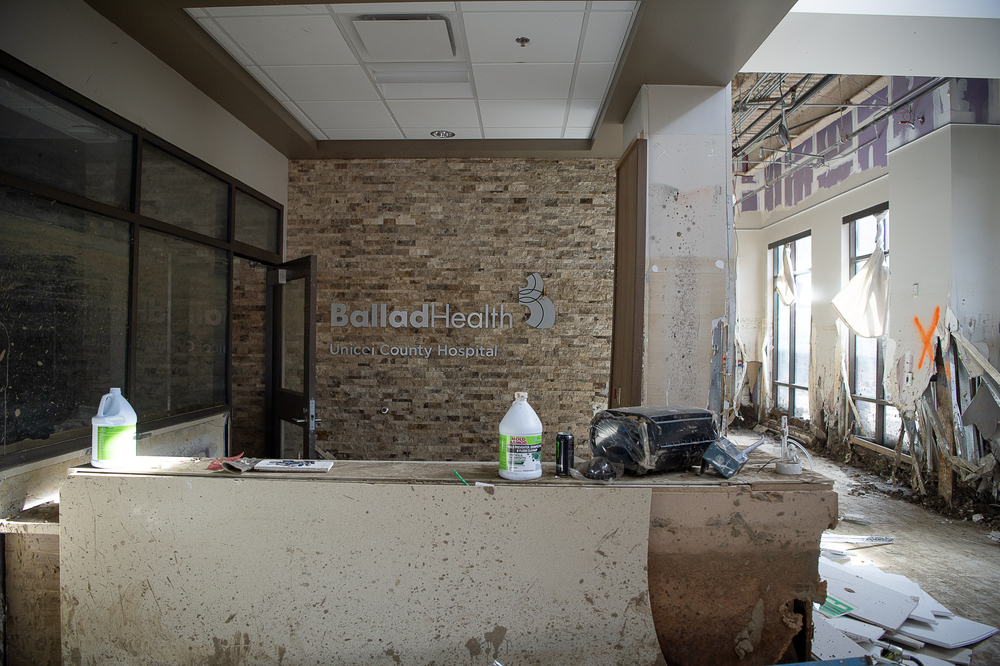
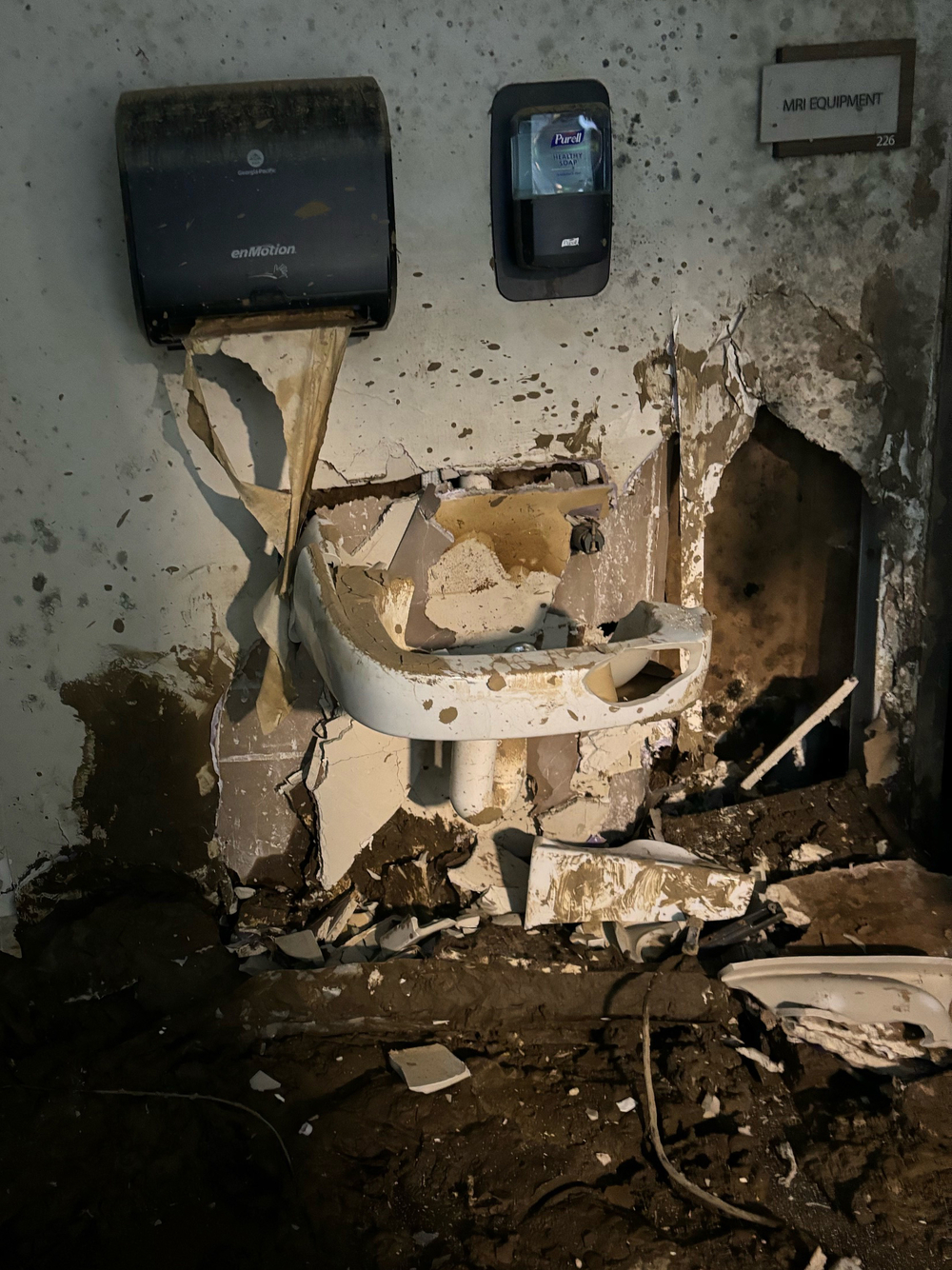
Ballad Health evacuated two other hospitals and one nursing home by ambulance within 24 hours of the flood in Erwin, but none of those sustained damage. Meanwhile, what's left of Unicoi County Hospital stands next to the Nolichucky in a field of mud and displaced river rocks.
For now, Ballad Health has opened a temporary urgent care center and plans to establish an emergency department at the site of the former Unicoi County Memorial Hospital in downtown Erwin.
Levine said Ballad Health will eventually rebuild a full-service hospital, but he estimated the project would cost $50 million, roughly twice as much as it did in 2018. It remains unclear where it would be built.
Probably not in a flood plain, Levine said. "I would avoid it if I could."
KFF Health News is a national newsroom that produces in-depth journalism about health issues and is one of the core operating programs at KFF — the independent source for health policy research, polling and journalism.
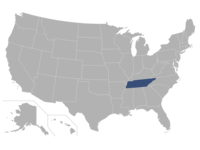
Nashville, TN