Police shielded from more lawsuits in a ‘bad, bad, bad bill’ advancing in Legislature
Feb 23, 2024 | 6:00 am ET
Description
Canva
The Louisiana House of Representatives passed a bill Thursday that would make it significantly more difficult to sue police officers who injure or kill someone or violate their civil rights.
House Bill 2, sponsored by Rep. Tony Bacala, R-Prairrieville, cleared the House in a 73-31 vote along party lines. It heads to the Senate for consideration.
Bacala’s bill would codify and expand qualified immunity protections for Louisiana law enforcement, including town marshals, constables, sheriffs’ deputies and all other peace officers. Qualified immunity is a legal doctrine that shields police and public employees from civil liability, making it difficult to sue them for any deaths or damages that occur during the course of their duties.
While it can apply to other government officials, it’s most widely known as a defense police use to block wrongful death and civil rights lawsuits.
Bacala, a former Ascension Parish chief deputy sheriff, said his legislation would cut back on frivolous lawsuits filed against law enforcement and could help agencies recruit new officers.
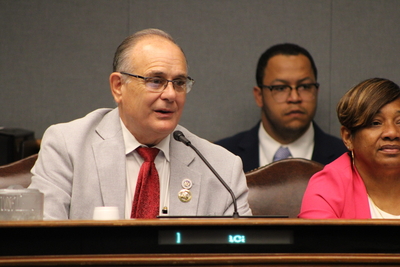
“You have certain groups who have a lot of fun filing frivolous lawsuits against police officers just to make their lives miserable,” Bacala said during House floor debate.
Current state law has some exceptions to qualified immunity. Plaintiffs can defeat an immunity claim if they can show an officer’s acts were criminal, malicious, intentional or negligent.
Bacala’s proposal dilutes those exceptions by eliminating negligence as an exception and requires a plaintiff to prove an officer committed criminal, fraudulent or intentional misconduct.
It would also prohibit a lawsuit if the plaintiff was convicted of any crime for which the officer arrested them. House Democrats took particular issue with this provision of the bill.
Rep. Edmond Jordan, D-Baton Rouge, said it would give police “carte blanche” to beat up suspects in custody and cited the 2019 killing of Black motorist Ronald Greene, who fled from Louisiana State Police until wrecking his vehicle. Body camera footage showed Greene trying to surrender to troopers before they beat, choked, stunned and dragged him while shackled before leaving him in a prone position until he died on the roadside in Union Parish.
“The people who killed Ronald Greene, they would get away with it under this statute,” Jordan said. “This is a bad, bad, bad bill. In my opinion, I will tell you this is probably the worst bill of this session.”
Jordan, an attorney, said the legislation would essentially give police absolute immunity, a level of protection reserved for judges, prosecutors and the president of the United States.
Bacala disagreed with Jordan’s assessment, pointing out his immunity proposal wouldn’t cover intentional misconduct.
“It does not give them free rein to do whatever they feel like without consequences,” he said.
The bill wouldn’t affect claims filed in federal court, where most police brutality lawsuits are litigated, Bacala added. It also wouldn’t apply to off-duty officers but would shield them when working off-hours security details, he said.
A separate but similar bill to give qualified immunity to gun owners who hold a concealed carry permit was approved Thursday in the Senate.
Senate Bill 2, sponsored by Sen. Blake Miguez, R-New Iberia, passed in a 27-11 vote and will next head to a House committee for consideration.
Miguez said his bill would incentivize people with firearms to obtain concealed carry permits and protect responsible gun owners from frivolous lawsuits.
“Under current law, an individual who uses force in self-defense is still forced to be dragged through the civil litigation process and through a trial to prove that their actions were a justifiable self-defense,” Miguez said.
His proposal would apply except in cases of gross negligence, intentional misconduct or the commission of a crime that results in a felony conviction — a level of protection greater than what police have under current Louisiana law.
Both proposals are part of Gov. Jeff Landry’s agenda to reduce crime, though proponents haven’t been clear on how they would accomplish that goal.
During Senate floor debate Thursday, Miguez couldn’t provide data to support his claim that his proposal would incentivize people to apply for concealed carry permits. He referenced a study that showed concealed carry permit applications didn’t decrease in other states where gun owners were given heightened immunity.
Sen. Joseph Bouie, D-New Orleans, criticized the proposal, saying it’s based on an unfounded assumption.
“We just seem to be doing this because we can do it,” Bouie said.
Miguez also ushered through a proposal that eliminates the state’s requirement to obtain a permit to carry a concealed handgun. Senate Bill 1 was approved in a 28-10 vote and moves to the House side next.
Baton Rouge, LA