SC State Museum asks for $50M in state taxes to overhaul exhibits
Jan 29, 2024 | 5:06 pm ET
Description
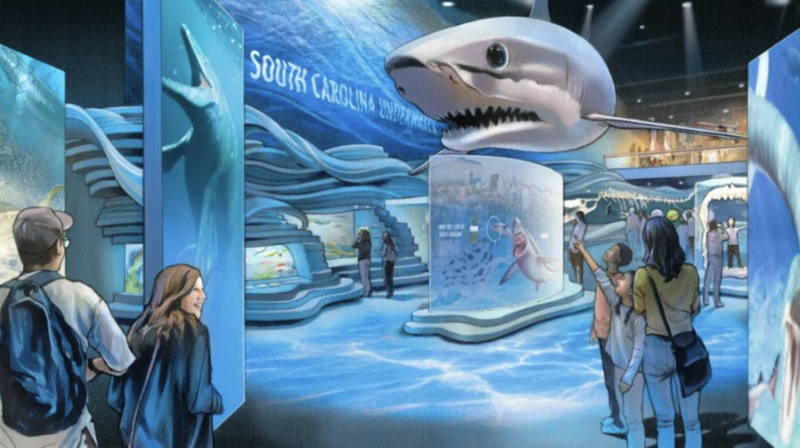
A rendering of what the State Museum's natural history wing could look like after renovations. If the museum can get the funding, construction on this wing is set to begin in 2027 and end in 2029. (Provided/SC State Museum)
COLUMBIA — In the natural history wing of the South Carolina State Museum, a fake Megalodon shark hangs over fossilized jaws and displays of teeth.
The exhibit gets the point across, but the blue-painted walls and minimal display cases have fallen out of fashion, museum director Amy Bartow-Melia points out.
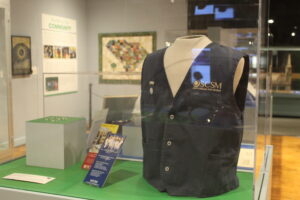
“Right now, what we’re looking at is the cutting edge for museum display and design for the ‘70s and ‘80s,” Bartow-Melia said.
The museum’s last major renovation — adding its observatory, planetarium and 4D theater — was a decade ago. But the permanent exhibits, which include displays of optical illusions, battle flags and art, have not been overhauled since the four-floor museum opened 35 years ago in a former textile mill.
Museum officials want to update those decades-old exhibits with a $75 million overhaul over several phases. Of that total price tag, about $15 million will come from grants, donations and revenue from ticket sales.
The museum’s already received and spent $10 million in state taxes for “Reimagine the Experience.” Its leaders are asking legislators for an additional $50 million in the upcoming state budget to get it done.
That cost doesn’t include upkeep and staffing after the renovations are done, Bartow-Melia said.
The project, expected to be completed in 2033, will be a major facelift for a museum still recovering from the COVID-19 pandemic, she said.
In 2023, attendance levels were just 78% of what they were before 2020.
The number of school groups, which don’t bring in much revenue but are a major component of the museum’s mission, also lagged. About 57,000 students went through in the 2018-19 school year. That compares to around 10,000 in 2022-23, according to a museum analysis.
The project is expected to boost general attendance numbers by about 35%, museum officials told legislators. That would take attendance past what it was pre-pandemic and hopefully bring with it an influx of student groups, Bartow-Melia said.
As attendance booms at SC’s military history museum, director looks to future
Behind the scenes
An initial phase of the project wrapped up in December. Walking through the museum, it doesn’t seem like a whole lot changed. But this part of the project lays the groundwork for the rest of it, Bartow-Melia said.
“Going into a major project like this, it’s really easy to jump into the fun, sexy stuff,” she said.
But it was important to first make sure all the infrastructure was in place to support the bigger parts of the project, she added.
That included making bathrooms accessible for people with disabilities, expanding WiFi access throughout the building and updating the museum’s website.
Hall of Innovation
The fourth floor of the museum feels like two separate worlds. On one side, there’s the observatory, with a working telescope pointed into the sky, surrounded by a collection of unused telescopes. On the other, glass cases contain war memorabilia, such as battle flags and replica ships.
A major part of the project will be reimagining how exhibits work together. The space between the war rooms and observatory will transform into what museum staff call the Hall of Innovation — a hands-on exhibit showcasing inventions and innovations by South Carolina residents.
The plan is to meld history with newer technology, examining, for example, Gullah Geechee food, the music of the late jazz pioneer Dizzy Gillespie of Cheraw, and progress in agriculture, automobiles and space exploration. (Lake City native Ron McNair, who died in the 1986 Challenger explosion, was the second Black astronaut in space.)
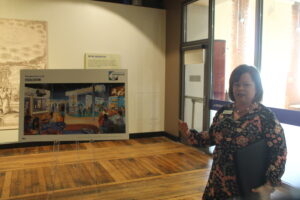
“It’s really thinking across the board in this whole wing about, how have South Carolinians from our earliest Native American communities to today been creative?” Bartow-Melia said.
Beyond the Hall of Innovation will be an updated version of the museum’s “cultural history” wing, which includes artifacts from the Revolutionary War, the Civil War and the subsequent federal Reconstruction period.
The history in that wing ends in 1920, leaving a century-long gap.
Renovations would extend the history on display, particularly when it comes to the Civil Rights movement. Already in the museum’s collection is a lunch counter where Columbia students staged sit-ins in the 1960s, which could become a focal piece of that exhibit.
Artifacts from the wars would remain.
The plan is to emphasize South Carolina’s outsized role in the Revolutionary War. That phase of renovations is slated for completion in 2026, just in time for the 250th anniversary of America’s founding.
“We want to make sure we’re highlighting our Revolutionary War materials and really talking about not just the battles but the home front and the Native American experience and the African American experience,” Bartow-Melia said.
Also in the works is a new permanent art gallery inside climate-controlled rooms with windows that allow visitors to see more of the museum’s 4,500 pieces of art without jeopardizing preservation efforts.
Natural history
Amid all the renovations, Finn the Megalodon will not move from his spot next to the staircase leading from the third floor to the second.
However, his habitat is set to change.
A blue-lit gallery will show what South Carolina might have looked like submerged, with fossils, shark teeth and replicas of sea creatures on display. Signs will explain how much of South Carolina was once underwater, with cases showing off critters of the time like prehistoric aquariums.
“What we want to do is update the space to really be interactive and meet audiences where they are,” Bartow-Melia said.
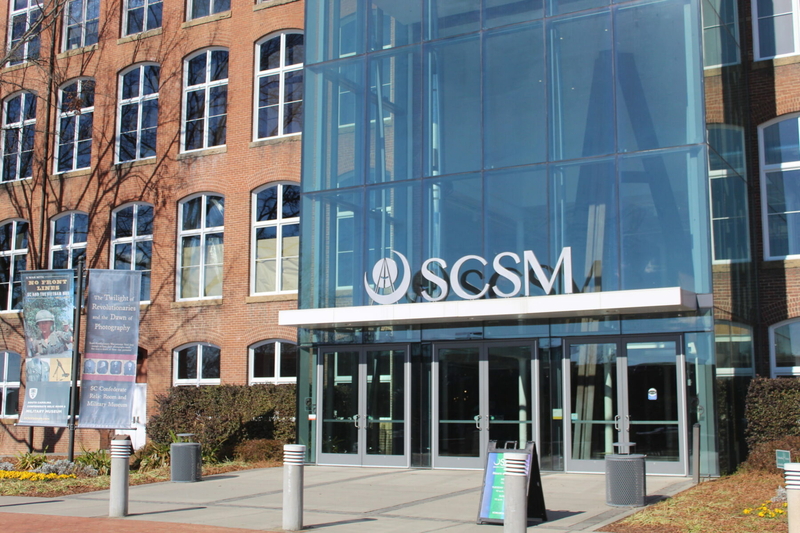
Moving back onto dry land, a revamped dinosaur gallery will lead into exhibits on the different habitats found across the state, from the mountains of the Upstate to the Lowcountry swamps.
Part of the idea is to encourage people to then turn around and visit the state’s parks. A core mission for the museum is not just to educate people while they’re inside but to give them things to think about when they leave as well, Bartow-Melia said.
“You read a story here about some historic event in the Lowcountry, (and say), ‘Hey, Mom, let’s go to Charleston next weekend and see it,’” Bartow-Melia said. “That’s been a really fun thing.”
The goal is to finish this section by 2029. A final push, from 2030 to 2033, would finish off backstage work, such as increasing the number of changing exhibitions and upgrading necessities unseen by visitors, such as the museum’s conservation lab.
Inclusivity
William Turpin’s Bible, where the 19th century abolitionist wrote the names of enslaved workers he freed, often appears in temporary exhibits. As do many other artifacts and displays on Black history and Native American history.
Telling more diverse stories has been a driving force behind much of the renovation. Officials want to turn these rotating temporary exhibits into full-time displays, so people don’t have to time their visits when they might be able to see stories from their culture, Bartow-Melia said.
Unlike in the past, when museums might curate these displays using only historical records, museum staff have been meeting with people to ask what they want to see and how they want to see it, Bartow-Melia said.
New military museum to open in Sumter with $23M in state aid
“We’re not just telling their stories,” Bartow-Melia said. “That’s not the way museums work anymore. It’s all about working together to do that.”
Funding
The budget process for the fiscal year that starts July 1 is just starting.
Whether the museum gets its entire $50 million request might not be known until June.
But Rep. Seth Rose, a Democrat whose Columbia district includes the museum, said legislators generally support the museum.
“We should want our State Museum to be something that makes us proud,” Rose said. “Obviously we want to keep investing in it to make it the best it can be.”

Columbia