Senate bill would add photo of cardholder to EBT cards
Jan 18, 2024 | 8:23 pm ET
Description
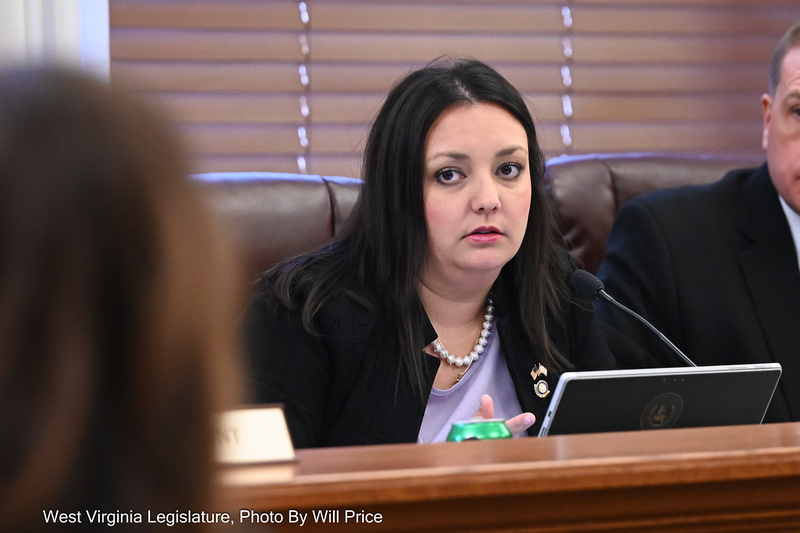
Senator Laura Chapman, R-Ohio, speaks during discussion of a bill that would require the state to add a photo of cardholders to EBT cards issued in the state on Jan. 18, 2024, in Charleston, W.Va. (Will Price | West Virginia Legislative Photography)
A West Virginia Senate committee on Thursday advanced a bill that would require that every electronic benefit transfer card issued in the state include a photo of the cardholder.
EBT cards, similar to bank cards, allow recipients of certain federal programs to make purchases electronically.
West Virginia uses EBT to disperse benefits to recipients of Supplemental Nutrition Assistance Program (SNAP), Temporary Assistance to Needy Families (TANF), Women, Infants, and Children (WIC) and other programs.
Senate Bill 450 is meant to be a way of combating fraud, but state EBT director Jacquelyn Hoppe testified that making sure that EBT cards are protected would make more of a difference in stopping fraud.
Hoppe said that according to rules by the federal Food and Nutrition program, anyone who presents an EBT card and has the correct PIN has been authorized to use it by the primary user. Retailers cannot discriminate against anyone who uses an EBT card.
“So if they have an EBT card and they have a PIN, the retail person isn’t able to make any changes; they have to accept it,” Hoppe said. “So it really doesn’t make a difference. What makes the difference in the fraud portion of it is allowing us to make sure that we use cards that are protected.”
Hoppe said retailers cannot deny a person use of the card because their picture is not on the card.
According to one study by the U.S. Department of Agriculture, between 2015 and 2017, 1.6% of SNAP benefits were trafficked, or exchanged for cash. In a news release in July, the former Department of Health and Human Resources said it and the United States Department of Agriculture had received several reports of “card skimming, phishing, or cloning scams to steal SNAP benefits.”
Hoppe’s remarks came in response to a question from Sen. Laura Chapman, R-Ohio, who expressed concern that adding a photo requirement may mean that family members who are not pictured on the card are not able to use them. She recalled from her days of working in a convenience store as a young person that children sometimes used their family’s EBT cards.
“My concern is if we require a photo, will that child be denied or somebody else who’s authorized in the household to use that card? And I just wanted to hear what your opinion is,” Chapman said.
According to federal rules, states that use photo EBT cards must establish procedures to ensure that other authorized members of the household who are not pictured on the card may still use it. Failure to do so may result in the state losing federal funding.
The bill so far has no fiscal note, but Chairman Mike Maroney, R-Marshall, said for that reason, the legislation was referred next to the Senate Finance Committee for consideration.
Currently the state pays for the cards based on the number it issues and the number active, Hoppe said. Replacement cards cost around $3 each. Putting a photo on the card would “easily double” the cost, she said.
The bill, as amended Thursday, would go into effect July 1, 2025 in order to give the state Department of Human Services time to promulgate rules to establish procedures for the implementation.
Also Thursday, the Senate Health Committee advanced:
- Senate Bill 228, which requires that insurance and Medicaid provide coverage for cleft lip and cleft palate treatment for young people up to age 19, and
- Senate Bill 357, increasing the scope of practice for dental hygienists to include tobacco cessation education to patients to improve overall dental health.
Charleston, WV