Alaska ends fiscal year with first budget surplus in a decade
Jun 30, 2022 | 9:17 pm ET
Description
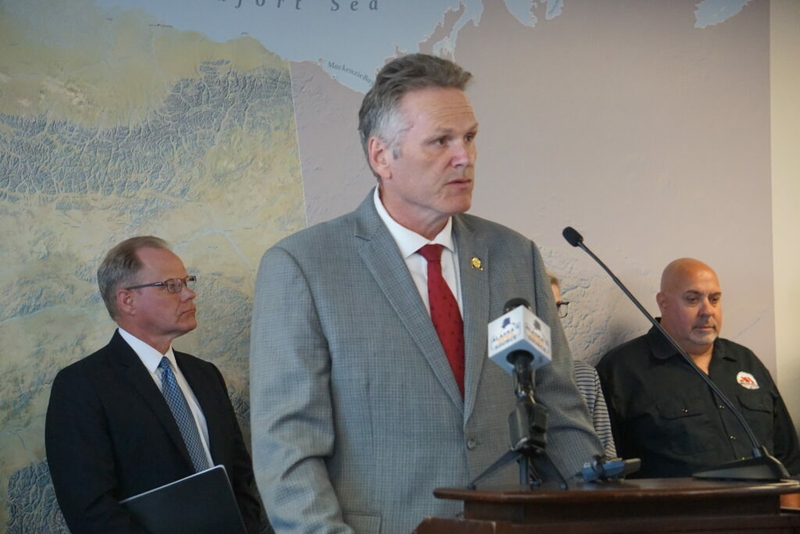
Gov. Mike Dunleavy speaks at a June 28 press conference in Anchorage on the fiscal 2023 budget to go into effect on July 1. Behind him is Anchorage Mayor Dave Bronson and Matanuska Brewing Company owner Matt Tomter. (Photo by Yereth Rosen/Alaska Beacon)
For the first time in a decade, Alaska’s state government will end its fiscal year with a surplus.
Final figures aren’t expected until later this year, but when fiscal year 2022 ends on Thursday night, the state is expecting to have earned $7.25 billion over the preceding 12 months. In the final budget, the state spends $5.36 billion.
“Based on current revenue estimates the administration projects to have a nearly $1.9 billion surplus in FY22,” said Jeff Turner, deputy communications director for Gov. Mike Dunleavy.
Spending is expected to rise in fiscal year 2023 under a plan passed by the Legislature and signed Wednesday by Dunleavy.
The year-ending surplus will be deposited into various savings accounts.
The numbers above represent “undesignated general funds” — tax revenue and the annual transfer from the Alaska Permanent Fund to the state treasury — as determined by the state’s Office of Management and Budget. They don’t include federal money or fees collected by the state, and the Legislature’s own budgeters have a slightly smaller estimate for the amount of the surplus.
The Russian invasion of Ukraine, which began Feb. 24, sent oil prices skyrocketing as nations embargoed Russian oil, limiting global supply.
Last spring, the state expected to earn only $4.7 billion in undesignated general funds during FY22. That included $3.1 billion from the Permanent Fund and $1.3 billion in oil revenue, plus assorted taxes.
Legislators approved, and the governor signed, a budget with $5.3 billion in spending, intending to spend from savings to make ends meet.
But after the invasion, oil prices rose so high — above $120 per barrel at times — that petroleum tax revenue will be more than three times what was expected.
Each year, lawmakers revise the previous year’s budget by enacting what’s known as the supplemental budget.
This year’s supplemental budget process added hundreds of millions of dollars to the FY22 budget, including $221 million earmarked for local governments to pay off school bond debt.
Even with that extra spending, a huge surplus remained to be diverted into various savings accounts:
- $199 million to the constitutionally protected portion of the Alaska Permanent Fund;
- $300 million to the Statutory Budget Reserve, a savings account that can be spent with a majority vote of the House and Senate and the approval of the governor;
- $342 million to the Higher Education Investment Fund, which funds college scholarships and the state’s equivalent of medical school;
- $19 million to the Alaska Marine Highway System’s vessel replacement fund; and
- $1 billion to the Constitutional Budget Reserve, a savings account that requires a three-quarters vote of the House and Senate and approval of the governor.
The higher education fund and the ferry system fund were drained by the Legislature’s failure to approve a supermajority vote last year.
The money deposited into the funds this year should refill them, if Dunleavy signs legislation that would prevent them from being drained again.
Dunleavy signed the fiscal year 2023 budget earlier this week, and if oil prices remain high over the next year, that document calls for more money to be deposited into savings.
It’s a significant turnaround from the past decade: Alaska has spent more than it’s earned each year since fiscal year 2012.
In late 2013, the state’s savings accounts peaked at almost $18 billion, but years of deficit spending were followed by a crash in oil prices that left the state with less than $1 billion in savings before the Russian invasion.
Juneau