Whiplash over remote access to abortion medication nationwide
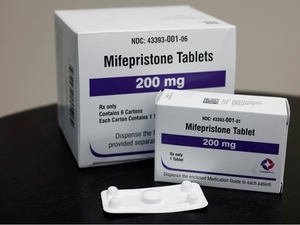
It’s still uncertain if an abortion medication can be prescribed over telehealth. Mifepristone is one of two drugs used to terminate a pregnancy before 10 weeks and to treat miscarriages, but could require an in-person visit before it’s dispensed, depending on a U.S. Supreme Court decision.
In 2023, the U.S. Food and Drug Administration issued a rule that allowed mifepristone to be dispensed through telehealth appointments. However, the state of Louisiana says the policy undermines their state law banning abortion and sued the FDA.
On May 1, the 5th Circuit Court of Appeals took Louisiana's side and blocked remote access to abortion medication nationwide. However, that was paused when the U.S. Supreme Court issued a temporary stay on May 4. Now, the Supreme Court ruled telehealth abortion can resume while Louisiana's lawsuit continues.



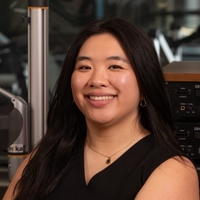


In Episode 28, you’ll hear from Professor Jessica Waters to understand how the abortion policies from just one state are upending access nationally. Waters is the director of the American University School of Public Affairs Leadership Program. Her research focuses on reproductive rights law and policy.
States like Florida, Oklahoma and Texas already have laws that specifically ban providers from mailing abortion pills to patients.
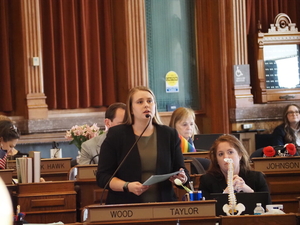
Iowa is on its way to join that list, after state legislators sent a bill to the governor’s desk. You’ll hear from Iowa Capital Dispatch reporter, Robin Opsahl, who has been covering the debate.
Finally, Daybreak newsletter author Madyson Fitzgerald shares the top stories she’s watching.
Episode produced and edited by Mallory Cheng. Music for Stories From The States composed by David Singer.
Got questions? An episode idea? Email us at [email protected].
Subscribe to Stories From the States on Apple Podcasts, Spotify and Youtube.
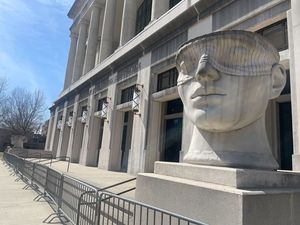
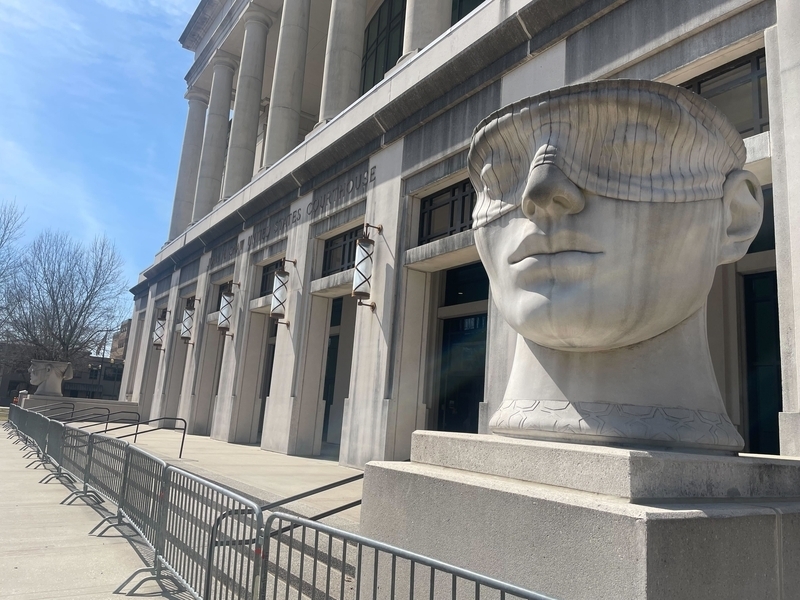
Photo: A hearing in the Louisiana v. Food and Drug Administration case on telehealth access to abortion medication took place at the John M. Shaw U.S. Courthouse in Lafayette, La., in late February. (Photo by Greg LaRose/Louisiana Illuminator)
Stories From The States is a production of States Newsroom, the nation’s largest state-focused nonprofit news organization, with reporting from every capital. At this pivotal moment in American democracy, our veteran journalists from all 50 states are reporting the consequences of government decision making. By zooming into one story each week, Stories From the States contextualizes and gives a human voice to what is happening now.
Transcript was created using an automated software.
Chris Fitzsimon
This is Stories From The States. I'm Chris Fitzsimon. Here at States Newsroom, we know there's a lot going on around the country, in every state capital, so thank you for being here. Today, we're talking about the fight over telehealth access to an abortion medication called mifepristone. Since the overturn of Roe versus Wade. Sta...
Transcript was created using an automated software.
Chris Fitzsimon
This is Stories From The States. I'm Chris Fitzsimon. Here at States Newsroom, we know there's a lot going on around the country, in every state capital, so thank you for being here. Today, we're talking about the fight over telehealth access to an abortion medication called mifepristone. Since the overturn of Roe versus Wade. States have enacted their own laws on whether or not to criminalize abortion. Some states have laws that specifically ban providers from mailing abortion pills to patients. Iowa is on the way to join that list.
Robin Opsahl
Some anti abortion advocates feel that these telehealth and mail order abortion options are ways to skirt restrictions on abortion.
Chris Fitzsimon
Nationwide, telehealth access has been one of the main methods of obtaining abortion medication for those living in states with bans, but now that is hanging in the balance. In a moment, we'll chat with an expert from American University about how the abortion policies from just one state could up end access nationally.
Chris Fitzsimon
In 2023 the US Food and Drug Administration issued a policy that allowed mifepristone to be to be dispensed without an in-person visit with a health provider. But, the state of Louisiana says the policy undermines their state law banning abortion, and that the federal rulemaking process allowing telehealth prescriptions, was flawed, so they sued the FDA. And on May 1, the Fifth Circuit Court of Appeals took Louisiana's side and blocked remote access to abortion medication nationwide. That was paused when the US Supreme Court issued a temporary stay on May 4th, which allowed telehealth access to abortion medication nationwide, to continue to May 11, that has been extended to May 14. To help us figure out what all this could mean, is Professor Jessica Waters, director of the American University School of Public Affairs Leadership Program. Her research focuses on reproductive rights law and policy. Professor Waters, thanks for being here.
Professor Jessica Waters
Thanks so much for having me.
Chris Fitzsimon
Just a note, we're recording this interview on Wednesday, May 13, and of course, there could be changes at any time. First, I wondered, sort of what your what your sense of where we are. Tell us how we got to this place and what's happening?
Professor Jessica Waters
Yeah, we are in the wild west. So you know, we have a case pending at the Supreme Court, and it sort of remains unseen what's going to happen.
Chris Fitzsimon
Do we make anything of the fact that, well, it was Justice Alito, I believe, and maybe that's because he's over the Fifth Circuit, but obviously an anti abortion justice. I think most people would say that was fair, a fair assessment of his position. Do we make anything out of the fact that they issued a stay, or is that just part of the procedural norms of the Supreme Court? Oftentimes it feels like in recent years, they've been reluctant to stay things they disagree with.
Professor Jessica Waters
Yeah, I don't make a lot of the fact that he issued a stay, you know, I think he was the appropriate justice for this to go to, given the geographic regions, and it is such a case of national import that it would have been shocking had he not issued the stay.
Chris Fitzsimon
Okay, so what would it mean? I know this for you that is so knowledgeable and does this for a living, but for folks who are listening, and I don't want this to be a story about the Supreme Court necessarily, or the politics of reproductive choice, what happens to women across the country if they decide that the state of Louisiana is right and that women no longer have access to this medication.
Professor Jessica Waters
Yeah. So if the Supreme Court ultimately says, Hey, FDA, you screwed up, you should not have allowed mifepristone to be available via telehealth, that ruling will go into effect for the entire country, right? So the Supreme Court in Dobbs in 2022 basically said the abortion question is left to the states, and now we are in a position where states have done different things. 13 states have banned access to abortion care. Others have protected it and enshrined access to abortion care in their state constitutions. So you know, access to abortion care very much depends on where you live and frankly, how much money you have, right? If you can travel. Telehealth, sort of changed that, because you could be in a state that has limited access to abortion care and still receive care from a physician via telehealth from another state, right? So post Dobbs, what we actually saw is the number of abortions in the country actually went up right and a lot of that is due to telehealth. You know, we know that one in four women in the United States will have an abortion. We know that over 60% of them are via mifepristone or medical abortion, and we know that of those abortions about 1/4 right now are via telehealth. If that goes away, suddenly, we're going to really see a decimation of access in states around the country, and that includes states that have decided to make abortion legal in their states,
Chris Fitzsimon
Tight. So just to be clear, states that have reacted to Dobbs by making sure are reasserting the legality of abortion would be banned from using this prescribed this medication through telehealth.
Professor Jessica Waters
Correct. Yes, they would not be banned, depending what the Supreme Court does. But if what the Supreme Court does is say, mifepristone remains on the market, but it cannot be prescribed via telehealth, every state in the nation would be bound by that, even if they have chosen to protect abortion in their state.
Chris Fitzsimon
It feels like a major part of the argument against allowing access to this medication to continue is misinformation about the safety of the medication itself. Is that something the court will be considering, or is that more of a is that an issue that the states alone will be considering?
Professor Jessica Waters
It remains to be seen, right? There are a number of challenges percolating to the FDA's initial approval of mifepristone, right? This is not, this is not the first time the Supreme Court has looked at this question of mifepristone abortion. So you know, if the Supreme Court were to in, you know another case, for example, say the FDA never should have approved mifepristone. Then these questions come up. The question that is squarely before the court in the instant case, in the Louisiana case, is the question of telehealth abortion and Louisiana and other states argue the FDA exceeded its authority, right? It should not have approved telehealth prescription of mifepristone.
Chris Fitzsimon
The national sort of, you know, I feel like after the Dobbs decision that overturned Roe v Wade, you mentioned that that it was left then up to the states, which is what the the anti choice people have been sort of clamoring for, on the one hand, for so long. This seems to fly in the face of that. But I guess contradictions in these policy worlds are nothing new.
Professor Jessica Waters
Yeah. I mean this, this part, you know, frankly, drives me a little insane. Because, you know, there was this argument that Dobbs was a states rights decision, right? That it was returning this question to the states, and if that were true, right? If that were the point, and that were the goal, those opposed to Roe, for example, have won, right? Like they've won, it's back with the states. What we are seeing now, though, is states that are opposed to abortion access, really trying to impose their laws nationwide, right? Like that's exactly what Louisiana is doing. Louisiana is saying, wait a minute, federal law doesn't apply to us, and we actually think our law should apply nationwide. We're seeing similar things in Texas. We are seeing other states saying they are going to criminalize anyone who goes across state lines for abortion care. So this like states rights decision. You know that nominally was called a states rights decision, as has turned out to be anything, but.
Chris Fitzsimon
Yeah, how momentous? Where would you put this? In the in the obviously dobb, the Dobbs decision was the earthquake. But this seems like a significant thing for millions of people across the country.
Professor Jessica Waters
It's a huge earthquake, right? I mean, even when we think about when the Fifth Circuit had issued its decision and the Supreme Court had not yet stepped in, that changed access for everyone around the country for two days, right? Doctors had to figure out what to do. Patients had to figure out what to do. A. And you know, if you are pregnant and seeking to end a pregnancy, you don't have infinite time, right? These are things that have to happen in a timely way. So we saw that chaos, you know, even just for a weekend, if the Supreme Court says the Fifth Circuit's decision goes into effect nationwide, that changes access overnight. You know, I think that physicians and healthcare providers will figure it out, right? They will figure out other methods to making sure that patients can get safe and legal abortions. But it really does change the landscape dramatically.
Chris Fitzsimon
Yeah, and I'm not sure we've addressed this, but enough, really, but especially people who are pregnant, who live in rural areas, who have to drive a long way to see a provider, to have follow up appointments, all this stuff. Even if it's if abortion is legal in their states, it seems much more difficult.
Professor Jessica Waters
Yeah. I mean here, here's the thing you know? We know that when abortion is banned, or we see like the overturning of Roe, for example, people don't stop getting abortions. We just make it harder and we make it more unsafe, right? So people will have to take time off work. They will have to go to incredible expense. Their abortions will likely be pushed later in pregnancy. Some people will resort to unsafe methods because they are desperate, right? That will be the new reality. We won't see a decrease in the number of abortions. We will see an increase in the number of unsafe abortions.
Chris Fitzsimon
One final question, I think I know the answer, but this isn't one of those at the Supreme Court. You know that we've, we've almost mentioned normal times. We've gotten accustomed a little bit to the Supreme Court making decisions without full hearings with whether it's called the shadow docket or other mechanisms that used to not happen, that we used to have. Several months there would be briefings and there will be hearings, and months later, there would be a decision whether you agreed with it or not. Is there any chance that this, this issue, will fall into that category.
Professor Jessica Waters
I mean, I would argue that if the Supreme Court lets the Fifth Circuit decision go into effect, that's what they have done, right? Because it has not been there has not been argument before the court. So that would be a case of a landmark decision being made that affects access nationwide happening without the benefit of full briefing and oral argument.
Chris Fitzsimon
Well, we will see very shortly, we really appreciate you being with us and helping us understand. Thank you very much.
Professor Jessica Waters
Absolutely. Thank you.
Chris Fitzsimon
Since our conversation with Professor Waters, the Supreme Court has decided to allow mifepristone to continue to be prescribed during telehealth appointments for now, to stay up to date on what's happening with abortion access in your state, you can always subscribe to States Newsroom's Reproductive Rights Today newsletter. It's a comprehensive wrap up of changes to reproductive rights in the states and reporting on the front lines in the fight over abortion access in a post roe America, you can subscribe at newsfromthestates.com/subscribe. In a moment, we'll chat with a reporter at the Iowa Capitol Dispatch. We'll be right back.
Chris Fitzsimon
Big policies affect even the smallest communities. That's something we talk about all the time here at States Newsroom, we know firsthand how overwhelming it can all be to sift through all the news around the country. What if I told you, you can get it all in one place, right in your inbox first thing in the morning? We've launched a new morning newsletter. It's called Daybreak. Every weekday, Daybreak will feature top stories from all 50 states and Washington DC, subscribe now for Daybreak at statesnewsroom.com/subscribe.
Chris Fitzsimon
States like Florida, Oklahoma and Texas already have laws that specifically ban providers from mailing abortion medication to patients. Iowa is on its way to joining that list. The state legislature there recently passed a bill restricting abortion medication from being prescribed via telehealth. Joining us now is Robin Opsahl, a reporter at the Iowa Capitol Dispatch. Robin has been covering this, and the Iowa Capitol Dispatch is an outlet with States Newsroom. Robin, thank you for being here.
Robin Opsahl
Thanks for having me, Chris.
Chris Fitzsimon
Well, first of all, tell us a little bit about that debate in the Iowa legislature. Give us a sense of what happened there.
Robin Opsahl
Yeah, so this was something that passed the Iowa House earlier in the final week, but was the last bill that was debated in the Senate as they were ending session this year. It's something that was a point of debate that there were obviously a lot of conservative folks who are very passionate about the issue of abortion who wanted to have that issue come up and got it passed through the legislature to the governor's desk in the final hour.
Chris Fitzsimon
Was it a surprise that it came up? Or were you surprised? As someone who covers the legislature so often.
Speaker 1
It is something that is not fully a surprise, I would say I think it was something that was not guaranteed to make it because it came up so late in session. There was debates earlier in the session on if this was the right approach. But of course, it ended up making it, and got to Governor Kim Reynolds.
Chris Fitzsimon
So Iowa in recent years has had a fairly restrictive the legislature, a fairly restrictive stance on abortion, right? So this wasn't, it wasn't a surprise that there was a majority there who would want to ban this medication, I guess.
Robin Opsahl
Oh, correct. So Iowa has a six week abortion ban known as the quote, unquote, fetal heartbeat ban. This is something that restricts most abortions around the six week mark, with exemptions for cases like incest, rape and when it's necessary to save the life of the parent.
Chris Fitzsimon
And what were the, I guess, primarily Democrats arguing on the other side. I know that some of them are pro choice, and probably some of them have privacy concerns and think that the medication is the best way to handle this contentious topic.
Robin Opsahl
Correct? So this is something that I think the debate was interesting on the abortion inducing medications debate, because Democrats were saying that this is a further restriction of access to reproductive health in a state where there's a massive OBGYN shortage and already a lot of rural healthcare options are closing and aside of the issue of abortion, telehealth and mail order prescriptions are the only way to access health care for a lot of people in a growing number of communities here. However, what what Republicans were arguing that having these medications available via telehealth was posing a a risk to the women who were being prescribed these medications in terms of not checking to see if they are, you know, at risk of having any negative side effects or any pain, etc, from using these medications.
Chris Fitzsimon
I guess there's been a lot of what appears to be misinformation by abortion opponents or, I guess anti choice people does. Did that come up in the debate that some of these concerns about the health impacts of this medication have been overblown?
Robin Opsahl
Yes, I... there are a few physicians who are in the Iowa legislature who spoke specifically against those points. It's something where I would say, at least in Iowa, some of the Republicans characterized it as quote, unquote, black market abortion medications which were coming into the state, and that this legislation seeks to prevent those are things which already cannot be prescribed. Of course, they're not legal to sell and would not be impacted by being required to have an in person physician prescribing them. It's also something that came up earlier in debate. It did not end up making it into the final bill, but there was a portion that would have required doctors tell their patients that the effects of an abortion inducing medication could be reversed. This was not in the final bill because it created a lot of backlash from doctors who, of course say that this is misinformation, and it would be requiring them to to share information which is not correct.
Chris Fitzsimon
Do you think, from covering this for a while that, you know, I think after the Dobbs decision overturned Roe v Wade, it felt like there was a big political backlash in many places, and it sort of seemed like the Trump administration sort of stopped talking about abortion, and at least nationally, it lost some of its urgency, even though it didn't, obviously, for people who were affected pregnant people who were affected by this, or people who want to have reproductive choice or rights, and yet, now it all feels like it's focusing on the medication. And I wondered, sort of, what your sense of the politics in Iowa is, given that.
Robin Opsahl
Yeah, I mean, I think that this debate came at an interesting time, because it was when the [5th Circuit] Appeals Court was making that decision implementing similar restrictions nationwide. I think in Iowa it was pretty direct. There were a lot of conversations about needing to protect the safety of women through implementing these restrictions, both in terms of making sure they don't have complications, but also saying that a lot of women seeking telehealth or mail order abortions are people who are potentially in violent or abusive situations, and saying that an in person visit would. Uh, help add a layer where a doctor would be able to see them and they might be able to get help. But there were also Republicans who spoke during this debate about the need for having in person visits so that the six week ban is correctly enforced in the way that it's meant to. I think that is a lot of what the larger discussion is about, that some anti abortion advocates feel that these telehealth and mail order abortion options are ways to skirt restrictions on abortion that have been implemented throughout the country.
Chris Fitzsimon
And what about your governor? What is Governor Reynolds think that? What role does she play in this in this debate or this issue?
Robin Opsahl
Yeah. I mean, Governor Reynolds has been supportive of the quote, unquote, fetal heartbeat ban. She has not weighed in on this specific legislation. But there is, of course, the option for her to veto or not sign this. But from what I know, she doesn't have any opposition to this piece specifically.
Chris Fitzsimon
And finally, before I let you go. Did anything surprise you about this debate? Obviously, we've talked about the history, the recent history in the Iowa legislature, where the anti choice forces have an advantage and have adopted these restrictive measures. But was there anything that surprised you about this particular debate, or part of it?
Robin Opsahl
I think that what was interesting in this debate specifically was some of the addition that they made, or changes which were approved to the bill. It does include changes to the state's definition of abortion to make sure that ectopic pregnancies and miscarriage treatments are not impacted or couldn't be restricted through any any of the laws regarding abortion. It's also something that I had mentioned, some of the concerns about misinformation before they did change some of the reporting requirements or other aspects that some doctors presented issues with, that I do not think other states necessarily took into account when they were crafting similar measures.
Chris Fitzsimon
Well, Robin, thank you so much for your work there in Iowa, covering all this and thanks for being with us.
Robin Opsahl
Thanks so much for having me, Chris.
Chris Fitzsimon
To stay up to date on Robin's reporting. You can sign up for the Iowa Capital Dispatch's daily newsletter at iowacapitaldispatch.com/subscribe. Coming up shortly, Daybreak, newsletter writer Madyson Fitzgerald will join us with the top stories she's looking out for, and with one more thing, we'll be right back
Moses Esheit
At a time when so many communities are losing their local news outlets. States Newsroom is filling a gap. We are now the nation's largest state focused nonprofit news organization with reporters based in every state capital and Washington DC. But we can't do it without your support. Your contributions allow us to produce award winning journalism and deliver it to you for free. No pop ups, no pay walls. This is a crucial time to support local journalism, and every bit helps to give go to statesnewsroom.com/donate.
Chris Fitzsimon
Joining us now is States Newsroom's Daybreak newsletter writer, Madyson Fitzgerald. Hi, Madison.
Madyson Fitzgerald
Hi, how are you?
Chris Fitzsimon
I am well, it was quite a week.
Madyson Fitzgerald
Oh, yeah, it's been super busy as as as always honestly in this day and age.
Chris Fitzsimon
Yeah, and we are loving Daybreak. So tell me something that caught your eye this week while you were putting all this great news together.
Madyson Fitzgerald
Yeah. Well, this week, one of the things that was hard to miss was more redistricting news, and so one of the big stories that really started out the week was the Supreme Court of Virginia's decision to strike down a voter approved redistricting amendment, which was really huge because I'm actually a Virginia native, and so I have family members contacting me about that, but the court upheld a lower court ruling that had declared the measure unconstitutional less than 24 hours after the special election, and so I think that decision, in addition to the Louisiana ruling from last week, has really thrown states into a flurry of action regarding redistricting, and lots of our newsrooms have been really providing great updates on what's going on, especially in Alabama, Tennessee and Missouri. So it'll be interesting to see how it all plays out.
Chris Fitzsimon
Yeah, that one, I think maybe it shouldn't have, but I think it felt like it caught people around the country a little off guard, that Virginia decision.
Madyson Fitzgerald
Yeah.
Chris Fitzsimon
Well, what about something that's coming up?
Madyson Fitzgerald
Well, going off of, you know, the redistricting news, one thing that we're going to be watching closely is the Georgia Legislature, because lawmakers are going to be. Convening in June for a special session to redraw the state's political maps. The governor actually broke with many other Republican led states in the South when he announced that they would not be pursuing redistricting ahead of the 2026 general election, which has been very different from a lot of states in the South, just because they've been rushing to break up districts and move these maps around. And so I think the next couple months will really reveal how all of these maps will come into play for the November elections and beyond that. For once we get to, you know, the next presidential election as well.
Chris Fitzsimon
Yeah, that one caught me off guard when I saw the headline. I thought, Wait, I thought they weren't doing it, but they're doing it for 2028 now.
Madyson Fitzgerald
Yeah, I think a lot of people are looking more towards the future, because it's just such a tight timeline this year to get those maps in. And so I think that some people are just like planning on pushing it out a little bit, just to give voters a little bit more space as well.
Chris Fitzsimon
All right. And what about one more thing?
Madyson Fitzgerald
Well, this week, I really enjoyed the story about North Carolina musicians and concert venue owners that are joining with lawmakers and the push to ban reseller bots and ticket fraud. I'm a huge fan of live music and concerts, and I have a lot of concerts lined up this summer, and so high ticket prices and ticket fraud is something that I've had to deal with several times. And so the Real Tickets, Real Fans Act would implement more regulations for second and third party sellers, and it would target price gouging and fraudulent sales of concert tickets. So under the legislation, resellers would basically need to clarify that they are resellers, and they're not the box office, they're not official artists, and they're not a venue partner. This would also ban impersonators from fooling fans into thinking that they're buying directly from the source. And so if this North Carolina bill were to pass, I think it would make it easier for fans to see the artists that they really know and love, especially since things are so expensive these days, you know, we want, you know, this one piece of entertainment to at least be a little bit affordable. So I'm looking forward to that.
Chris Fitzsimon
I didn't know...Thanks for bringing that up. I didn't know anything about that. And then it turns out, the woman who was one of the primary speakers at the press conference announcing this, I've been to her venue and seen great shows there. Yeah, it's pretty interesting. All right. Mady, well, thank you so much. We appreciate it.
Madyson Fitzgerald
Yeah, thank you.
Chris Fitzsimon
Thanks for listening to stories from the States. I'm Chris Fitzsimon. Mallory Cheng produced and edited the podcast. David Singer produced our theme music. If you liked what you've heard today, please leave a rating and review. It means a lot to know what you think about the podcast. To stay up to date on all the latest episodes. Subscribe now to Stories From The States, a podcast from States Newsroom available wherever you listen to podcasts. We'll talk to you soon.