Flight 93 crashed on his land. He remembers the heroes 25 years later.
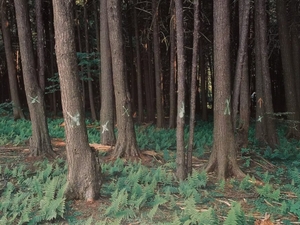
When United Flight 93 crashed in Somerset County, Pennsylvania, on Sept. 11, 2001, Tim Lambert was on his way to work at a public radio station. In the newsroom, he saw the televised images of the wreckage in a field near Shanksville and thought the trees looked familiar. Later that night, his dad left a message on his answering machine saying, “Those trees are ours.”
Lambert and his family, by chance, became a part of the story of Flight 93.


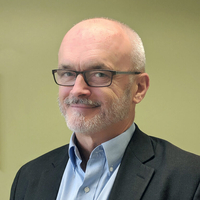

In Episode 45, you’ll hear from Pennsylvania Capital-Star Editor-in-Chief Tim Lambert. For 25 years, he has reported on Flight 93, kept in contact with many of the victims’ families and shared their stories.
You’ll also get a weekly news wrap-up from Evening Wrap newsletter writer Danielle Gaines. She’s got you covered on the latest about: the uneven growth of labor unions, wrinkle in the national school voucher debates and the latest on the Rhode Island and New Hampshire election results.
Episode produced and edited by Mallory Cheng. Music for Stories From The States composed by David Singer.
Got questions? An episode idea? Email us at [email protected].
Subscribe to Stories From The States on Apple Podcasts, Spotify or YouTube.
Photo: Tim Lambert, center, interviews Somerset County Coroner Wallace Miller, left. Former WITF News Director Damon Boughamer on the right records the conversation at the Flight 93 crash site on Oct. 6, 2001. (Courtesy of Tim Lambert)
Stories From The States is a production of States Newsroom, the nation’s largest state-focused nonprofit news organization, with reporting from every capital. At this pivotal moment in American democracy, our veteran journalists from all 50 states are reporting the consequences of government decision-making. By zooming in on one story each week, Stories From The States contextualizes and gives a human voice to what is happening now.

Transcript was created using an automated software.
Chris Fitzsimon
This is Stories From The States. I'm Chris Fitzsimon here at States Newsroom. We know there's a lot going on around the country in every state capital, so thank you for being here. First, as always, we're jumping in with the news of the week from around the country. This week, we're taking a look at the uneven growth in labor unio...
Transcript was created using an automated software.
Chris Fitzsimon
This is Stories From The States. I'm Chris Fitzsimon here at States Newsroom. We know there's a lot going on around the country in every state capital, so thank you for being here. First, as always, we're jumping in with the news of the week from around the country. This week, we're taking a look at the uneven growth in labor unions throughout the states. Also, we have an interesting wrinkle in the national school voucher debates. In West Virginia, some parents are filing a lawsuit to block its expansion. We'll also hear a quick political roundup on the Rhode Island and New Hampshire election results, and even a little on the unusual GOP midterm Republican convention. And it has now been 25 years since the terrorist attacks in Shanksville, Pennsylvania, New York City, and Washington D.C. one person in our own newsroom found himself by chance a part of the story of United Flight 93. Later in the show, we'll chat with Pennsylvania Capital Star editor-in-chief Tim Lambert about his connection to that flight. But first, let's check in on the news with our States Newsroom newsletter author Danielle Gaines. Hi, Danielle. How are you this week?
Danielle Gaines
Hi, Chris. I'm great. How are you?
Chris Fitzsimon
Good. Have you been watching any of the tennis U.S. Open? It's pretty wild.
Danielle Gaines
I'm obsessed with the U.S. Open. We went a few years ago as a Christmas gift to my spouse, and I love watching it. So many Americans in the semifinals. So that's really exciting. And I'm really excited because you know Francis Tiafoe was in the semifinal and proud Marylander.
Chris Fitzsimon
That's right. All right. Well, let's talk about what's going on in the news. So, one of the themes I know that you have been writing about, noticing this week, is labor unions. Tell us what's happening.
Danielle Gaines
So, in honor of Labor Day, we had a story about labor union membership in the United States. So, it is continuing to climb, although it remains sharply divided by the politics of individual states. So that's kind of an interesting dynamic. There was this report on the State of the Unions from the University of Illinois, my alma mater, which is not exactly why we're talking about it. But! And they found that across the country, 411,000 union members were added last year. That brings the total to about 14.6 million American workers who are in unions, about 10% of the workforce. And while it went up throughout the country, it is sharply divided between states that have right to work laws. So the country is about equally divided. 26 states have right-to-work laws. Union membership in collective bargaining states is about 14% and in right-to-work states, it is about 5%. You know it's also like important to point out that it's also so different from the peak. So, union density was at its highest in 1954 in America, and then about a third of workers belong to unions, and today, that's obviously much lower.
Chris Fitzsimon
Well, another pretty hot debate that's been going on for decades, literally in the country, is the whole school voucher debate. Tell us what's happening there.
Danielle Gaines
This was an interesting story out of West Virginia. A little interesting wrinkle in the voucher debate. So, parents from Mingo County. I love all the names out of West Virginia. So parents in Mingo County have filed a lawsuit because one of their local schools is set to close, and that's happening during this backdrop of West Virginia lawmakers expanding the state's voucher program to be universal. It's called the Hope Scholarship. It gives students around $5,400 this school year to go towards private school or homeschooling. More than 25,000 students are using the program, and lawmakers allocated $277 million for the Hope Scholarship. And so the parents filed this lawsuit, saying, you know, that this voucher program specifically is having a detrimental impact on their ability to get a free and fair education.
Chris Fitzsimon
Yeah, it's really going to be interesting to see what happens, and I guess there's always been a big dispute in the states that have these massive voucher programs. What the oversight and regulations are, which is another debate, I guess, playing out.
Danielle Gaines
Yeah, so you know, West Virginia created their Hope Scholarship in 2021, and at the time, it was created to be the broadest education savings account program in the country. So, as we see things playing out there, we can kind of see where things might be headed elsewhere.
Chris Fitzsimon
Well, let's talk politics. We are still having primary elections this week.
Danielle Gaines
Yeah, so much politics. Let's see. Well, Rhode Island and New Hampshire had elections this. Week it was kind of fun because the elections were on two different days rather than being both on Tuesday.
Chris Fitzsimon
Wednesday. That caught me off guard.
Danielle Gaines
Yeah, Rhode Island moved theirs for the Labor Day holiday and had some really interesting outcomes. So sitting Democratic Governor Dan McKee became the first incumbent to lose his primary election bid in more than 30 years. He fell to challenger Helena Fox in Providence, the city, the capital city. The sitting mayor lost to a progressive challenger, so that's interesting. And then some drama continuing now in the second congressional district, where a businessman who participated in the January 6 riot at the U.S. Capitol has won the Republican nomination in the second congressional district.
Chris Fitzsimon
Well, and then New Hampshire, tell us what's happening.
Danielle Gaines
Yeah, New Hampshire has this interesting. Well, it is unique system for awarding state contracts. So it's called the Executive Council. The Executive Council is elected. Currently, it is dominated by Republicans and Republican members of the council have stood in the way of funding for Planned Parenthood for several years. So Planned Parenthood, through its PAC, is now getting involved in the race for executive council, which is something that many people don't know about, including many people who live in New Hampshire. So that's adding a new dynamic to the upcoming general election.
Chris Fitzsimon
And in case it all wasn't confusing enough, we actually had a midterm convention this week.
Danielle Gaines
Yeah, so a rare midterm convention by the Republicans happening down in Texas. It's interesting so far. President Donald Trump on the first night rallied the folks in attendance. He promised a $5,000 Trump dividend if the Republicans managed to keep both chambers of Congress. So that's interesting. It's not the first time he's promised money. It's more than a trillion dollars.
Chris Fitzsimon
Yeah, I probably wouldn't buy something hoping that that would that you would be able to pay your credit card bill off with that.
Danielle Gaines
Yeah, I wouldn't bank on it. And then, of course, you know, one of the the big surprise of the night, more surprising than that, I don't know, was the fact that Pennsylvania Democratic U.S. Senator John Fetterman appeared. So you have some Republicans begging off and not going to this convention. You have other Republicans facing questions about their relationship to Donald Trump, and then you have the Democratic U.S. senator from Purple State, Pennsylvania, appearing.
Chris Fitzsimon
I have a feeling he will remain in the news for quite a while, including after the election. I'm going to guess.
Danielle Gaines
Doesn't seem to be taking himself out of it.
Chris Fitzsimon
No. All right, we have time for one last thing. What's happening?
Danielle Gaines
Well, you know, I came upon this really interesting story in South Dakota. So we all know that you can get your vanity plates for your cars, and in South Dakota they have a conservation plate, and thousands of drivers are driving around with this habitat conservation license plates, but they actually haven't made any financial contribution to protect habitat or wildlife because the state has a really interesting two-step process in order to make that happen. So you buy the license plate from the state, that's just regular license plate, and then you have to take an extra step to buy a decal from the conservation groups that actually finishes the picture of the license plate. So people are driving around with half-finished license plates that haven't supported the cause.
Chris Fitzsimon
And it feels to me like that makes it a little more difficult. I mean, that I bet a lot of people don't realize that when they once they get the plate, I think most people think they're done.
Danielle Gaines
Yeah, it it's definitely less successful than other state efforts, and so you had some advocates calling attention to that dynamic.
Chris Fitzsimon
Well, I'm glad you did. So, Danielle, thank you as always for being with us. Have a great week.
Danielle Gaines
Thank you.
Chris Fitzsimon
To stay up to date on the latest news happening in the states, subscribe to Daybreak and Evening Wrap. To get those newsletters in your inbox, go to newsfromthestates.com/subscribe. We are now remembering the 25th anniversary of the September 11th terrorist attack, we all remember exactly where we were on that day in that moment. 2,977 people lost their lives. Today, we're zooming in to United Airlines Flight 93. That was the passenger flight hijacked by four Al Qaeda terrorists. The hijackers planned to crash the plane into a federal government building in Washington, but failed when the passengers and crew members fought back, forcing the terrorists to crash the plane into a field near Shanksville in Somerset County, Pennsylvania. Well, as fate would have it, one of our States Newsroom journalists found himself by chance connected to the story of Flight 93. In a moment, we'll hear from Pennsylvania Capital Star Editor in Chief Tim Lambert. We'll be right back.
Moses Esheit
Hi, this is Moses Eshet, product associate at State's Newsroom. At States Newsroom, we believe journalism should be fair, fearless, and. With reporters working on the ground in all 50 states and Washington D.C. we provide nonpartisan coverage of all the state issues that matter most to you. You can subscribe to our work by going to statesnewsroom.com/subscribe.
Chris Fitzsimon
Well, Tim, thank you very much for being with us.
Tim Lambert
Great to be here.
Chris Fitzsimon
I think most folks who remember that awful day, 25 years ago remember that one of those flights, Flight 93, was headed to Washington. The brave passengers and crew members forced the plane down in a field near Shanksville, in Somerset County, Pennsylvania, which it turns out was a very familiar location to you.
Tim Lambert
Yeah, it was. It was actually part of the crash site. Was was on my property, if you remember the video, which was like the only images we had from from Flight 93 in the days after 9/11. There were a line of hemlock trees in the background, maybe 10 yards from the crash site, that were charred and and burned up, and that was where my property line started. And investigators later told me that the first class section and the cockpit had broken off of the jetliner and blew into that tree line. So that that made my land part of the crash site.
Chris Fitzsimon
Well, when did you realize that that that your land was involved? How did that happen?
Tim Lambert
There were there were some hints throughout the day, but it was such a busy day as a journalist. You weren't really allowed to think that much. It was just a blur. But on the way to work, I was driving from Gettysburg to Harrisburg, Pennsylvania. That's probably about a 45 to 50-minute drive, and I was speeding along because I figured the state police had enough to worry about that day, and I just had to get to work. And that's when I heard that a plane had gone down near Shanksville, and my dad grew up in Shanksville. My grandparents had lived there until their passing, and you know, I figured he might know some people where this happened, or he'll know exactly where this happened, and so he can help me out and and maybe getting an interview to have to make sense of of what was going on in this little community. So I was very familiar with Shanksville at the time, and then later in the day, around 4:30 in the afternoon, I had stopped in the newsroom and just sort of looked at the television, and there was a reporter standing on the corner of the Shanksville Lambertsville Road, and that's the first time that it occurred to me that we still owned property, and I knew that property was very close to that intersection.
Chris Fitzsimon
What was going through your mind when you saw that?
Tim Lambert
I just was stunned, really, that this was even a possibility. Right, that's when it first entered my mind. So I was sort of amongst the chaos of that day. I was sort of just dumbfounded, and I was asking a few people who had talked to people that were at the site, talked to reporters that were already at the site, and they kept saying it was a reclaimed strip mine, so I knew our property still had trees and ponds and you know flowers and things like that, and it wasn't it wasn't developed at all. So I kind of was wondering what was going on, and then I got home about 1:30, 2:30 in the morning, so September 12, and on my answering machine because we had answering machines, not voicemail back then. My dad had left a message that said, "I don't know if you've been watching the news, which always makes me laugh because I'm like, "Dad, I'm a journalist. Of course I was. But he said, "Where that plane went down in Shanksville, those trees are ours. And I sort of looked at the phone, wondering what I just heard, and letting it sort of sink in. And I immediately called him back, and he was describing, you know, I know that land. I walked in those trees. I talked to a couple people there who told me the area it was in. He goes, "Those, that's our land. And he said, "What should we do? And I just said, I think they're a little busy right now. When they need to find us, they will.
Chris Fitzsimon
Yeah, you've done amazing reporting on this, and over the years since this has happened, and you and I've talked about this before. And I, I wonder what was it like the first time you actually went there? You, you were a journalist, but you're also a human being, you know, and were affected as journalists by what we see, but not many of us have must have that feeling of this insane, well, disaster, terrorism, all the things that would be your adrenaline would be pumping as a journalist, and then to know that it was your land.
Tim Lambert
Yeah, it was a it was a difficult process. Really, we found out officially that our site, our land, was considered an essential part of the crash site. I think it was around the last week in September. I was the only out of Somerset County landowner, so it took a little while to track me down. And my dad had transferred the land to me several years before, so I think things were a little difficult in finding. Somebody at that point, but the Somerset County coroner confirmed that you know we were part of of the crash site, and he invited me to visit. Now the first thing I thought about was nobody has been to that site since September 11th. Like it was it was closed off. The FBI had investigated for a couple of weeks, and once they got the black box, they turned the site over to the Somerset County coroner's name was Wallace Miller, so immediately I'm thinking I'm going somewhere nobody has has gone before, and I'm going to see things that nobody has seen. and And Flight 93 was sort of in the public eye for what the passengers and crew did to to try to retake the plane, so but nobody knew the site. Like nobody had paid any attention to. It was always this field in Pennsylvania, and I was going to this field. So he invited me to visit, and I just said, "Look, I'm going to level with you. I'm a journalist. And he said, "What are you going to do? Report on yourself?"
Chris Fitzsimon
Good question.
Tim Lambert
You know, yeah. Like there's there's no book on this. I can't open up a book and say a journalism you know book and say let's go to the chapter where terrorism occurs on your land and you have to cover it so he allowed me to record the conversation I brought some folks with me to take pictures and I was a radio reporter at the time at a public radio station in Harrisburg, Pennsylvania WITF and I actually had to have my dad meet me. He lived in Pittsburgh, which is opposite of where I was coming from, and take me to take me out there because I didn't know where the land was. I couldn't remember. It was in the middle of nowhere, and we get there, and we had to go through the locked gates. Our name was on a list that the sheriff deputy who was guarding the property kind of waved us through, and Wally was there with cleanup crews. So they were sort of going through the land and picking things up, and you know, just going going over the property. And we got out of the car after we parked, and the wind picked up, and you could smell jet fuel. And this was weeks after the like overwhelming smell of jet fuel, and then Wally came over and started started explaining what had happened, and you know the plane had been traveling about 560 to 580 miles an hour, and it was rocking back and forth according to witnesses, and then it sort of like went up on its belly and then just nosedived into the ground, and the cockpit and first class sections broke off and blew into the tree line, and the rest of the plane just sort of telescoped on itself and just sent debris everywhere. And when he said that, I asked him, "Hey Wally, what what did you find from the plane? And he bent over and he picked up this piece of metal that was maybe the size of a quarter, and he said stuff like this. Anything that doesn't belong in the woods looks like it doesn't belong in the woods is from the plane. And I've had this experience, Chris, where it never happened again. Like I just had this one experience where when I blinked, I literally heard like a shudder, like a camera shutter. And when I opened my eyes again, Flight 93 was all around us. Like all I could do was look down. All of us could do is just look down at the debris on the ground, and we just couldn't wrap our heads around the fact that this was once a 757.
Chris Fitzsimon
Wow, you've gotten to know the family members of some of the folks who were on that plane, and I wondered if you could tell us about them or some experiences to sort of make this to get people to really understand what happened in a human way.
Tim Lambert
Sure, I had a chance to experience visiting the site and visiting the site with family members for nine years, so I was able to be up close and personal with with several of them. The very first family member I met was in December of 2001. The National Park Service was holding a meeting in Shanksville to discuss what to do with the site. Would it become a national site? Would it become something the county did? The state? Like what? What did the community want? So I drove out to the site from Gettysburg and I went to the crash site first because I wanted to center myself. I didn't know how landowners were going to be sort of, you know, handled there, and I wanted to remember what what we were going to talk about, and that was what those 40 passengers and crew members did that day. So I just was out there. The sun was going down, and Wally drives up, and there's a car behind him. And I wanted to get out of there because I knew it was a family member who was in town for the for the meeting. And Wally calls me over before I could get to my car, introduces me to the family of Sandy Bradshaw, who was one of the stewardesses who told her husband in a phone call from the plane that she was boiling water to throw on the terrorists as they tried to retake the plane, and her husband was there, and I think it was either her mother or his mother, and I just told them how sorry I was, and you know the site is is there for them whenever they wanted to go, at least my my part of it was. And you know, I just wished them well and told them if they needed anything to get in contact with me through Wally. And then later, I went to the only place in Shanksville where you can get something to eat, and I had a coffee. And the the mother of Sandy or the husband came up to me and making small talk, and she said, "So you're a journalist, right? And I said, "Yep. And she just looked at me and said, "Tell their story. So that was sort of my my mantra from then on. I was going to tell the story of Flight 93, and through the years, I was able to meet these family members a couple of months later, in February of 2002, Wally put together a meeting of the families, family representatives, to talk about the site, talk about what they were getting back in terms of possessions and remains. And he asked he asked me to come along, and I somehow it came up that I was a landowner, and during one of the brakes, a woman came up to me and and she said, "Are you Tim? You're one of the landowners. And I said, "Yeah. She said, "I'm Debby Borza. Debby, her daughter Deora Bodley, was on the plane. She was the youngest passenger on Flight 93. And Debby looks at me and says, "I'm really sorry. You're part of this. I'm I'm sorry. And all I can think about was you lost your daughter on this plane, and I lost some trees, right? And she apologized, and and and from that moment on, Debby and I, we were simpatico, we had a bond, and and I just couldn't believe the compassion that she had for, you know, me being drawn into this, and my family being drawn into this, and what would be a very sort of long and stressful, you know, 10 years, nine years. So over the years, it was just a matter. You know, I've met Debby several times at the site, and we would just talk and walk. And on the fifth anniversary of the of the crash, Wally calls me up, and in the months before that, and says, you know, you should come to, you should come to Shanksville this weekend. And I'm thinking, why would I want to come to Shanksville on a Saturday night in July? And I just started dating someone who is now my wife, and I was like, Wally, I don't know, that's a weird request, man. And he was like, Debby wants to throw a surprise birthday party for you at the Pine Grill, which was a local restaurant, so I went out and a bunch of families were there, and they sang happy birthday. And Amy got to meet all the families that I had known, and and she sort of got to see a little glimpse into what the next few years would be like to be in this world. And then I invited a couple of them, the families, to come down to the site the next day and do kind of an interview about where they were in terms of dealing with where the memorial process was, where they were in in dealing with their grief, and we just had a wonderful conversation there. And you know, it was a conversation that they wouldn't have with any other journalist, and they wouldn't have it at any other place. You would only be able to get that sort of raw emotion standing in those gates, and and talking freely, and then you know they they were hard on me because they wanted to know why the land hadn't been sold yet, so I didn't get a free pass. That's for sure.
Chris Fitzsimon
Yeah, everybody obviously deals with grief, and I just I can't even imagine what that was like to to be a family member of someone on that plane, was there a common thread that ran through the conversations that you had, or did or did each family member deal with it distinctly?
Tim Lambert
I think each family member dealt with it distinctly. They all found different ways to channel their grief. I think, you know, that that meeting in Princeton, New Jersey in February of 2002 that I mentioned earlier. I mean that was that was grief on display, raw in some cases. You could see families who were struggling and they they had some outbursts that weren't weren't pretty. And then a year later, I would see those same families at the first anniversary and they were smiling, and they were with their children, and they were walking in the high grass as the as the land started to heal a little bit. And then through the years, it would just be different points of you know Debby Borza, she threw herself into the memorial process. There were several families who who that was what they were going to do. That's how they channeled their grief. They were going to make sure this memorial was built, that it was done right, and that the story was told of the passengers and crew and their bravery. So that was really the the most families that I had talked to who who were involved in the memorial process. But it was always different. Like Kenny Nackey, who lost his brother Lewis. They called him Joey on the plane. He told me that he was at the site one time when a couple of bear cubs came out and started wrestling not far from where he was sitting, and you know he said it reminded him of him and his brother kind of roughhousing, and he was like, I turned a corner that day at just. Because I, it was a sign. He saw that as a sign from his brother, so it was it was just stuff like that over the years. That it was just an honor to be able to to do that. And and there weren't many journalists, if any, who were doing that kind of work. And I'm not bragging about it. I mean, I certainly had the the access, but I wanted to make sure what I was doing was respectful and was telling the story of of the site and the people who were impacted and found that site to be incredibly important in their lives.
Chris Fitzsimon
And finally, before we let you go, what's on the site now? Tell us about the memorial. Tell us what is on that land now.
Tim Lambert
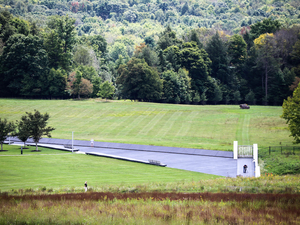
The site has a memorial that covers 2,200 acres. The original crash site was about 48 acres, so the National Park Service wanted to preserve the rural quality of of that site, the rural nature, the tranquility there. So it's it's a very large area, but when you drive in, you you are greeted by a giant tower of voices. It's a wind chime, has 40 wind chimes. That it's very windy up there in this rural part of Somerset County, so you can hear sort of what they like to think of the passenger speaking to us as we as we enter. And then you drive a little bit, and you come to the visitor center, and there's an education center there. There's a visitor center where you can learn about the events of that day and and the impact on on Shanksville and the surrounding area, and the memorial process. And then you know if you come out of that visitor center, you you follow this granite black walkway that takes you to an overlook, and the overlook is the path of the plane. So on September 11th, 2001, the plane would have flown right over top of our heads if we're standing at that overlook. And you look down on the field and you kind of get the 30,000 foot view of the memorial. You see the boulder that they've placed there, which is approximately where the plane hit hit the ground. You get to see what they call the bowl area, where the the trees were that were were all taken out after you know they were burned and soaked with jet fuel and things like that. So it's very peaceful and tranquil. And then you can take a couple of walking paths down to the second part of the memorial, or you can drive, and that takes you to what they call the Wall of Names. And the there's slabs of of granite there that have the names of the 40 passengers and crew individual on each slab. There's a wooden gate that marks the entry into the crash site. It is made out of the native hemlock trees, and that only opens on remembrance anniversary date. So on September 11th every year that opens, and family members walk down to the site itself. The site itself is is closed off from the public, which I think is appropriate because it is a cemetery, and there's still at least the last time I was there five years ago, there's still debris from the plane there. A very telling reminder of of Flight 93 and the story that keeps telling keeps you know keeps coming to life. So the families get a chance to visit the site and they they get to spend time with each other, which maybe that's the only time they see each other every year, every five years. But you know they have a chance to to grieve in their own way because another family member told me that you know their grief never got to be private they were very public and having to be out front in this so that is a place where they can be themselves and and grieve their loved ones.
Chris Fitzsimon
Well, such a remarkable story and thank you for telling it. Thanks for thanks for being here. We appreciate it.
Tim Lambert
I appreciate the opportunity to to remind people of of what those passengers and crew did that day.
Chris Fitzsimon
Well, that's our show. Thanks for listening to Stories from the States. I'm Chris Fitzsimon. Mallory Cheng produced and edited the podcast. David Singer produced our theme music. To stay up to date on all the latest episodes, subscribe now to Stories From The States, a podcast from States Newsroom, available wherever you listen to podcasts. We'll talk to you next week.