Blown away: The wind turbine project caught in a Trump battle
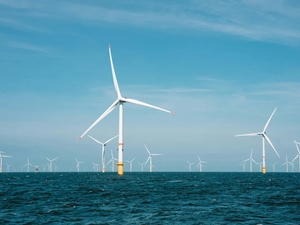
If you’re standing along the beach in southeast Rhode Island, you might see some wind turbines out in the ocean. They are part of a major project meant to build up the renewable energy supplies in Rhode Island and Connecticut eventually powering 350,000 homes.
The Revolution Wind project was about 80% completed when the Trump administration abruptly paused its construction. Although work has now resumed, one tradesman working on wind infrastructure projects is worried about the future of the industry.






In Episode 5, we’re diving into one project that suffered a blow in Trump’s war on offshore wind as a renewable energy source.
We’ll hear from Nancy Lavin from the Rhode Island Current about what led to the Revolution Wind project being suspended and the politics surrounding renewable energy efforts – who is lining up for and against these projects.
We’ll also chat with Nick Reynolds, a member of Local 195 of District Council 11, a local painters’ union, who worked on the project.
Finally, Evening Wrap newsletter author Danielle Gaines shares the top stories she’s watching.
Episode produced and edited by Mallory Cheng. Music for Stories From The States composed by David Singer. A special thank you to Christopher Shea from the Rhode Island Current.
Got questions? An episode idea? Email us at [email protected].
Subscribe to Stories From the States on Apple Podcasts, Spotify and Youtube.
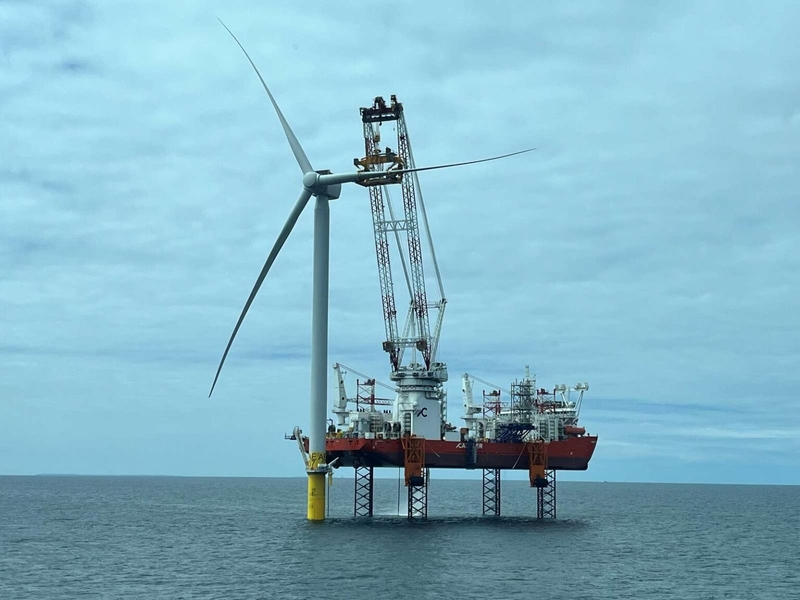
Photo: One of the installed Revolution Wind turbine sitting along the coast of Rhode Island is shown. (Photo courtesy of Ørsted)
Transcript was created using an automated software.
Chris Fitzsimon
This is Stories From The States. I'm Chris Fitzsimon. Here at States Newsroom, we know there's a lot going on around the country every week, in every state. This week, we're talking wind turbines, specifically the ones you'd see over big bodies of water to help generate power. The Trump administration isn't a big fan, apparently,...
Transcript was created using an automated software.
Chris Fitzsimon
This is Stories From The States. I'm Chris Fitzsimon. Here at States Newsroom, we know there's a lot going on around the country every week, in every state. This week, we're talking wind turbines, specifically the ones you'd see over big bodies of water to help generate power. The Trump administration isn't a big fan, apparently, of the renewable energy resource. They've canceled millions in federal funding to support wind infrastructure, but states like Connecticut and Rhode Island are still investing in renewable energy. One of their major collaborative projects called Revolution Wind was 80% completed, and developers thought they were in the clear, but the Trump administration abruptly paused the project in August, which was met, as you'd imagine, with a mix of emotions.
Nick Reynolds
Just so uncertain. It's not a great feeling when we rely on these jobs and these projects to feed ourselves.
Chris Fitzsimon
Today, we're heading over to the New England coast to chat with a tradesman who worked on the Revolution Wind project, but first we'll talk to a Rhode Island reporter covering the situation.
Chris Fitzsimon
The Revolution Wind project was already 80% finished, but was abruptly paused by the federal government. In response, the developers of the project filed a lawsuit against the Trump administration. Now, construction is back on after a DC judge issued a preliminary injunction. To give us a rundown about what's going on along the New England coastline is Nancy Lavin, she's a senior reporter at the Rhode Island Current. Nancy, thanks for being here.
Nancy Lavin
Thank you for having me.
Chris Fitzsimon
Well, Nancy, give us some background. Let's try to understand what's actually happening. Tell us about this Revolution Wind project.
Nancy Lavin
Yeah, so like many of the offshore wind projects that are, we're seeing under construction or under development up and down the coast, this has been in the works for years. It is a joint project from Orsted, which is a big Danish renewable energy company and another consortium of overseas development companies under the sort of umbrella of Skyborn Renewables. 65 turbines. It's about 15 miles south of Rhode Island, somewhat close to the Block Island Wind Farm, which everyone in Rhode Island will be the first to tell you, was the first in the country, offshore wind farm. That's only five. However, this is 65 and once it's up and running, at its peak, it would generate enough electricity to power 350,000 homes. Rhode Island and Connecticut are the two states that have already, since 2019 been under contract to buy power from this when it is completed. The federal review process, it takes many years. There's a lease, then there's scrutiny about environment, construction, impact on fisheries, impact on vessels traveling, marine safety. Rhode Island is also unique in that we have our own coastal Regulatory Council that also gets to weigh in on any offshore wind projects within 30 miles of our state coastline, even though this process is largely governed by the federal government. So all of that was done. They got their final approval in November 2023. 1000 labor workers under unions in Rhode Island have been working on the projects. There's been a lot of investment in ports in Rhode Island and Connecticut to sort of create the equipment that will lift these massive, you know, skyscraper turbines into the air and the water. There's all this workforce training that's been going on to train these specialty technicians and how to construct and maintain and operate these turbines. And then all of a sudden, August, Friday afternoon ruined my weekend.
Chris Fitzsimon
Well, it probably ruined a lot of people's weekend.
Nancy Lavin
Yeah, seriously, the Trump administration comes out with the Bureau of Ocean Energy Management, which is the agency that really oversees offshore wind permits, sends a letter to the developer of the project, saying, 'Stop, halt national security' and not a lot more detail.
Chris Fitzsimon
Okay, to help us understand this project was what roughly 80, more than 80% finished already when it was stopped?
Nancy Lavin
Yeah, so they had 45 of the 65 turbines built the two sort of underseas cables that connect the wind turbines to the substations on land where they, you know, connect to the electrical grid were also almost complete, as well as these two pair of substations where the cables sort of all connect. The exact completion date. It was supposed to be up and running about a year from now, but the actual construction was, you know, almost done. There were about a dozen workers actually out at sea and stuck there, just kind of like milling around for two weeks and then before they eventually went back and docked in Connecticut, because they were like, what do we do?
Chris Fitzsimon
What was the reaction when this unexpected work stoppage happened at this point?
Nancy Lavin
Distress, outrage, uncertainty, a mix of reactions, and I think it sort of varied depending. And I will say there was also some celebration, because even though Rhode Island is well known as a Democratic stronghold, we also have a very strong commercial fishing industry. And I have seen covering offshore wind development, particularly at the state level, through the state coastal regulatory process over the last five years, many of the commercial fishermen are strongly opposed to these wind projects. They worry about their safety. They worry about the loss of species. And to be fair, they are recording fewer landings. They are less able to catch the species that they are trying to catch, which is, you know, squid, Atlantic cod. A lot of the things that Rhode Island is known for in the area, however, sort of what the federal government and what most scientists and researchers have said in their very extensive environmental reviews is that's not necessarily isolated to offshore wind. That's because of climate change and migration patterns and other disruptions and commercial activity in the water. So those the fishermen, were celebrating. Everyone else, labor leaders, environmental advocates, state officials, our congressional delegation. Not happy.
Chris Fitzsimon
Just to be clear, folks who had reservations about this or who were opposed, I assume, had chance to speak in this. This was you mentioned. This was a long process. It's been several years. It went through a lot of hoops. So all sides that seems like would have had a chance to have been heard before now.
Nancy Lavin
Now, yes, although they would argue that the process, you know, has been kind of flawed and rigged from the start. So the interesting thing is, there's a big overlap in Rhode Island, and I think in other coastal states, between sort of the fishing opposition and right wing backed anti renewable energy groups. So there's actually this group in Rhode Island called Green Oceans, which, by its name and by its branding on its website, you think is an environmental group. It's not. It was started by a group of residents in one of the coastal towns in Rhode Island opposed to offshore wind. They are funded by a lot of national right wing conservative groups, and are now actually involved in these federal court cases, which is interesting that they've been granted permission to sort of intervene in federal cases in Rhode Island and DC, but perpetuating a lot of misinformation, and really disinformation about offshore wind, killing whales. It certainly didn't help that another wind project in Massachusetts, Vineyard Wind, over the summer, one of the turbine blades fell off into the water, which was determined to be a manufacturing error. But, you know, certainly solidified all every fear and every concern about the safety of these projects overall, in the mind of detractors.
Chris Fitzsimon
What was the reaction to unions, labor officials and folks who are worried about jobs?
Nancy Lavin
Yeah, they were not happy. So you know, our in Rhode Island, like many states, big labor state, the labor organizations, have a lot of influence also in state politics, and labor leaders and state officials have really worked over the last four years to kind of create this quote, unquote, blue economy in Rhode Island, which is not just about the actual projects being built next to Rhode Island that we're buying power from, but even projects, you know, in New York and New Jersey, that our ports now have this specialty equipment to, like, lay the turbines upright and ship them out to sea, and we have all of these specialized workers who know how to operate them, and who know how to maintain them, and who are taking these specialty apprenticeship programs that have been created in Rhode Island. There was about 1200 union jobs that have already worked on this particular project. And you know, there were rotations going out to sea every two weeks in the wake of the stop work order, some of those laborers, depending on which trades they were in, have actually since taken other jobs because they were like, we can't just sit here and sit by the phone waiting to see what the federal administration is going to do. So a lot on the line.
Chris Fitzsimon
I just want to go back to something you said earlier this just to show how massive a project this is. 350,000 homes will eventually be able to be powered by this project?
Nancy Lavin
Yes, and both Rhode Island and Connecticut have not just goals but mandates around decarbonization. So in Rhode Island, we, under state law that was passed a few years ago, have to create or buy credits to offset 100% of our electricity use by 2033 this project was already baked into all of the calculations about our ability to reach that because everyone assumed it was a done deal. And this is, you know, our only major off scale wind project. Things like solar, things like geothermal, are like starting to become more popular, but really do not sort of make the impact that a massive offshore wind farm does. Rhode Island also has a mandate by 2050 to hit zero net carbon emissions. And starting, I believe by 2030 people in the state can sue if we don't meet these incremental benchmarks of reducing our carbon emissions X percent below the baseline, which is a 1990 level baseline. And again, Revolution Wind was already baked into all of our assumptions about whether we're going to be able to hit these incremental mandates.
Chris Fitzsimon
You mentioned that one of the points of opposition from the Trump administration was national security, which seems odd. Do we know what that means? What's the national security risk in this project?
Nancy Lavin
So the initial letter really gave very little detail. It referred back to this memo that this executive order that Trump signed on his first day in office, which made pretty clear, we're pausing reviews of all wind projects that are not yet fully permanent, because we want to review them against national security and environmental and energy concerns. No one thought revolution wind was really at risk because it had already been permitted and was like mostly built, and then eight months later, the developers get this letter saying, hey, national security, remember this executive order from eight months ago? This is why the letter was two pages, offered very little detail. However, the developers and then the attorneys general for Rhode Island and Connecticut have since sued the Trump administration and in the developers lawsuit, which is was filed in DC and has been sort of playing out the process a little bit faster. Filings from the Justice Department on behalf of the Trump administration offer a little bit more explanation into how they're justifying this, which is essentially their argument. And the testimony from federal environmental regulators suggest that even though this project got final approval in November 2023 it wasn't totally final, because according to these federal regulators, they gave the developers a little leeway on some of these additional pieces that were needed, including some details about how building and operation of the wind project would interfere with Department of Defense, or War Department, as it is now being called, at least in these legal documents and by the administration, with Department of Defense boats and with the electromagnetic waves from and frequencies From the turbines underwater, how that would interfere with defense signals. The other piece that they claim was sort of still under review was this detail about how the project would interact with NOAA's ability to do research into fisheries in the areas. And they say these things weren't turned in. 'We asked for them. We asked for them, and then finally we issued a stop work order'. The developers, in response, filed their own, you know, set of responses, which say we've been meeting with you guys every two weeks since the Trump administration took office. They say they met with the various agencies two days before the stop work order was issued. None of this was ever said, According to the developers in their testimony.
Chris Fitzsimon
Just to be clear, from the timeline that you gave us, this project sort of had the go ahead or wasn't, at least wasn't objected to the first time President Trump was in office, so the Trump administration at some point signed off on it, or at least didn't stop this project.
Nancy Lavin
Yes, it was actually under the first Trump administration that the Pentagon gave some preliminary sign off on the defense piece of it, ironically.
Chris Fitzsimon
What do we think changed their mind about this project?
Nancy Lavin
It's really not super clear, still. You know, they're offering this additional detail, but the they actually include in the exhibits in the court case, copy of the agreement between the developers and the Department of Defense, and the agreement never says there are these outstanding like written documentations that you need to turn in. It just says you agree, and we agree. You're going to let us know if anything comes up, and if you change the configuration of the turbines, or the number of the turbines, or anything like that.
Chris Fitzsimon
Okay, with all that background, where are we? What happens now?
Nancy Lavin
Work has resumed. Our governor and the Connecticut governor had a big sort of parade, if you will, in New London, Connecticut, which is where some of the vessels have been docked, sort of celebrating. Work is back. We're back on however, if the administration's record on all of these other state lawsuits on everything from research funding to vaccines to immigration policy, or any indication there will be a challenge to a higher court, and this was actually only in one of the cases that this judge in DC ruled that the work can continue. So still pending, although it obviously would likely to concur with this ruling, is the case in Rhode Island by the attorneys general, which is also arguing that the work should be able to resume.
Chris Fitzsimon
Well, Nancy, thanks for being with us and helping us understand what's at stake here. We appreciate your time.
Nancy Lavin
Thank you for having me.
Chris Fitzsimon
As of this recording, construction on the revolution wind project is still in progress. However, Rhode Island's second attempt to build more wind turbines along their coast has not been as successful, according to reporting from the Rhode Island Current a contract between Rhode Island Energy and South Coast Wind fell through. That project would have provided enough electricity to power 125,000 homes. A spokesperson for Rhode Island Energy mentioned the federal uncertainty around the offshore wind industry was a reason why contract negotiations were cut. The project is getting the attention of the Bureau of Ocean Energy Management that recently won a case to let them reconsider South Coast Winds federal permits, which were already approved by the Biden administration just last year. Now it's uncertain if or when the South Coast wind project will happen. A tradesman working on wind infrastructure is worried that might be what the future of all these projects could be. In a moment, we'll chat with Nick Reynolds, he worked on the Revolution Wind project. We'll be right back.W
Moses Esheit
At a time when so many communities are losing their local news outlets. Today's newsroom is filling a gap. We are now the nation's largest state focused nonprofit news organization with reporters based in every state capital and Washington DC. But we can't do it without your support. Your contributions allow us to produce award winning journalism and deliver it to you for free. No pop ups, no pay walls. This is a crucial time to support local journalism, and every bit helps to give. Go to states newsroom.com/donate,
Chris Fitzsimon
Imagine this. You go through extensive training to be part of the construction of an offshore wind project, and then it abruptly stops, as we heard Rhode Island current reporter Nancy Lavin say it caused a lot of distress, outrage and uncertainty for many folks working on the Revolution Wind project, including Nick Reynolds. He's a member of Local 195, of District Council 11, a local painters union, and he joins us now, Nick, thanks for being here. Tell us a little bit about your work. First, what is your work like?
Nick Reynolds
Yeah so the trade is industrial painting. So I prep and paint steel, anything, steel, bridges, tanks, wind turbines, wastewater treatment plants, infrastructure.
Chris Fitzsimon
What is a typical day like? How do you paint a wind turbine? It must not be easy.
Nick Reynolds
Yeah. So most of the work that I've done has been out of band lifts. Those are the machines that you see when you see like new construction of buildings. Those, a lot of times they're like big orange machines, four wheels with a basket that range anywhere from 40 feet to 160 feet.
Chris Fitzsimon
So you go up and you go up in the basket?
Nick Reynolds
Yeah, so our trade performs, like a lot of related work, like it's not just painting, like we do rigging. So like a lot of times to access repairs on a bridge, for example, we will build scaffolding. One of the types of scaffolding is called Quick deck. It hangs down from chains on the bridge, and then you basically build steel squares that are held together with pins. And it's modular, so you put up one square, you load the material, and build out until the entire bottom of the bridge is covered, and that's the access for the repairs.
Chris Fitzsimon
What? What are you thinking when you're up, when you're up in that basket?
Nick Reynolds
I remember what I thought when I first started was, 'I don't know if I can do this',
Chris Fitzsimon
I bet.
Nick Reynolds
But I think everyone's scared to fall. But I think over time, you gain confidence on the tools and with the equipment, and it's just second nature to me at this point. It's just another day.
Chris Fitzsimon
Yeah how long have you been on the Revolution Wind project?
Nick Reynolds
Between all the wind projects, I've been working on and off since 2022 so I worked on Revolution, right now I'm working on Sunrise Wind but they're both in the same facility in the port of Providence, in the hub that, or said, built to help facilitate this work.
Chris Fitzsimon
What was the feeling, or what did you think when you first heard that the Trump administration at some point had paused a revolution wind project?
Nick Reynolds
Initial thoughts were, oh, my God. You know, hopefully there will be, there will be work for me on Monday, because that was all up in the air. There's no question that those actions have affected, you know, union work hours for not only me and other painters, but all the trades and all the industries that are supporting these projects as well.
Chris Fitzsimon
Were your co workers feeling the same way? Did you guys talk about it?
Nick Reynolds
Yeah, I mean, there's, there was so much uncertainty. I remember, like, everyone kind of calling around, and there was like murmuring about work on Monday and then in the future, just so uncertain. It's not a great feeling when we we rely on these jobs and these projects to feed ourselves.
Chris Fitzsimon
Yeah, and it must, must have been odd. It seems like you would have thought this would have, would have been a job that they would have seen finished. And then all of a sudden to have it screeched to a halt, at least temporarily, it must have been a shock.
Nick Reynolds
Yeah. I mean, I think that we were all under the impression that once all the permitting was done and and it was funded, that there was no legal way to stop the work. So we were a little shocked. And I believe it was cited as like a national security threat was, I just think is absolutely ridiculous. I don't understand why the Republicans are doing this.
Chris Fitzsimon
Yeah.
Nick Reynolds
I don't
Chris Fitzsimon
What about when it sort of restarted? What was the feeling in your trades or your union about the fact that people were able to go back to work?
Nick Reynolds
I mean, I speak for myself, I was grateful to go back to work, but I think that we all know the reality now is that the people that have invested in these projects aren't likely to come back and spend money here again. It wouldn't make sense, would it? I don't know, like we have done a lot of training, specialized training, in order to just get on these jobs. So it's takes the wind out of your sails when you put so much effort towards something like a new industry that's promising for the future, and then something like that happens, it's just demotivating to say the least.
Chris Fitzsimon
Yeah, I'll bet. What kind of training did you have, or specialized training? What did you have to learn to do this job or work on these projects.
Nick Reynolds
Yeah, so obviously, there's a maritime aspect offshore work. So there was a grant that was issued by the state and Orsted, also funded it partially for additional first aid training, water rescue training, helicopter training and rope access training.
Chris Fitzsimon
That seems fairly complicated.
Nick Reynolds
Complicated and a huge commitment of time. Yeah.
Chris Fitzsimon
How long have you been in this kind of work?
Nick Reynolds
I've been working in construction for about 10 years, and in this particular industry for eight.
Chris Fitzsimon
What are your thoughts about the future of the industry?
Nick Reynolds
The industry isn't going anywhere because it's infrastructure, like my work will be needed in the future, but like wind as a whole, I just, I just can't imagine people wanting to make an investment in something that someone can just make a decision one day and shut down on a whim.
Chris Fitzsimon
What would you want people to know? Who you know, they probably just saw the headlines. They might even if they live in, you know, maybe an adjacent state or whatever, and they've read about this from the workers perspective, what would you want somebody to know about, what's happening there, what you guys have gone through and what you're worried about,
Nick Reynolds
I think, like maybe a lot of people who have quote, unquote regular jobs or nine to fives, don't understand that construction work is trying to build the career out of, like many, many temporary projects. So you know, we're never done. You're never done looking so to be on a project that has years of work hours that are well funded, and to take that away is is a huge blow to like the working class of Rhode Island and construction workers in general. That's how we pay for food. That's how we pay for doctor's visits, dental visits, glasses, gas car insurance, life. You know, money is the feel for choices, and if we're not working, we're pretty limited, to say the least.
Chris Fitzsimon
What would you do if you weren't doing this? Do you think?
Nick Reynolds
If I weren't doing construction or this?
Chris Fitzsimon
Yeah, yeah,
Nick Reynolds
Starve. I think I've tried many things. I might, I might bartend been successful at that in the past, but you know, those jobs don't really come with health insurance, do they?
Chris Fitzsimon
Yeah, and they're not usually union jobs, I'm guessing.
Nick Reynolds
No, they're not. They never are.
Chris Fitzsimon
Well, Nick, we really appreciate what you're doing up there and and that you took some time to talk to us. Thank you very much.
Nick Reynolds
I appreciate that you're interested, it's a big deal to me.
Chris Fitzsimon
Coming up shortly, Evening Wrap newsletter writer Danielle Gaines will join us with the top stories she's looking out for, and with one last thing, we'll be right back.
Nelle Dunlap
Hi, it's Nelle Dunlap, product and engineering director at state's newsroom. At State's Newsroom, we believe journalism should be fair, fearless and free, with reporters working on the ground in all 50 states and Washington DC, we provide non partisan coverage of the state issues that matter most to you. You can subscribe to our work by going to states newsroom.com/subscribe.
Chris Fitzsimon
Well, now it comes to my favorite time of every week, talking to Danielle Gaines, the author of the State's Newsroom Evening Wrap newsletter. Danielle, how are you?
Danielle Gaines
Hello, I'm good. How are you good?
Chris Fitzsimon
Tell us something that caught your eye this week?
Danielle Gaines
Yeah, we had a couple of stories, kind of both centering on resident responses to immigration enforcement across the country. And so we had this story out of Oregon, where there's now widespread opposition to possible federal government plans to build a detention center at an airport hangar in this like relatively small Central Coast town, residents and officials actually pieced it all together. So their Coast Guard rescue helicopter was moved 70 miles away. A defense contractor looked into leasing land next to the airport. Private companies began putting out ads for detention correctional officers. And so since they put it all together, there have now been, like multiple lawsuits, and state and local and federal lawmakers have all mobilized kind of against this plan. So I found that very interesting. And then in Tennessee, where the Memphis Safe Task Force is operating in a similar vein, there is this rapid response group that was set up V 901, and they report on immigration activities. They started during the first Trump administration. They say they now receive more than 100 calls a day, and our story included vivid details from just one example. So an alert went out about a woman hiding in a closet with her twin toddlers. She didn't know what to do as agents were surrounding her home, a volunteer rushed to the scene and found a tow truck blocking the street, blaring the song, "Bad Boys".
Chris Fitzsimon
Oh my god.
Danielle Gaines
Agents had thrown chemical agents into the house, and the family was forced out and through volunteers, they're at least covering these stories and spreading information.
Chris Fitzsimon
Yeah, it's really interesting. It feels like it's happening more and more communities are responding and learning from what happened in the previous communities.
Danielle Gaines
Yeah, and that's really how people are learning how to move around safely in some cases.
Chris Fitzsimon
All right, give us something that's coming up. What are you looking to see?
Danielle Gaines
You know, I'm looking out. Our friends at Stateline this week had a story about the Justice Department suing six more states for detailed information about their voter rolls. That means that the Justice Department has now sued a dozen states for this information. The first round of lawsuits was filed in September. They are all aimed at democratic or purple states that won't turn over unredacted copies of the lists, so they're looking for driver's license numbers, partial social security numbers. The Trump administration says this is for election integrity efforts, and democratic officials are concerned about privacy issues and that this will be part of an immigration verification tool.
Chris Fitzsimon
It feels like, feels like half the news these days is some version of responding to the new immigration crackdown.
Danielle Gaines
Yeah, and so they're the six states were sued this week, but then also this week, Colorado, which is facing off with the Trump administration on a lot of different fronts, refused to turn over their information once again. So they also acknowledged they may be part of another future lawsuit.
Chris Fitzsimon
Okay, Danielle, now that I think the moment we've all been waiting for, what is one last thing for this week?
Danielle Gaines
Yeah, it's always hard to pick, and I love just having a little bit of a light spot when we're reading all the news. So in South Dakota, near Nebraska, there is a new display going up. It's called firehenge, and it is right off of I-90. So firehenge is a ring of 10 ton fire trucks on their like back end raised up to the sky, leaning against each other, resembling Stonehenge from England. And it is actually a promotion for a firehouse, but it is still something to behold. Looks very interesting. And if you don't know, this is very near to carhenge, which is already a thing in Nebraska. And actually the city of Alliance, Nebraska manages it. They said that they're not really threatened by firehenge coming up nearby. And so it was just kind of a fun story from the Nebraska Examiner looking at, like, kind of the competition between these two states for these two, like quirky roadside attractions.
Chris Fitzsimon
That is fascinating, carhenge and firehenge,
Danielle Gaines
Yes, and they are far from the only henges, by the way. So as part of firehenge, there is doghenge, which is a bunch of fire hydrants. And then there's a foamhenge in Virginia, truckhenge, which is vintage farm trucks in Topeka, Kansas, phonehenge in South Carolina, which is phone booths. And if you go and read our story, we also have like henges of the past, things that just didn't quite have staying power.
Chris Fitzsimon
Well, we now are up to date on he nges. Thank you.
Danielle Gaines
Yes, very interesting. And we've got photos too, so you should go look at them.
Chris Fitzsimon
Yeah, definitely check that out. Thank you very much, Danielle.
Danielle Gaines
Thank you.
Chris Fitzsimon
Thanks for listening to stories from the States. I'm Chris fitzsimon. Mallory Cheng produced and edited this podcast. David Singer produced our theme music and a special thank you to Christopher Shea from the Rhode Island Current. If you liked what you've heard today, please leave a rating and review. It means a lot to hear what you think of the podcast. To stay up to date on the latest episodes. Subscribe now to Stories From The States a podcast from States Newsroom. It's available wherever you listen to podcasts. We'll talk to you soon.