As offshore wind energy falls flat under Trump, Louisiana businesses wait and hope
Nov 07, 2025 | 4:31 pm ET
Description
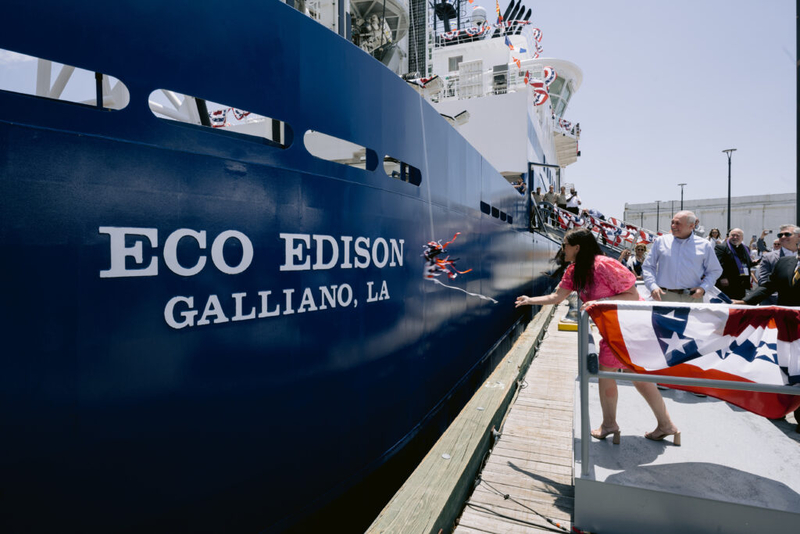
Jennifer Scalise, wife of U.S. House Majority Leader Steve Scalise, R-Louisiana, christens the ECO Edison, the first American-built offshore wind service operations vessel on May 11, 2024, in New Orleans. The ECO Edison will be the floating home base for offshore wind technicians at Ørsted's Northeast offshore wind farms. (Tyler Kaufman for Ørsted)
President Donald Trump’s anti-wind energy agenda is harming Louisiana businesses that form the backbone of America’s offshore oil and gas industry, which stands to lose billions if the president fulfills his campaign promise to end construction of offshore wind turbines.
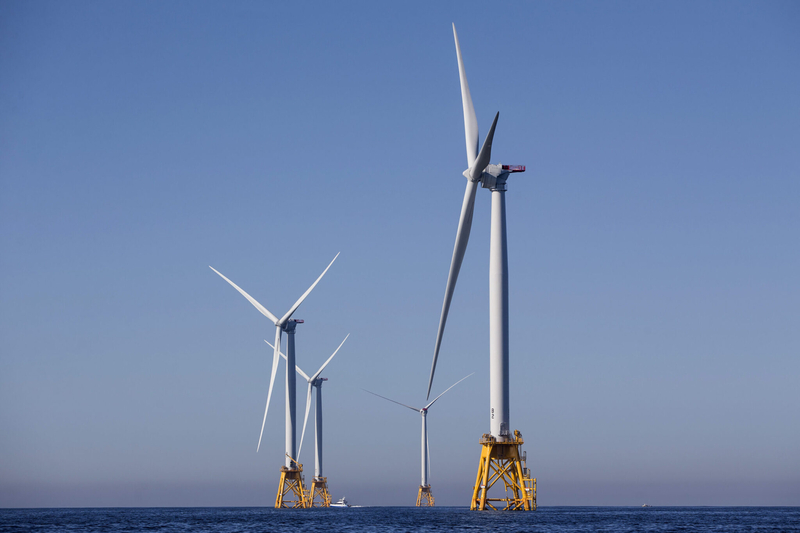
In recent years, offshore leases have opened in state and federal waters in the Gulf of Mexico for offshore wind farms to be built. Wind technology has advanced, allowing for taller turbines to capture more of the Gulf region’s wind power higher up in the air. A trained workforce, built off the back of oil and gas, provided a wide base of support for the industry to expand.
On his first day back in the White House, Trump signed an executive order halting construction on all offshore wind projects. The president has long expressed a dislike of wind turbines, sometimes making dubious claims that they “destroy everything,” are the “most expensive energy there is” and that they produce noise that causes cancer.
These actions and statements have slowed supply chain investments and threatened the jobs of blue-collar workers in Louisiana and nationwide, all while electricity demand is growing, in large part because of increasing numbers of large, power-hungry data centers.
There are no offshore wind projects under construction off Louisiana’s coast, but the state is deeply entwined with developments in other parts of the country. Most of the businesses working on offshore wind farms on the East Coast come from the oil and gas sector in the Gulf of Mexico.
Even without a single industrial-scale wind turbine generating electricity in Louisiana, offshore wind has so far spurred over $500 million worth of supply chain investments in the state, according to Oceantic, an offshore energy trade association with about 400 members worldwide. Almost all of Oceantic’s members work in both the wind and fossil fuel sectors, spokeswoman Stephanie Fracoeur said.
It’s the same across the Gulf South. The offshore wind sector has spurred roughly $14 billion in investments into U.S. supply chain and manufacturing companies, with nearly two-thirds coming from businesses in Republican congressional districts, according to Oceantic.
But those investments have grown risky as many offshore wind projects that were planned have been paused or scrapped altogether.
“Oil and gas hasn’t been exceptionally busy over the last decade, so offshore wind was helping keep many of these companies in business,” Francoeur said. “Unfortunately, these policy changes have put a pause on things … The federal actions have been crippling for hundreds of American businesses that were planning on this work.”
State Rep. Joe Orgeron, R-Golden Meadow, represents an area of the state that has invested and made a lot of money in the wind industry. Lafourche Parish is home to shipbuilders, metal fabricators, ocean crane operators and many other companies in the offshore energy sector. Having once built and serviced the oil rigs in the Gulf of Mexico, these businesses on the bayou were called on to do the same thing for offshore wind farms along the East Coast, Orgeron said.
Orgeron, a former Nicholls State University professor with a doctorate in experimental physics, once managed his family’s offshore vessel business and helped it expand into the wind sector. Like other companies, they didn’t abandon oil and gas; they expanded into wind energy because it offered a stable revenue stream to offset volatile fossil fuel commodity prices, he said. While an abundant oil supply and low fuel costs are good for consumers, Louisiana’s energy service sector hits the doldrums when profit margins lead exploration companies to press pause on their Gulf drilling plans.
“For 60 years, we went through economic booms and busts, and it’s just so nice to know there’s an alternative market where your identical expertise is required and appreciated,” Orgeron said. “I really don’t wanna see one of our down-the-bayou operators lose an alternative revenue stream that’s not tied to the price of oil.”
A handful of offshore wind projects are still in progress on the East Coast, where dozens of Louisiana oil-and-gas service companies are now working.
Jake Cheramie is the general manager of Encore Group, a company in Houma that provides cooks, cleaners, crane operators and other personnel to offshore work sites. Just a few years ago, all of Encore’s clientele were in the oil and gas sector, but Cheramie said Encore gravitated to East Coast wind energy development in 2021. It now encompasses roughly 20% of their business, he said.
“Most of the major vessels in lower Lafourche are up in the Northeast working now, and that’s cool to see,” Cheramie said. “It’s been good to us. I certainly don’t wanna see offshore wind go away.”
Oceantic categorizes Encore as one of many auxiliary services businesses that work for one of Louisiana’s 42 offshore energy companies that currently hold active wind contracts.
Much of the work has gone to shipyards that build vessels that specialize in offshore construction. For instance, Edison Chouest Offshore in Cut Off spearheaded construction of the $97 million Eco Edison vessel for Revolution Wind, a wind farm project off the Rhode Island coast, and other East Coast projects. That single contract, one among several others like it, employed nearly 600 Edison Chouest workers across multiple states.
About a year ago, Encore opened an office in Rhode Island to support its personnel working on the Revolution Wind project. That wind farm made headlines Aug. 22 when the Trump administration rescinded its federal permit and issued a stop-work order, citing vague national security concerns. Scheduled to come online in early 2026, the $5 billion project was about 80% complete at that time.
Revolution Wind sued the Trump administration, and a federal judge sided with the company a month later, ruling the government’s actions “arbitrary and capricious” and unsupported by any evidence of national security concerns.
The judge’s temporary injunction allowed the company to resume work for the time being, but the order is temporary and could change if the Trump administration succeeds on appeal. The setback has already cost Revolution Wind $77 million, according to company officials who also blamed Trump’s anti-wind policies and tariffs for increasing the cost of steel and other construction materials.
It’s a new reality that Encore and other businesses are having to grapple with. The part of their business model that was the most stable just a year ago has suddenly become shaky.
“Louisiana is going to be one of the hardest-hit areas,” Francoeur said. “Once the current projects are completed, some of those companies will have idle shipyards or idle vessels.”
Cheramie said Encore is working on other offshore wind projects in New Jersey and Virginia but worries about losing them if the Trump administration continues to target the industry. If things stay on track, Encore should have steady work for another two to three years, he said, admitting new contracts for future jobs are now hard to come by.
“There’s been quite a few projects that aren’t being permitted or may be canceled,” Cheramie said.
The pause is largely due to Trump’s executive orders, pausing all wind leases and permitting. He has followed those up with actions that have made business particularly difficult for wind and solar companies, including directing his Commerce Department to investigate the wind sector for any national security implications and directing his Interior Department to block the nation’s largest solar project, which was planned for federal land in Nevada.
“Things are likely not to move forward in the next couple of years because of the actions by the Trump administration to essentially put a pause on federal permitting for offshore projects,” said Madelyn Smith with the renewable energy industry group Southeastern Wind Coalition.
One example is RWE Wind, a German company that held the first federal wind lease off the coast of Louisiana in addition to leases on the East and West coasts. It scrapped all three projects this year and laid off 73 of its U.S. employees after Trump started his assault on the wind sector, according to a Reuters report. The company said it is focusing on onshore wind and solar for the time being while still holding onto its offshore leases.
Many Louisiana-based offshore energy businesses with wind interests refused to speak on the record for this report. The same was true for some trade groups, including the National Ocean Industries Association, which represents members in the offshore wind and fossil fuels sectors.
Orgeron said he has noticed the same pattern among some of his constituents who prefer to not say or do anything that draws attention from the White House.
“I have friends who know they’re in the crosshairs of the Trump administration,” he said. “They’re kinda in a holding pattern.”
There is one active lease in Louisiana state waters for a wind farm, according to the state Department of Energy and Conservation. The Cajun Wind project is proposed by the North American arm of Vestas, a Denmark-based renewable energy company. It’s planned off the coast of Cameron Parish and would generate enough electricity to power 144,000 Louisiana homes at peak output, according to the project’s webpage. It’s unclear when or if Vestas plans to start construction. The company didn’t respond to a request for comment.
Diamond Offshore Wind, backed by the Mitsubishi Corp., initially planned to build a wind farm in Louisiana waters. It abandoned its lease at the beginning of 2025 but terminated its operating agreement in March.
Offshore wind farms are “enormous infrastructure projects,” Smith said. Such projects can take eight to 13 years and millions of dollars to build. Any permitting delay, political uncertainty or disruption in supply can be significant enough to chase off investors, she added.
“It has definitely given some developers pause that there have been so many changes,” she said “They are going to be looking for more stability and clarity in the federal regulatory landscape in order to move forward.”
Simon Mahan, executive director of the Southern Renewable Energy Association, said he doesn’t expect much expansion in offshore wind over the next few years unless the Trump administration’s Bureau of Ocean Energy Management, which has paused offshore wind leases, reverses its current stance.
That could be detrimental for other industries that need new sources of energy to operate, such as artificial intelligence. The AI sector has been building data centers across the country that require massive amounts of power to operate, such as Meta’s proposed facility in North Louisiana. Data centers will need an estimated 22% more electricity by the end of this year and nearly three times as much in 2030, according to a report by S&P Global.
“We are facing a pretty severe energy crunch, not just in Louisiana, but nationally,” Mahan said. “Any sort of delay that we’re seeing, that is only going to hamper our energy dominance agenda.”
For the time being, many of those in Louisiana’s offshore energy sector are counting the days until the next presidential election, Orgeron said.
“Everybody’s just waiting it out until Trump leaves office,” he said. “I just hope that the president I voted for doesn’t, because of his little idiosyncrasies, destroy it completely.”
Baton Rouge, LA