Wyomingites with deep conservation roots oppose axing Forest Service Roadless Rule
Sep 23, 2025 | 6:25 am ET
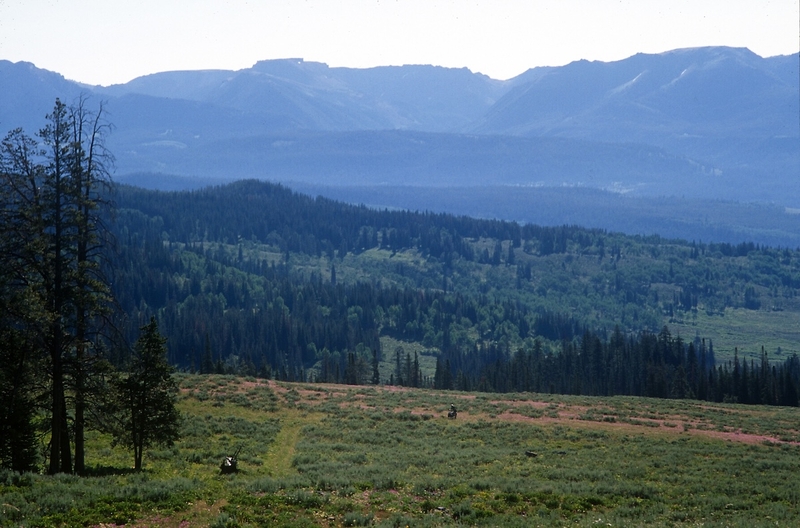
Description
Photo courtesy of WyoFile
Conservation groups, hunters, hikers and Wyomingites carrying on family conservation legacies are resisting the Trump administration’s plan to eliminate the 2001 Forest Service Roadless Rule.
At the close of the 21-day comment period Friday, the U.S. Forest Service received 625,737 responses to the rollback plan. Opponents also wrote Secretary of Agriculture Brooke Rollins, who oversees the agency, advocating for roadless landscapes that nurture wildlife, clean air and water.
“We see firsthand how roads are the single greatest threat to wildlife,” Jackson Hole resident Kathryn Turner, a wildlife artist and valley native wrote in response to the proposed rollback. “They fragment habitat, block migration corridors, and increase collisions,” she wrote.
Turner’s father, John, led the U.S. Fish and Wildlife Service from 1989-1993. Kathryn Turner is the fourth generation to be raised at the Triangle X Ranch in Grand Teton National Park and serves on the Jackson Hole Wildlife Foundation board.
“Tourists do not come to look at clear cuts and strip mines.”
Lee Ann Inberg-Schuff
Lee Ann Inberg-Schuff carried the conservation torch for her late brother, Kirk Inberg, a Wyoming Game and Fish warden who died in 1991 in a plane crash in the Teton Wilderness while tracking radio-collared grizzly bears.
“Tourists do not come to look at clear cuts and strip mines,” Inberg-Schuff wrote. “Recreation and tourism can be easily quantified and in Wyoming alone, is a $4.9 billion industry.
“Extractive industries are boom/bust at best and so very shortsighted,” she wrote. “Keeping Roadless areas makes the most financial sense.”
Citizens want protection
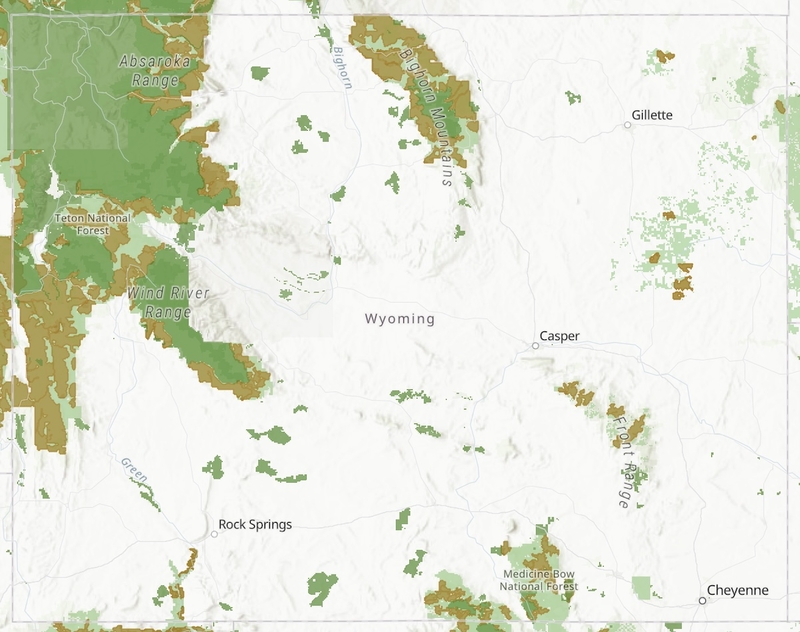
Considered by Sierra Club “one of the most important conservation wins,” the Roadless Rule rankled Wyoming government from the get-go. The state sued to overturn the protection of 3.2 million Forest Service acres — land owned by all Americans — located in Wyoming. The state’s campaign ended unsuccessfully in 2021 when the U.S. Supreme Court declined to take up an appeal.
The roadless rule generally prohibits roadbuilding and logging across 44.7 million acres nationwide, not counting national forests in Colorado and Idaho, which have their own roadless regulations. The Roadless Rule does not prohibit motorized travel and, by definition, is not a program to close existing roads.
Expanded road access is necessary, the Department of Agriculture said in a notice proposing an environmental impact statement authorizing elimination of the Roadless Rule, because “insect and disease and wildfire activity, especially within the [wildland-urban interface] affects important resources, neighboring infrastructure, and communities.”
Whether roadless areas are at increased danger of wildfire and its most serious effects is widely debated. Instead of scrapping the rule, the Department of Agriculture and the Forest Service should instead alter it slightly to address fires, one former Forest Service official opined.
“The Trump administration could update the rule to permit temporary roads in roadless areas that are near neighborhoods along the wildland-urban interface to allow for forest thinning or other ecological restoration,” Robert Bonnie, a former high-ranking Agriculture Department official, wrote in an op-ed in the New York Times.
In Wyoming, there’s also disagreement over whether logging is sustainable in the state’s semi-arid climate or more akin to “timber mining” than harvesting.
Many Wyoming agencies, however, fell in line with the Trump administration’s plan. Many citizens did not.
“The public lands around the Wind River Range are the driving force of our [business] and we need them to stay protected,” wrote Jake Dickerson, co-owner of Wild Iris Mountain Sports in Lander. Repealing the rule, “would have a negative impact on the entire economy of our town and the many thousands like it across the west.”
Roadless areas are “[t]he last best places to hunt in Wyoming, and probably the West,” said Lander resident Nathan Maxon.
“Roadless areas are where source populations exist that produce [wildlife] migrants into the surrounding landscape where we can encounter them,” wrote Merav Ben-David, a professor of Wildlife Ecology at the University of Wyoming. Based on decades of experience and study, she said eliminating the roadless rule “will only harm those of us who rely on wildlife for our livelihood and enjoyment.”
Some commenters did not sign their submissions. One 81-year-old said he started visiting national forest lands as soon as he was old enough to drive. He said there are enough roads in national forests already, 370,000 miles of them, “enough to circle the Earth nearly 15 times.”
Another unsigned comment read that once Wyoming land is developed, “it will never return to its natural state.”
Owners of a 56-year family sporting goods business near Wyoming’s Bighorn National Forest said the rollback “will do nothing but negatively impact the Tourism and Recreation sector without any guarantee of significant gain in economic activity.”
A member of a “small rural community in Wyoming” said it was difficult for his fellow villagers to speak up.
“Most residents do not have the ability or knowledge to find this obscure website to make public comment,” the anonymous writer said. “For every person in my community that comments, there are hundreds more who feel the same way and are adamantly against irresponsible policies like this proposal.
“However,” he wrote, “we will all vote.”
State agencies align
Wyoming State Forestry Division’s comments were typical of those made by Equality State agencies. “We are supportive and fully endorse the current proposal to return management discretion of [inventoried] roadless areas to local land managers,” officials at the division said.
Wyoming’s Department of Environmental Quality said it would continue to enforce pollution guidelines in roadless areas. “The proposed rule recission still requires [that] site-specific impacts comply with applicable state and federal regulations,” an agency official wrote.
“Wyoming State Parks aligns with other Wyoming agencies to support the rescission of the Roadless Rule,” wrote Chris Floyd, deputy director of the Division of State Parks, Historic Sites & Trails and the Office of Outdoor Recreation, all part of the agency Wyoming State Parks and Cultural Resources.
The Saratoga-Encampment-Rawlins Conservation District wants the rescission’s environmental impact statement to include more than two options — no action and rollback. It called for the ability for Wyoming and other states to forge their own roadless conservation rules.
In Converse County, commissioners support “reconsideration of [the Forest Service’s] current and misguided nationally driven planning strategy and urges the agency to instead empower local forests with greater authority.”
Teton County has supported protection of roadless areas since 2018 and reiterated its position in a letter opposing rescission of the rule.
Conservation groups and scientists
Wyoming and national conservation groups and scientists filed extensive comments.
“In Wyoming, when things aren’t working quite right, we fix them — we don’t throw them away,” the Wyoming Wildlife Federation wrote. The group likened rescission to “the sticker shock of buying a brand-new truck when all you really need is a repair.”
In contrast to the just-expired 21-day comment period, the 2001 rule was forged after 430 meetings and 1.6 million public comments, the group said. Trout Unlimited, the Wyoming Wild Sheep Foundation and the Theodore Roosevelt Conservation Partnership signed on to the comment.
An analysis of early submissions showed that 99% of commenters oppose rolling back the Roadless Rule. The Center for Western Priorities, a Colorado nonprofit, made that analysis based on 5,000 randomly selected comments submitted by Friday’s deadline morning.
Protection for wildlife was a major theme of comments. Fully 70% of Wyoming’s roadless areas provide spring, summer and fall range for elk, Nat Paterson, policy director for the Wyoming Wildlife Federation, wrote.
“In Wyoming, 60% of our roadless areas provide irreplaceable habitat for native trout.”
Samantha Beard
The 70% figure “comes from our partners at Trout Unlimited who did an analysis of GIS layers looking at Wyoming Game and Fish Department data of elk seasonal range and inventoried roadless areas in Wyoming,” federation Executive Director Craig Benjamin wrote in an email.
The existing rule protects 11,337 climbing routes and boulder problems, more than 1,000 whitewater paddling runs, 43,826 miles of trail, including parts of the Continental Divide Trail, another Wyoming coalition wrote. Wyoming Wilderness Association, Greater Yellowstone Coalition, Teton County Backcountry Horsemen, Wyoming Outdoor Council, National Outdoor Leadership School and the Council for the Bighorn Range also said the rule protects 20,298 mountain biking routes.
“In Wyoming, 60% of our roadless areas provide irreplaceable habitat for native trout,” Wyoming Trout Unlimited Council chair Samantha Beard wrote.
Backcountry Hunters and Anglers said the rule protects “strongholds that hunters and anglers rely on for healthy fish and wildlife habitat, unparalleled opportunities in the field, and clean water.” It called for adopting a permanent safeguard — a measure stronger than the existing administrative rule — through the proposed Roadless Area Conservation Act.
The Natural Resources Defense Council had about 100 cosigners to its exhaustive comments.
A rollback would “dramatically harm wildlife areas … negatively impact the forested areas … and allow for corporations to have unchecked access to protected wildlife areas,” the Society for Conservation Biology wrote. It referenced a rare study of the effectiveness of the Roadless Rule.
“Many [roadless areas] are among the most wild, undeveloped areas both in the nation and within their respective states,” according to the study “Conservation value of national forest roadless areas,” which included about 15 pages of references to science papers. Roadless areas “protect drinking water for hundreds of thousands of people [and] add significantly to the total carbon captured by existing protected areas.”
The Forest Service will analyze the comments, favoring those that are constructive, information-rich and that clearly communicate and support their claims. It will use those to inform an environmental impact statement on the proposed rescission. The final rule, EIS, and record of decision are expected to be released in late 2026, the agency said.
Cheyenne, WY