Federal appeals court rejects Indiana media bid to witness executions
Jun 08, 2026 | 2:49 pm ET
Description
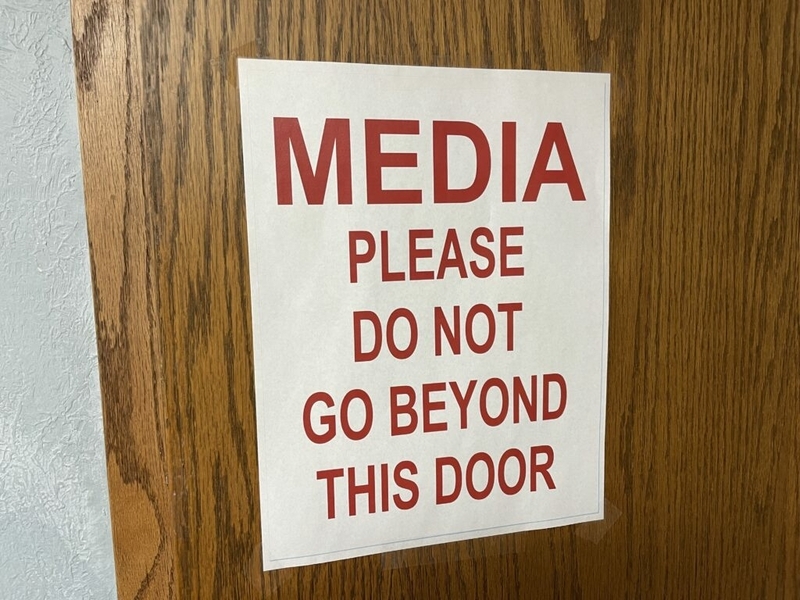
A June 5 ruling from the U.S. Court of Appeals for the Seventh Circuit upheld Indiana's execution witness law, rejecting a request from media outlets seeking guaranteed access for journalists to observe executions carried out by the state. (Photo by Seth Tupper/South Dakota Searchlight)
A divided federal appeals court on Friday upheld Indiana’s policy limiting who may witness state executions, rejecting arguments from news organizations that the restrictions violate First Amendment protections for the press and public.
In a 2-1 decision, the U.S. Court of Appeals for the Seventh Circuit affirmed a lower court’s May 2025 denial of a preliminary injunction sought by the Associated Press, the Indiana Capital Chronicle and several other media outlets.
The underlying lawsuit challenges an Indiana law and Department of Correction policy that generally prohibit journalists from witnessing executions.
News reporters are granted access to a designated area outside of the Indiana State Prison but are not permitted to directly witness executions unless they are among five people invited by the condemned inmate.
“On the one hand, plaintiffs make the fair and compelling point that increased scrutiny may lead to more humane and competently administered executions,” wrote Judge Michael Scudder. “But … allowing uninvited strangers with no immediate connection to the underlying crime to watch a prisoner die risks offend-ing the dignity of their final moments.”
Story continues below.
The panel majority expressed skepticism that the U.S. Supreme Court’s “experience and logic” test for public access to government proceedings applies to executions.
But even assuming it does, Scudder wrote, executions have not historically been “open to the press and general public” and public access does not clearly play a “significant positive role in the functioning” of the process.
The court pointed to a long historical trend away from public executions, noting that Indiana moved executions behind private enclosures in 1852 and that the last public execution in the United States occurred in 1937.
“Executions are different than trials,” Scudder wrote. “The public did not merely lose interest in watching them first-hand. Rather, people stopped attending because states passed laws prohibiting them from doing so.”
Judge grants summary judgment to Capital Chronicle in execution drug costs case
The majority also rejected the news outlets’ claim that Indiana’s policy violates the First Amendment’s Press Clause. Scudder wrote that state law treats journalists the same as any other member of the public because neither may attend an execution unless they fall within one of the approved witness categories.
Judge Candace Jackson-Akiwumi dissented, however, arguing that executions occupy a unique place in constitutional law because they involve the state’s ultimate exercise of power.
“A government exercises its greatest power when it ends a person’s life,” she wrote. “As I see it, such severe and irreversible punishment on behalf of ‘the people’ must be observable to comply with the Constitution.”
Jackson-Akiwumi said the public and press have a qualified First Amendment right to observe executions and warned that “the public cannot oversee what it cannot observe.”
In a lengthy footnote, the dissent also noted that the majority did not directly address a separate press-rights argument advanced by the news organizations — that Indiana’s policy places a “more than incidental burden” on journalists’ ability to gather news.
“Despite the panel decision, we believe we have a strong chance of ultimately prevailing on the merits of our case, and we’re considering our next steps,” said Lin Weeks, an attorney with the Reporters Committee for Freedom of the Press representing the news organizations. “The press and public have a First Amendment right to observe executions absent a specific, compelling reason to the contrary. Press access is vital to ensure impartial, complete accounts of executions carried out in the public’s name.”
The lawsuit was filed in 2025 shortly after Indiana resumed executions following a yearslong pause.
A federal judge denied the outlets’ request for a preliminary injunction last year, prompting the appeal.
Indianapolis, IN