WV Schools superintendent backs Kanawha County protocol for special education and Hope Scholarship
Aug 27, 2026 | 1:39 pm ET
Description
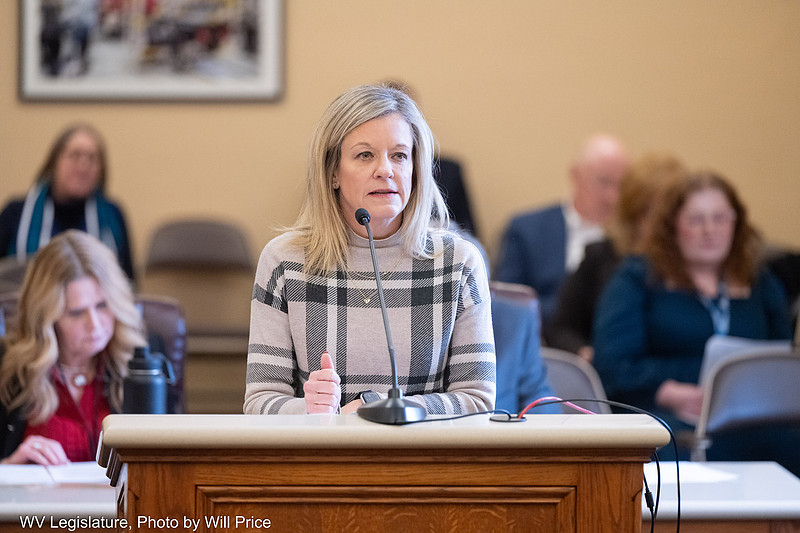
West Virginia Schools Superintendent Michele Blatt speaks before lawmakers at the state Capitol in Charleston Jan. 7, 2025. (Photo by Will Price/West Virginia Legislative Photography)
West Virginia’s top school official says Kanawha County Schools’ procedure regarding students with disabilities returning to the public schools and the Hope Scholarship is legally sound.
Michele Blatt, state schools superintendent, sent a letter to Attorney General JB McCuskey on Wednesday saying that once a child with disabilities exits the public school system, their special education services cease under federal law.
Should a student choose to return to public schools, a reevaluation for disability status is required, according to Blatt. This applies to students who left public schools to use the Hope Scholarship, the state’s education voucher program.
“The West Virginia Department of Education and West Virginia’s local school systems support the right of parents to determine the educational pathway that best meets the needs of their child,” Blatt said in a statement to West Virginia Watch. “At the same time, parents need to consider the benefits, responsibilities and limitations associated with each education option when making these important decisions. We remain committed to providing accurate information and supporting families as they navigate those choices.”
McCuskey sent a letter on Aug. 18 to Blatt taking issue with the Kanawha County Schools procedure that he said impacted students who had left public schools to use the Hope Scholarship. He worried that the protocol violated federal and state law and could subject those students “to discipline without state and federal protections.”
Blatt disagrees with McCuskey’s legal analysis of the KCS procedure and says schools cannot implement an Individualized Education Plan for a student who is no longer enrolled in and attending the public school under federal education law.
KCS has already responded that their protocol, while not an official policy, is in accordance with federal and state law. The county school system has been sending a letter to parents of students with disabilities explaining their procedure for returning to public schools since 2024.
Blatt said the state education department has worked collaboratively with KCS to revise their letter to parents to clarify that filling out a notice for a child to use the Hope Scholarship specifically does not constitute the revocation of special education services.
“However, the corrected notice should also accurately communicate that the student’s withdrawal from public enrollment is the basis on which special education services cease,” Blatt said.
“We have no evidence that Kanawha County has denied any services or that a student was adversely affected by the issuance of the letter in question. In the exercise of our general supervisory authority, we will continue to work statewide to ensure that all students are being served within the state and federal statutes and regulations,” she wrote in her response to McCuskey.
The Department of Education has not received any formal complaints regarding this matter, Blatt said.
“ … We understand parents may question how federal special education requirements apply in different educational settings,” Blatt said in a statement. “We encourage families to contact the WVDE or their local school system so that we can provide information, answer questions and assist when concerns arise. Many concerns can be resolved through a conversation, and the WVDE also provides a formal state-level complaint process for parents who wish to pursue the matter further.”
“In the future, I encourage the Attorney General to call the WVDE or county board of education to quickly resolve matters or provide parents with the appropriate contact information,” she added.
Blatt said the education department will develop and disseminate statewide guidance addressing the nuances between Hope Scholarship for private schools, Individualized Instruction Programs, homeschooling and more in relation to special education services.
If a student enrolls in a private school that participates in an agreement with a county board of education, Blatt said some special education services may be available to the student as funding allows.
There are more than 25,000 students using the Hope Scholarship this school year, and the program gives students around $5,400 this school year to pay for education outside of public schools. The majority of funds are spent at private religious schools, which are not legally required to provide special education services or follow IEPs under federal law.
Charleston, WV