Wilmington City Council formally opposes mayor’s plan to close park encampment
Jun 09, 2026 | 6:00 am ET
Description
Photo courtesy of Spotlight Delaware
Why Delaware Should Care?
In recent years, the unhoused community in Wilmington has grown. In response, Mayor John Carney introduced a plan to convert an Eastside park into the only city-sanctioned encampment. But the initiative has since faced protests and criticism. Now, officials have decided to close down the encampment.
The Wilmington City Council has taken a stand against Mayor John Carney’s plan to shut down the city’s only sanctioned homeless encampment.
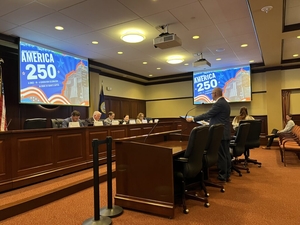
In a resolution unanimously passed Thursday, the council urged Carney to “immediately halt any forced removal” plans at Christina Park “until a comprehensive, humane, and adequately funded transition plan is fully operational.”
The resolution vote followed an hour of comments from the public, featuring dozens of residents speaking against the city’s plan to close the Eastside neighborhood park on June 15. Some of the commenters lived at the park.
“Seeing us in that park is an eyesore for [Carney], but at the same time, he has to realize, we have nowhere to go, nowhere to sleep,” park resident Andreu Taylor-Simmons said.
In response to the council resolution, the Carney administration reaffirmed the city’s intention to close the encampment on June 15.

In a statement released Monday, city officials stated that the Eastside neighborhood park was always meant to be a temporary space for the unhoused. They also argued that neighbors have been “patient” while waiting for the park to be restored for recreational use.
Transition plans already in place, they said.
As part of the transition plan, the city said there are 20 beds at two separate housing organizations that offer case management services. For those unable to get one of them, the Wilmington Housing Authority will cover the cost of emergency hotels and motels, the city said.
The statement from the Carney administration follows a letter sent by city officials to the council, arguing that Darby’s resolution did not acknowledge the administration’s progress.
“Instead, it demands that Wilmington taxpayers continue to shoulder the cost of temporary encampment until the state completes its planning work,” the letter read.

The resolution’s sponsor, Councilwoman Shané Darby, read the letter during a city council committee meeting last Wednesday.
When asked about Carney’s promise to link park residents with housing, Darby expressed skepticism, stating in an interview with Spotlight Delaware, “I would love to see it.”
Darby’s resolution also recommends creating a senior-level Homelessness Response Coordinator position in the mayor’s office to coordinate citywide outreach, work with service providers, track homelessness data, pursue funding and develop long-term plans to reduce chronic homelessness in Wilmington.
Mounting criticism
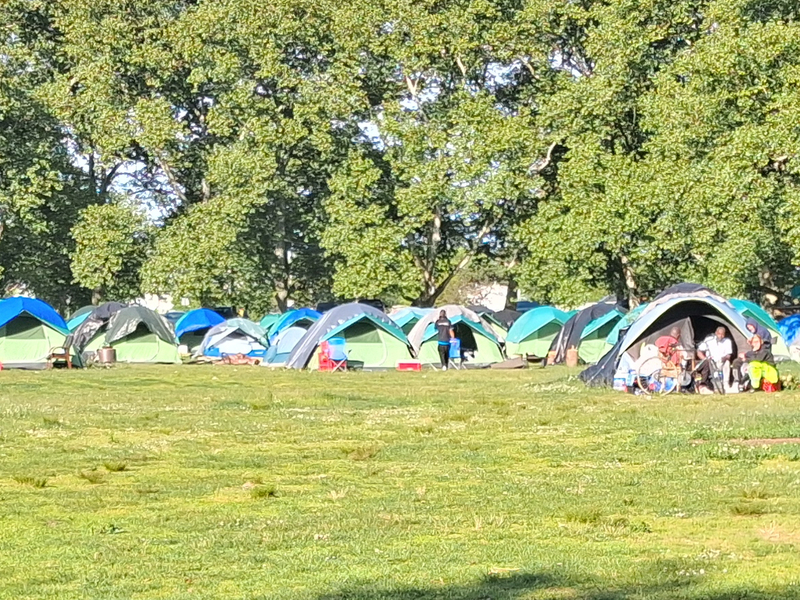
The Carney administration launched its initiative to direct homeless people to Christina Park seven months ago. At the time, there were already about 50 people living in tents there.
Since then, officials have faced mounting criticism from encampment residents and housing advocates who said that the city had not provided promised services and that it had imposed burdensome rules.
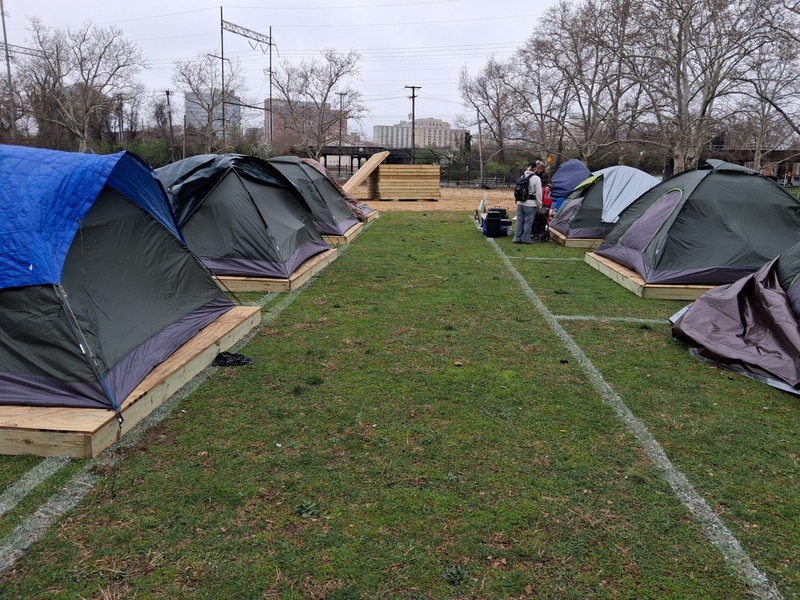
Many also decried the city’s decision in April to direct residents into city-issued tents placed on large pallets at the park. The city spent nearly $60,000 on the pallets and tents.
Last month, Kim Eppehimer, the head of the nonprofit contracted to oversee the encampment, called the mayor’s plan to evict park residents an “unfortunate displacement of folks who are essentially already displaced.”
The city contract for Eppehimer’s nonprofit, Friendship House, is set to expire June 30.
Opposition to the encampment closure has also arisen outside of formal organizations. A petition, sponsored by local housing advocates, that asked the city to pause the eviction having received over 150 signatures.
During Thursday’s council discussion, Darby said she believes the park should be returned to the public, but argued there should be a plan in place before the eviction takes place.
Several council members also asserted that the city and state need to expand the number of shelter beds available, and affordable housing. Councilman Chris Johnson said more dollars are needed for social services targeting homeless people in the city.
Councilwoman Yolanda McCoy noted that homelessness has been a yearslong issue — one that Carney isn’t to blame for it. She said his initial sanctioning of the encampment at Christina Park simply brought “eyes to a situation we were already in.”
Is a pallet village a solution?
In the Carney administration’s response to Darby’s resolution, officials also said talks are ongoing with Springboard Delaware about potentially bringing a tiny home village to Wilmington.
They also noted that Carney has directed the City Council to select one of two sites for the village July 1, in order to secure federal Covid-era relief dollars before they expire. The sites include a property across the street from Christina Park and another that sits along Garasches Lane, a small street lined by industrial land in Southbridge.
Last month, Southbridge residents expressed their opposition to the proposed site in their neighborhood.
Darby told Spotlight Delaware the council was being rushed to make a decision, saying members were not thoroughly consulted before the two locations were presented.
“The administration was like, ‘Hey, here’s this email. There are two locations, you choose it. You’ve got to do it before July.’ And I was like, ‘What?’” Darby said.
Reporter Naomi Weiss contributed to this report.

Dover