Why the Human Rights Commission is taking rare step to sue 5 districts over anti-trans policies
Nov 19, 2025 | 4:51 am ET
Description
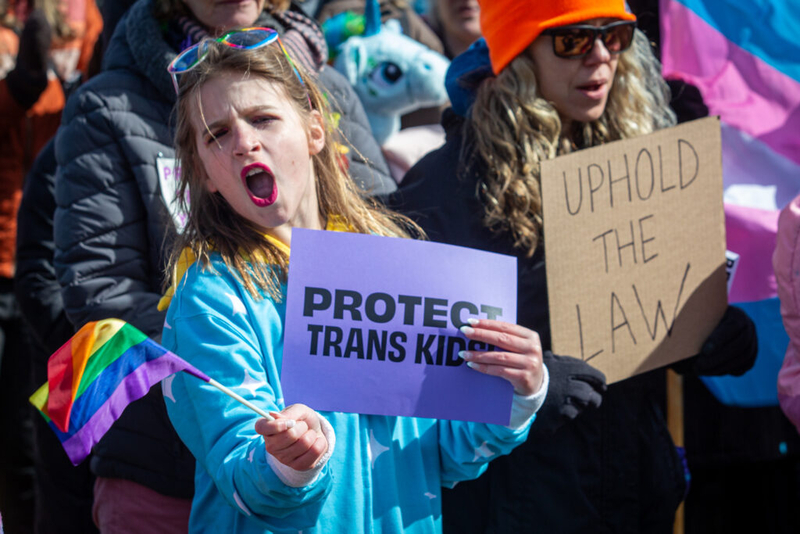
Supporters yell and wave signs at rally in Cumberland, Maine on Sunday, March 23, 2025, calling on Maine lawmakers, and local MSAD51 school officials, to support transgender student athletes. (Photo by Troy R. Bennett/ Maine Morning Star)
In an effort to provide speedy relief for children experiencing discrimination in schools, the Maine Human Rights Commission sued five districts that recently adopted policies that restrict transgender students’ access to athletics, bathrooms and locker rooms.
The quasi-independent state agency told Maine Morning Star in an interview on Tuesday that given the growing number of districts that have approved such policies, filing a lawsuit is the fastest, most transparent way to ensure that schools do not impose rules that discriminate against students based on gender identity.
The lawsuit against the school districts, first reported on by the Bangor Daily News on Monday, is the first time in recent history that the commission has chosen this course of action. Typically, the commission addresses violations of the Maine Human Rights Act, which has barred discrimination based on gender identity for two decades, through investigations following complaints of alleged discrimination.
“Given how widespread and how fast moving this has been, and what seemed like an increase in the pace of of school boards adopting these policies or considering these policies, it seemed like initiating an investigation within the commission’s investigative process was just was not going to be an efficient way to to deal with this issue,” said Executive Director Kit Thompson Crossman.
The investigation process can take up to two years, and has to remain confidential, Thompson Crossman said. That lengthy process would not address the immediate rights and needs of trans and gender non-conforming students facing discrimination in schools, they said. By filing a lawsuit, the commission is asking the courts to promptly weigh in and require the five districts to repeal their anti-trans policies and implement rules compliant with Maine law.
The lawsuit names five small, rural districts: MSAD 70 in Hodgdon, RSU 24 in Sullivan, RSU 73 in Livermore Falls, and the Baileyville and Richmond school districts.
Given how widespread and how fast moving this has been, and what seemed like an increase in the pace of of school boards adopting these policies or considering these policies, it seemed like initiating an investigation within the commission's investigative process was just was not going to be an efficient way to to deal with this issue.
The consequences of these districts’ actions extend beyond creating a hostile environment for their gender nonconforming or trans students, according to the legal filing. It argues that other districts “cannot be assured that they will be protected from unlawful discrimination when they participate in athletic competitions against school districts which have adopted policies requiring students to participate on teams corresponding with their biological sex.”
The commission has received reports of adults threatening students “who do not appear biologically female,” according to the lawsuit, filed by commission lawyers Barbara Archer Hirsch and Collin Hurd.
Trans students are also concerned for their safety and may not file complaints for fear of retaliation, according to the commission, which has testified before several school boards against the policies.
“The harm created by these policies begins as soon as they’re adopted by intimidating transgender students, making them feel unwelcome and unsafe in their public school, which they are required by law to attend,” the lawsuit states.
Given the far-reaching impacts of these policies, the commission is also arguing that “Piecemeal resolution would waste commission and court resources, while a single assessment of the requirements of the Maine Human Rights Act would allow immediate and statewide resolution of this issue.”
Advocates from Maine Women’s Lobby and Equality Maine applauded the commission’s decision Tuesday. There are currently at least eight Maine districts that have passed anti-trans policies with more weighing changes, following a national movement driven by the Trump administration to exclude trans people from athletics, school facilities and gender-affirming care.
As a result, parents are afraid to send their trans or gender nonconforming children to school because they’re worried about discrimination or bullying, said Gia Drew, executive director of Equality Maine.
“The fact that these districts have gone their own way and gone rogue, I don’t know when this has ever happened before,” Drew said. “All kids should feel safe and welcoming and should be treated fairly in school, and that’s what our law says, and that’s what the courts say.”
Both Thompson Crossman and Maine Women’s Lobby Executive Director Destie Hohman Sprague said the fact that the lawsuit was initiated should come as a comfort to families that are worried about their children being unlawfully discriminated against.
“I hope that they see this act by the commission as the protection that they deserve,” Hohman Sprague said. “Someone needs to have their back. And in this case, it seems that the commission is really making an effort to do that.”

Augusta, ME