What’s in the new federal housing law for New Hampshire
Jul 13, 2026 | 5:00 am ET
Description
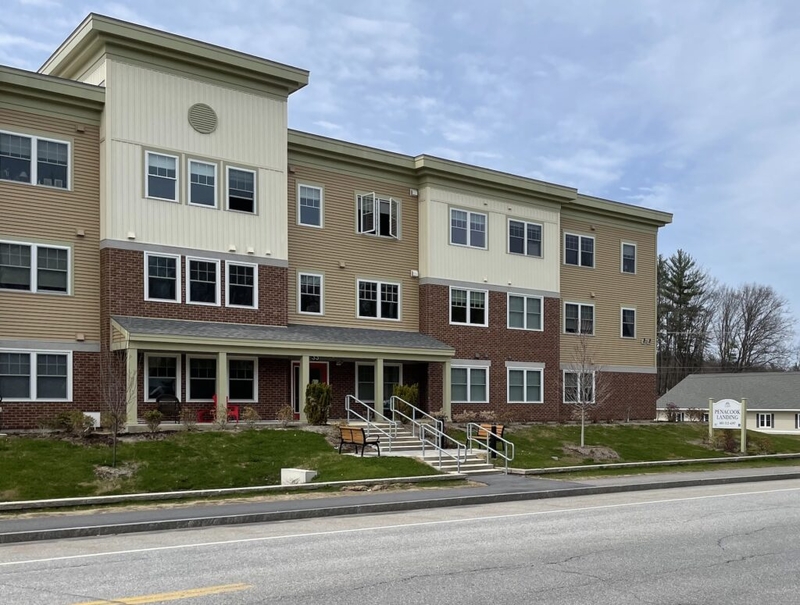
Penacook Landing is an affordable housing development in Penacook, New Hampshire. The new federal housing includes grants for municipalities that, among other criteria, show they have provided “density bonuses” to developers who provide affordable housing. Proponents of the measure say it will lead to more housing. (Photo by Dana Wormald/New Hampshire Bulletin)
To Matt Mayberry, the expansion of manufactured homes in the United States has long been plagued by a single feature: wheels.
The houses, often referred to as “mobile homes,” are unfairly treated as temporary structures, undesirable for long-term use and zoned out of existence in many towns, he said.
And the stigma is not just cultural. Federal law has defined manufactured homes as requiring “a chassis” — a metal structure with wheels. That definition has led many banks to define the homes not as real estate, but as “personal property” akin to a car, blocking off for many the availability of stable, long-term mortgages.
But at 12:01 a.m. Saturday, a sweeping bipartisan congressional bill that would change that definition became law. And Mayberry, the CEO of the New Hampshire Homebuilders Association, says it could unlock a whole new pathway to housing.
“It’s just going to provide more safe and secure opportunities for ownership,” he said in an interview Friday.
The “21st Century ROAD to Housing Act” became law last week without President Donald Trump’s signature, after he protested a lack of action on a voting restriction bill. With its passage came prohibitions on corporate home purchases, reduced regulations for manufactured and modular housing, financial incentives for pro-housing zoning changes, and grant funding for innovative repurposed developments.
New Hampshire housing advocates say the new law contains a lot to celebrate in a state that, estimates suggest, requires nearly 90,000 new housing units by 2040. Here are some of the notable changes.
A boon for manufactured housing and ADUs
The new law contains a number of provisions to encourage manufactured housing, advocates say.
To start, it eliminates the chassis requirement. That rule stated that any manufactured home built without a chassis could not qualify under the Housing and Urban Development manufactured housing code. Not qualifying for that code, a universal standard, meant the home would not be protected from local zoning regulations.
By dismantling that requirement, supporters say the new law reflects reality: A 2011 HUD report found that only about 5 to 7% of manufactured homes are ever moved. Removing the chassis rule could lower the cost to build the homes and allow manufactured homes to be treated as real estate. For decades, manufactured homebuyers have been required to use “chattel loans” to help buy manufactured homes rather than a 30-year mortgage; those alternative loans carry higher interest rates and often much shorter, 15- to 20-year repayment periods.
Mayberry said the change makes manufactured homes much more attainable.
“By changing this from personal property to real estate under this bill, now you can finance it,” he said. “You can get a mortgage on this. You can qualify for FHA (loans). You can qualify for USDA (loans).”
The bill also helps manufactured housing buyers by allowing higher federal loan limits, from $75,000 for a single family unit to $150,000, new, uniform federal efficiency standards, and expanded federal funding to help pay for infrastructure upgrades in manufactured housing communities.
Nick Taylor, director at Housing Action New Hampshire, argued that the stigma around the homes is poised to change, amid new construction methods and the housing crisis.
“Modern manufactured housing that is largely indistinguishable from a traditional ranch-style home is absolutely part of the solution,” he said.
Directing grants to “pro-housing” towns and cities
The law creates new incentives for municipalities to update their zoning codes and remove barriers to development.
That’s because it requires the Department of Housing and Urban Development to send 10% more funding to cities that exceed the national median housing growth rate, and 10% less to those that fall behind the average.
Those payments, known as community development block grants, can be used to fund services for low and moderate-income people, such as shelters, water and sewer improvements, street upgrades, accessibility ramps, small business grants, and housing assistance. New Hampshire distributed about $12.7 million of such grants in 2024.
Mayberry said that the program could help inspire New Hampshire cities and towns to take steps to encourage more housing development. Many of those cities have a dire need to upgrade water and sewer infrastructure, and the block grants can be a lifeline, he noted.
“It not only helps the municipalities, but it helps the taxpayers,” he said.
The law also unlocks a new spending category for the block grants. Cities and towns may now apply for the funding to help finance new affordable housing projects, allowing them to sustain that housing growth.
A new funding program for zoning overhauls
The bill offers another financial reward for cities and towns that change their zoning: a piece of a $200 million per year grant program.
Grants from that program, known as the Innovation Fund, will go only to municipalities that show they have dismantled regulatory barriers; streamlined their permitting processes; provided “density bonuses” to developers who provide affordable housing; and taken other steps such as reducing lot sizes and parking requirements.
Cities and towns that have done that and can show a measurable increase in housing can use the new funding to pay for more housing, infrastructure expansion, transportation upgrades, and other housing-related costs.
Taylor noted that many of the criteria for the new federal grants mirror New Hampshire initiatives such as the Housing Opportunity Program grants and the Housing Champions program. And he said the goal is the same: to encourage town residents and leaders to lead the way toward housing growth.
“We want to see people be creative and try to find things that may work and learn from each other’s success,” he said.
Shorter federal environmental reviews
The new housing law includes measures to speed up certain federal reviews under the National Environmental Policy Act.
For instance, all affordable housing units that are less than 100 units will be exempt from environmental assessments, as well as any commercial-to-residential conversion efforts.
Reviews for larger housing projects are now capped to one year. Environmental impact statements are capped to 150 pages. And Housing and Urban Development is the sole agency responsible for the reviews.
Those changes have drawn opposition from some environmental groups, like the Union of Concerned Scientists, who have warned about the need to assess risk of wildfires and flooding.
But Taylor said they would help often politically fragile affordable housing projects to advance more quickly, and he particularly praised the acceleration of “infill” developments that use existing buildings.
“This is an example where you already have housing on a lot and we’re just trying to add some additional density,” he said. “There’s no reason for that to go back through another environmental review process.”
Restricting ‘corporate landlords’
One of the law’s most discussed components may have limited impact in the Granite State. The law creates a nationwide cap on the number of homes that can be owned by institutional investors without restrictions.
Moving forward, any corporate entity that owns 350 or more single-family rental homes may no longer purchase additional homes, unless they are constructing “build-to-rent” housing.
That provision of the bill, championed by Trump himself, is designed to prevent individual home buyers from being outbid and priced out by investment firms and other companies.
Taylor said those kinds of transactions are not as prevalent in New Hampshire, though he praised the law for reducing any future spread.
But Mayberry said while the practice may not be widespread among developments and houses, it is a common dynamic for manufactured homes, which are often snapped up by investors and then rented, blocking easy ownership.
“Real estate investment trusts can no longer come in and buy these parks wholesale, crank up the rents, and force people out or drive them into poverty,” he said. “I think that’s a game changer.”
The phenomenon played a role in the 2024 gubernatorial campaign, when Democrats criticized then-candidate Kelly Ayotte for her previous position as a board member for Blackstone, the largest “corporate landlord” in the country, arguing that she was contributing to the housing crisis.
At the time, Ayotte countered that Blackstone had a relatively small presence in New Hampshire and argued it was not the enemy.
Corporate landlords “are not changing the market when it comes to New Hampshire; it’s a simple supply-and-demand problem,” she told the Union Leader in 2024.
Concord, NH