Was there really a Baseline Killer? A new appeal claims Phoenix police framed Mark Goudeau
Apr 21, 2026 | 1:28 pm ET

Description
Photo via Getty Images
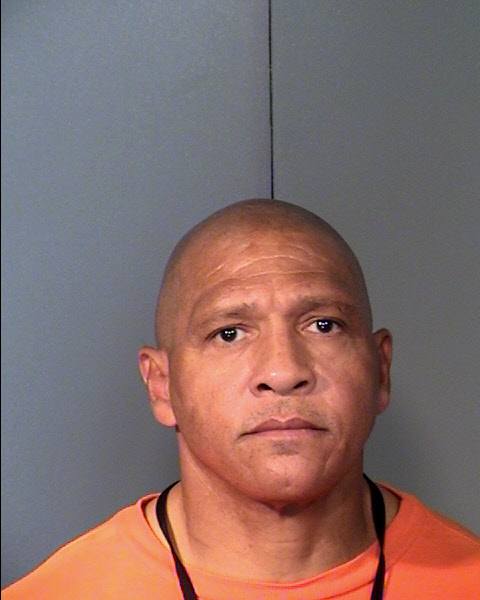
Twenty years after he was arrested and identified as the Baseline Killer, Mark Goudeau still maintains that he is innocent.
Goudeau, now 61, alleges that Phoenix Police detectives planted incriminating evidence in his house and tampered with DNA findings, according to an appeal filed in Maricopa County Superior Court in February. He further alleges that prosecutors committed misconduct; that the judge violated his right to due process; and that his defense attorneys were woefully ineffective.
The case was so flawed, according to the appeal, that it took 384 pages to explain exactly why.
As a result, the appeal suggests that Goudeau was convicted of nine murders that may have been unrelated and that he didn’t commit.
Perhaps most surprising, his current attorneys claim that Goudeau is constitutionally ineligible for the death penalty under a 2002 U.S. Supreme Court opinion concerning defendants who were considered “mentally retarded” in the phrasing of the time.
And the recourse, they suggest, is to throw out the convictions and sentences and send the case back to trial. Or let Goudeau go. Or at least commute his death sentences.
The summer of fear in Phoenix
For 13 months in 2005 and 2006, the Phoenix metropolitan area was beset by what seemed to be two serial killers.
The Serial Shooter, a name coined by police, cruised from Tolleson to Chandler, shooting from car windows as if playing video games in real time; 10 horses, several dogs and at least eight people were killed, 18 others wounded.
The other serial killer snatched women off the street, sometimes in broad daylight, attempted to rape them, shot them in the head if they didn’t cooperate and left their bodies tauntingly close to where he took them from. Then he vanished.
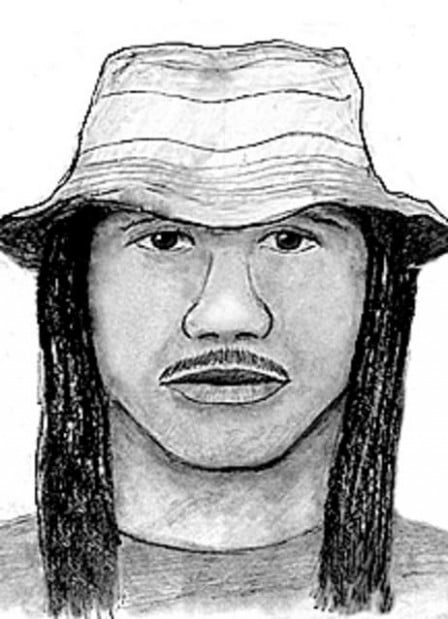
Police called him the Baseline Rapist at first, and then the Baseline Killer, because some of the attacks took place on or near Baseline Road in South Phoenix. In fact, more attacks occurred in the square mile between Thomas and Indian School Roads and 24th and 32nd Streets. Eight women and one man were killed. At least five women and three minor girls were sexually assaulted and survived. Several businesses and individuals were robbed. There were at least 43 victims overall.
When someone thought to be the Baseline Killer was seen on surveillance video snatching a woman from a Central Phoenix carwash in late June 2006 — the woman was found dead a block away — the city was thrown into panic.
But Phoenix Police task forces tracked down the killers. The Serial Shooter was, in fact, three men, and they were arrested in Mesa in August. A jury imposed six death sentences on Dale Hausner, who later committed suicide in prison. Samuel Dieteman pleaded guilty to involvement in two murders and is serving natural life in prison. Hausner’s brother, Jeff, received a lengthy sentence for non-fatal stabbings the three committed together.
Goudeau was arrested a month later, on September 6, 2006, initially for sexually assaulting two sisters at gunpoint in a south Phoenix park nearly a year earlier. He made the sisters spit in his hand and rubbed it on the body parts he had touched with his mouth to frustrate DNA sampling.
That strategy almost worked. Standard DNA testing could not pull a complete profile out of the genetic soup he had made. Phoenix police used an experimental new DNA test that focused on the Y chromosome, the male portion of the DNA sample, to identify Goudeau.
In January 2007, he had already been found guilty of multiple counts in the rape case and sentenced to 438 years in prison before police linked his DNA to a murder they had overlooked because it didn’t fit the pattern. Ballistics linked that case to the other eight. In 2011, a second jury found him guilty of 67 offenses, including all nine murders and sentenced him to death nine times.
Goudeau swore he was innocent in his statements to the jury before his sentencing. His wife swore he was innocent in multiple interviews. His neighbors claimed that he was a good man, always working around the house, frequently seen with his wife going off to hike with friends. One attorney even described him as charming.
But he had a dark past. There was a rape allegation for which he was not prosecuted. In 1989, when he was 25, he was arrested and accused of raping and beating a woman so badly that she had a fractured skull. And while he was out on bond awaiting trial for that assault, he robbed a supermarket in his neighborhood to get money to buy cocaine. Instead of going to trial for sexual assault, he was allowed to plead guilty to three counts of aggravated assault and was sentenced to 15 years in prison; the armed robbery bought him 21 years.
Thanks to his wife’s lobbying and a record of good behavior in prison, he was paroled after 13 years, in 2004. His parole file is full of testaments from friends and relatives as to how he was a changed man and had learned his lesson.
“I began to realize … how many people I did hurt …. I have no excuse for it because it was my choice using drugs,” he said at his parole hearing. “But I can assure you that I would never use drugs or alcohol again. I would never harm anyone…. I know what I have to do to stay out of [prison] … I would never hurt my family or myself. I would never hurt anybody again in my life.”
The Baseline attacks started a year later. Goudeau had drugs in his possession when he was arrested.
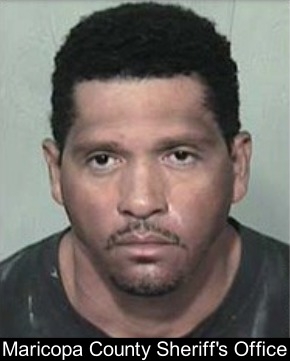
But still, he insisted to the jury that he was a changed man. Prison had taught him a lesson. And the only reason he was arrested and charged was because of that past conviction.
The jury found him guilty anyway and sent him to death row.
Ten years ago, in 2016, the Arizona Supreme Court upheld all 67 convictions and knocked down Goudeau’s claims of police and prosecutor misconduct. And it refuted his allegations that his attorneys failed to communicate with him.
He has been a model prisoner since then, according to his prison disciplinary history online.
A litany of new claims
The present court action is referred to as a petition for post-conviction relief, or PCR. Appeals are limited to the four corners of a trial, based largely on transcripts. PCR takes the case back to the trial court, and it is the first opportunity to introduce new evidence and to allege “ineffective assistance of counsel,” essentially, that the lawyer didn’t do the job and thus violated the defendant’s constitutional rights. It’s also the last place to get information on the record before taking the case to federal court. The ability to introduce new evidence in federal court is very limited, and so it must play out first in state court.
This one was filed by California attorney John Mills, who was appointed by the court shortly after Goudeau’s direct appeal was finalized in 2016. He has spent a decade assembling his case, a task slowed by the pandemic and by the glacial speed of extracting discovery from Phoenix Police and the Maricopa County Attorney’s Office. It was edited down from more than 500 pages to the current 384. Exhibits supporting the allegations will be filed separately with the Clerk of the Court.
Parts of the petition are shocking, if true.
It alleges that Phoenix police planted evidence during searches of Goudeau’s house. One planted piece, Mills claims, was a duplicate of a ring that was stolen from one of the murder victims. Police had gone to Walmart for a plastic copy of the ring so that detectives would know what to look for when they scoured pawn shops for the original. The petition alleges they went a step further and purchased a similar ring so that they could “find” it in a shoe in Goudeau’s closet during a subsequent search.
A ski mask and a pair of shoes at Goudeau’s house were found to have traces of blood from two other victims. The petition alleges that officers had withheld tubes of blood from autopsies and squirted it on the confiscated clothing to make their case.
And the DNA, which had been an issue at trial, was suspect and its handlers were too inexperienced to be trusted. During both of Goudeau’s trials, defense attorneys noted that YSTR DNA, the technique that focuses on the Y chromosome, was inconclusive because unlike standard testing, it does not paint a unique genetic fingerprint, but is identical to that of all males in the family. In other words, they argued, it could have belonged to any of Goudeau’s brothers or nephews, some of whom also had criminal records.
The prosecutors, Suzanne Cohen and Patricia Stevens, allegedly allowed witnesses to lie on the stand and failed to acknowledge corruption in the police department and in their own office, according to the petition.
The judge, Warren Granville, allowed it all to happen, thus violating Goudeau’s constitutional rights, the petition claims.
The majority of the document, like all PCR petitions, focuses on what “competent counsel” would have and should have done. In Goudeau’s case, this meant questioning the ballistics; the DNA; and the witness identifications of Goudeau, both on the stand and under police questioning.
“Much of the testimony witnesses offered at the prosecutor’s suggestion was demonstrably false,” the petition states, “but counsel failed to introduce prior statements to prove as much.”
The attorneys also failed to show how Goudeau’s phone records would provide an alibi in many of the crimes, because he was on the phone to his wife or relatives, or he was driving his brother to the parole office.
Then there was a dizzying roster of third-party suspects for most of the murders, husbands and ex-husbands, boyfriends and pimps and neighborhood bad elements. Another Phoenix police officer had created a dossier blaming the crimes on a local gang member. The petition suggests that the defense attorneys could have at least implied reasonable doubt by suggesting other men committed the murders.
All of these things, the petition contends, could have led to a different trial outcome
Under one U.S Supreme Court ruling, the jury may not have been properly informed that Goudeau was ineligible for parole, a common legal problem at the time. Juries could be left believing that, if they did not sentence a defendant to death, that he could one day be released on parole and kill again. Parole was abolished in Arizona for most cases in 1993. The only option for Goudeau, if found guilty, would have been natural life sentences with no chance of release, but the jury did not know that.
And the defense attorneys had not offered up sufficient mitigating evidence that might have convinced a jury to spare Goudeau’s life, Mills argues in the petition. They hadn’t detailed his mother’s early death, for example, his father’s boozing and womanizing, the poverty of 13 children left to fend for themselves or shuffled from one relative to another.
Perhaps most shocking is the contention that Goudeau cannot be executed under a U.S. Supreme Court opinion, Atkins v. Virginia, which prohibits the execution of people with intellectual disabilities. In the original language of the 2002 opinion, it was described as mental retardation.
Goudeau, according to the petition, has “deficits in social interactions and practical day-to-day tasks.’”
He has “borderline intellectual functioning and severe verbal deficits that would impact his ability to understand his trial.”
In the end, the petition argues, the court must “vacate and set aside his convictions and sentences and order that the State retry or release him; or vacate his death sentences and resentence him to life.”
It will not happen any time soon. The Arizona Attorney General‘s Office has yet to respond to the petition (and declined comment to the Arizona Mirror), and there will be back and forth for an indefinite future. If the petition is denied, the case will be appealed in federal court.
‘It never crossed my mind’
Let me step out of the third person for a moment, because this is personal.
I began covering the Baseline Killer case in summer 2006, before Goudeau was arrested, talking to terrified neighborhood folks and playing 20 Questions with the cops. I attended both of Goudeau’s trials and reported on the Arizona Supreme Court opinion. I know the detectives who investigated the case, the prosecutors and the judge who tried it, and the attorneys who defended Goudeau in both trials. I interviewed Goudeau’s wife in her living room and interviewed some witnesses, as well. I have visited all but two of the rape and murder sites, and in each case thought, “This is a shitty place to die.”
I have also covered more capital murder cases than I can remember and have witnessed six executions.
The Goudeau trials are etched in my memory. The prosecutors laid out the murder trial in what they called chapters, 13 of them, read chronologically. The same points kept emerging: the patterns and the patter of the attacker, the crackly voice, the cold demeanor. The DNA evidence was complex but convincing. The prosecutors were as methodical as the killer had been.
The two sisters who were sexually assaulted at a south Phoenix park in 2005 describe trying to fight off their rapist, even getting their hands on his gun but not figuring out how to fire it. The older sister was in the late stages of pregnancy. The attacker pointed the gun between her legs and made her beg for the life of her unborn child.
One victim who escaped detailed how she was hijacked in her car, forced to disrobe, ordered to perform oral sex. When she refused, her attacker put the gun to her head and told her that her family would read about her in the paper the next day. The gun misfired and she bolted from the car. It was an insight into what the other murdered women heard and the terror they experienced in their last moments.
There are statements made by surviving family members that I still cannot repeat without crying. For example, the mother who said she wished she could put her hand into her chest and pull out her heart and show it to the court. I watched the husband of another victim follow a witness out of the court room, a man who had tried to save the wife’s life as she bled to death. Out in the hallway, the husband thanked the witness for being there and trying to help. Then the two of them collapsed into each others’ arms and stood there weeping for several minutes.
And how to imagine Mark Goudeau as intellectually disabled? He was a man liked and respected by his family and his neighbors and his coworkers, and especially by his wife, a sophisticated and intelligent businesswoman, who it would be hard to envision partnering with the man described in the petition.
They had apparently never seen his other side. Despite low grades in school, he held a job, carried himself through life with apparent dignity. He also eluded police for more than a year, and thought up ways to avoid detection, like having his victims spit in his hand and rubbing it on them to stymie traditional DNA testing.
It would be a major mind challenge to so thoroughly balance Dr. Jekyll with Mr. Hyde. Conversely, if Goudeau were intellectually disabled, it would be unlikely he could have committed the crimes and gotten away with it for so long.
Corwin Townsend, the lead defense attorney in the rape case, was surprised at the allegation of intellectual disability.
“It never crossed my mind,” he told me.
Goudeau’s 1990 presentence report noted he was one credit shy of graduating from high school and chose to go to work instead of summer school. It noted that he had a reading level below the sixth grade. But he was submitted to testing before his trials began and was found mentally competent. The new petition places those results at lower levels.
“He was engaged in the case,” Townsend said. “He knew all the fine points. He wanted all the details of everything and he was a complete participant in his case.”
“He was in the upper echelon of defendants I’ve had,” he said.
Mills, the attorney directing PCR, acknowledges the awkwardness of the intelligence question.
“I know that Mark would not want an Atkins claim emphasized,” he told me, referring to the Supreme Court case. “What he cares about is the misconduct in the case and his innocence.”
In Goudeau’s second trial, his attorneys tried to present mitigation that would convince the jury to spare his life. Goudeau shut them down because it embarrassed him. However, as the PCR petition points out, much of the initial mitigation evidence was framed as an explanation of why Goudeau’s background might make him violent.
During the murder trial, Goudeau and his attorneys met with the judge outside the presence of the prosecution to discuss the defendant’s differences with his attorneys. More than once, the attorneys requested that Goudeau be tested for mental competency. He refused that, as well.
But at the end of the trial, he spoke eloquently when he addressed the jury and told them he was “no wolf in sheep’s clothing.”
Then as now, he professed total innocence.

Phoenix, AZ