Voucher oversight splits candidates for Arizona schools chief
Sep 16, 2026 | 12:11 am ET
Description
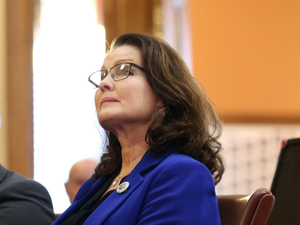
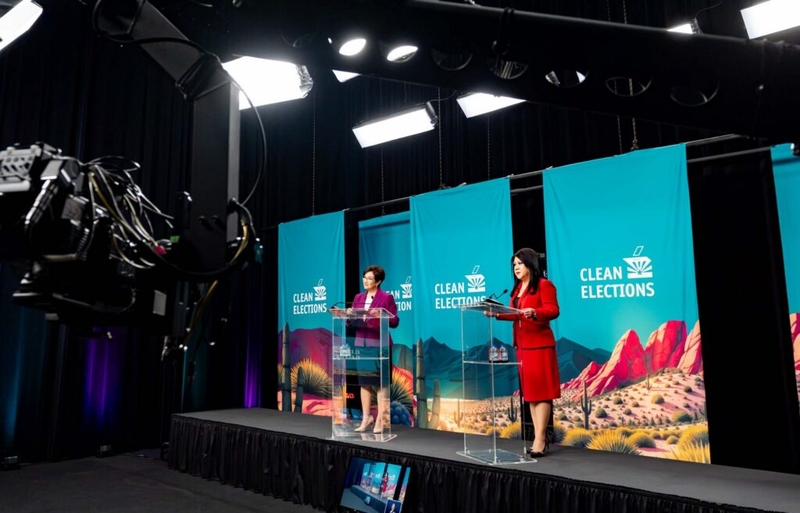
Teresa Leyba Ruiz (left) and Kimberly Yee go head-to-head in the 2026 AZ Clean Elections Superintendent debate on Sept. 15, 2026. (Photo by Diannie Chavez/The Arizona Republic/pool)
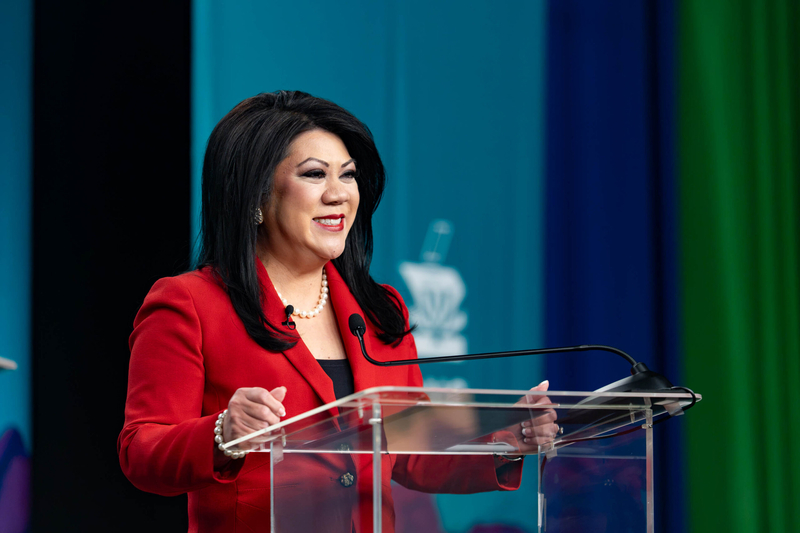
Arizona’s billion-dollar and growing school voucher program took center stage Tuesday night as state Treasurer Kimberly Yee and former schoolteacher and community college president Teresa Leyba Ruiz sparred over how they would lead Arizona’s public schools as the next state schools chief.
The program, known formally as Empowerment Scholarship Accounts, is projected to cost the state more than $1 billion this year and has drawn sharp criticism for a lack of regulations that has resulted in luxury purchases, including diamond rings and airline tickets.
The future of ESAs is at the heart of this year’s battle over the state superintendent’s seat: Yee was recruited primarily because voucher supporters were dissatisfied with how the current superintendent of public instruction, Tom Horne, responded to backlash against the program.
During Tuesday’s debate, Yee lauded vouchers as an educational option that should be open to parents, and when Ruiz accused the program of siphoning money away from public schools, Yee criticized Ruiz for not supporting all students.
“I don’t believe that the government should tell a family what type of education their child should have,” Yee said, ultimately failing to answer whether she would support any new regulations on the program, instead emphasizing her support for better oversight from the state Department of Education.
The Republican did say she would ensure accountability for disallowed purchases, implement a system that better flags suspicious reimbursement requests and end the practice of automatically approving a family’s first $2,000 in reimbursement claims. (Horne implemented that policy to clear a backlog of claims.)
Ruiz, too, said the automatic approvals should be stopped, vowed to create a transparency portal so that Arizonans could see what ESA money is being spent on and said that a family’s income eligibility should be looked at by lawmakers.
And the two disagreed over whether schools and instructors that accept voucher money should undergo background checks or meet educational requirements. Ruiz emphasized that “public dollars demand public accountability,” but Yee said that doing so would be detrimental for both providers and students, adding that privacy laws are at stake for many, including special needs students.
“Once you start digging into their educational environment and their educational needs,” Yee warned, “you start violating the HIPAA laws, the health related privacy laws.”
She did not explain how requiring private schools that accept taxpayer-funded vouchers to conduct background checks or meet state curriculum or testing standards — things public schools must do — would violate student health privacy laws.
The next head of public schools will need to contend with the state’s ongoing teacher retention crisis and Arizona’s place at the bottom of the rankings for school funding. Proposition 123, a $300 million annual funding source, expired last year but Republican lawmakers have failed to put forward a renewal plan.
Yee and Ruiz both said they would lobby the legislature for increased and permanent revenue sources to bolster Arizona public schools, but they differed on how the money should be spent. Yee said new school funding needs to be explicitly limited to paying teachers, citing “administrative bloat” as the reason why teacher pay has stagnated and the state has struggled with a nearly decade-long retention crisis.
While Republicans frequently blame administrative pay for low teacher salaries, the reality is that there is no correlation between administrative spending and teacher pay in Arizona. And, in fact, reporting from the Arizona Auditor General found that the per-pupil share of school spending spent on administrative costs increased from $1,156 per student in fiscal year 2020 to just $1,309 in fiscal year 2025. By contrast, the category of education spending that has increased the most since 2020 was instructional spending, which includes teacher pay.
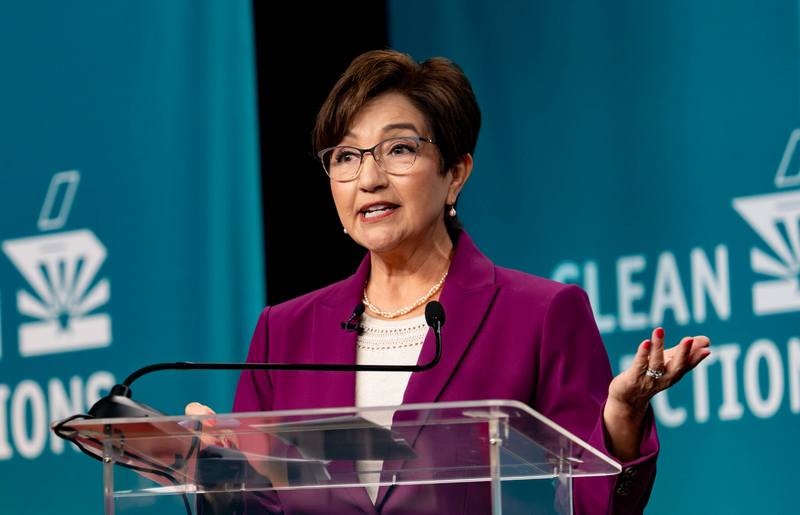
Ruiz said that her plan to help convince teachers to stay in Arizona classrooms would include a return to a respectful dialogue. She accused Yee of failing to do so and attacking teachers over culture war issues. Republicans have increasingly singled out and criticized LGBTQ visibility in the classroom, including how teachers seek to welcome transgender students by using their preferred pronouns.
Horne made crusading against trans students a pillar of his second tenure as state superintendent, advocating against trans girls joining sports teams that reflect their gender identity in court, releasing public statements condemning the use of gender inclusive bathrooms and setting up a teacher hotline for parents to report on teachers who discussed “gender ideology.”
On Tuesday, Yee appeared to advance a similar preoccupation with erasing trans students, saying she is “concerned” about teachers who ask about preferred pronoun use.
“I am very concerned about the pronouns that have been taught in our schools,” she said. “(Children as early as) five years old, asking them if they are a he or a she or an it or a their.”
To retain teachers, Yee said she would push for higher salaries and set up a mentor program for retired and experienced instructors to help guide younger teachers. She called for a return to “traditional” mathematics, reading through phonics and a revival of home economics and workshop classes. Ruiz, meanwhile, said she would support early literacy and math intervention programs, along with an increase in school funding.
In her closing statement, Ruiz characterized Yee as the partisan option, while Yee rebutted that she would represent all children and center the voices of parents — an often repeated mantra from Republicans signaling support for school choice and an intent to eliminate mentions of LGBTQ people from classrooms.
“You can choose more political fighting, you can choose political attacks and personal attacks, or you can choose a career educator who’s been always focused on our students,” Ruiz said.
“It’s time for Arizona parents to be in charge of their child’s education and get back to the basics,” Yee said. “It’s time for parents, not the government, to choose the best education for their child’s unique needs.
Phoenix, AZ