The vote that will reveal the most about Arkansas’ politics
Nov 01, 2026 | 6:00 am ET
Description
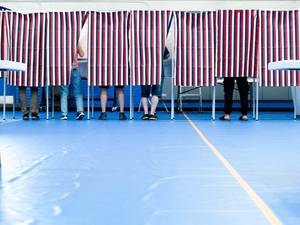
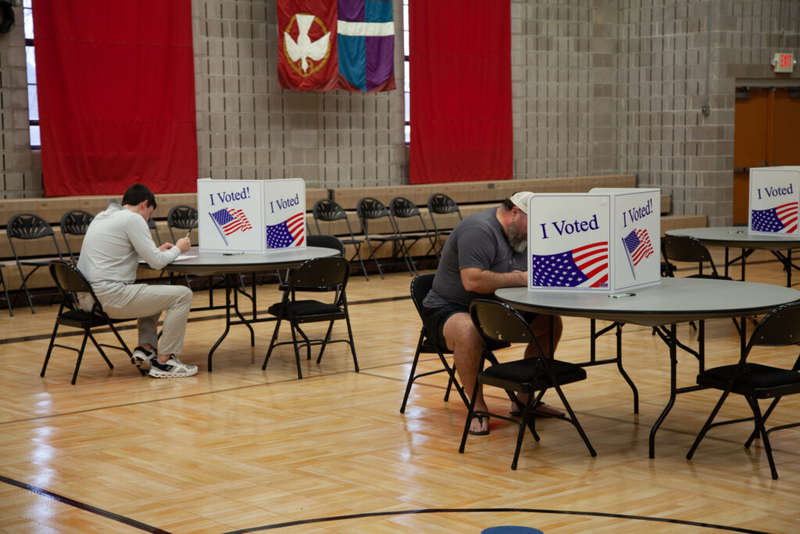
Voters cast their ballots during the March 3, 2026 primary in Little Rock, Arkansas (Photo by Katie Adkins/Arkansas Advocate)
Try as hard as you can, but you’re unlikely to find two Arkansas legislators as far apart ideologically as Bart Hester and Clarke Tucker.
Hester’s the outgoing Republican Senate president pro tempore and Tucker’s a Democrat from Little Rock who ran for Congress eight years ago. The two state senators have been on opposite sides of issues spanning from tax policy to culture war fights.
So it’s not a small feat that the two have paired up in an ad touting a ballot measure on economic development as something both conservatives and progressives can love.
Normally such a bipartisan front would be a sign that there’s broad enough support for this proposal that it’ll be a slam dunk on election night.
Instead, there’s more uncertainty surrounding the proposal — Issue 3 — than just about anything else going before Arkansas’ voters this year. It’s unlikely to gain attention outside Arkansas, especially compared to potentially competitive races for the U.S. Senate and a Little Rock-area congressional seat.
But the outcome of the vote on the proposal could reveal a great deal about the state of Arkansas’ politics, and the divides confronting legislators when they meet next year.
Referred to voters by the majority-Republican Legislature, Issue 3 would permit lawmakers to create programs, loans and grants using public money for the purpose of economic development.
If approved, the amendment would give legislators the authority to pass laws allowing local governments to create economic development districts where incentives like tax rebates could be negotiated to attract new business to a designated area.
Supporters of the measure say it’s a needed tool to help Arkansas compete with other states and have pointed to communities they say would benefit from such districts. It has the backing of the state’s top elected officials and the state’s business lobby.
But the proposal is going before voters during a midterm marked by a wave of anti-incumbent and anti-establishment feelings.
The uncertainty surrounding Issue 3 is underscored by recent polling from Talk Business & Politics and Hendrix College. The poll from early October showed more than one-third of those surveyed undecided about the measure, with 27% for it and 38% against. The poll had a margin of error of plus or minus 5 percentage points.
Opposition to the proposed amendment created strange bedfellows, with conservative activists and some Republicans speaking out against the measure and saying it gives the Legislature too much power on the rules for these districts.
It’s also drawn the ire of some progressives who say it’s a handout for businesses and the wrong approach for growing the state’s economy.
In many ways, the objections to the proposal mirrored the bipartisan opposition to data centers in Arkansas and nationwide. Supporters say the measure isn’t intended to incentivize new data centers, but it’s running into suspicion from voters who felt burned by a lack of transparency.
It’s also coming up for a vote as lawmakers brace for renewed discussion about the Generating Arkansas Jobs Act, which allows utilities to charge ratepayers immediately to recover construction costs for new projects.
Hearing complaints from farmers and other ratepayers about increased bills, some lawmakers who backed the legislation last year say they regret the decision.
A defeat or even a squeaker of a vote in favor of Issue 3 could signal a difficult road ahead for the business lobby, which may be playing defense on the Generating Arkansas Jobs Act, data center regulations and other issues in next year’s session.
It may also indicate establishment lawmakers from both parties have to grapple with a populist backlash that crosses party lines.
Hester and Tucker have found an issue to agree on. The question is which bipartisan coalition will win that argument.
Little Rock