A procrastinator’s guide to New Hampshire’s biggest races in Tuesday’s midterms
Nov 01, 2026 | 7:00 am ET
Description
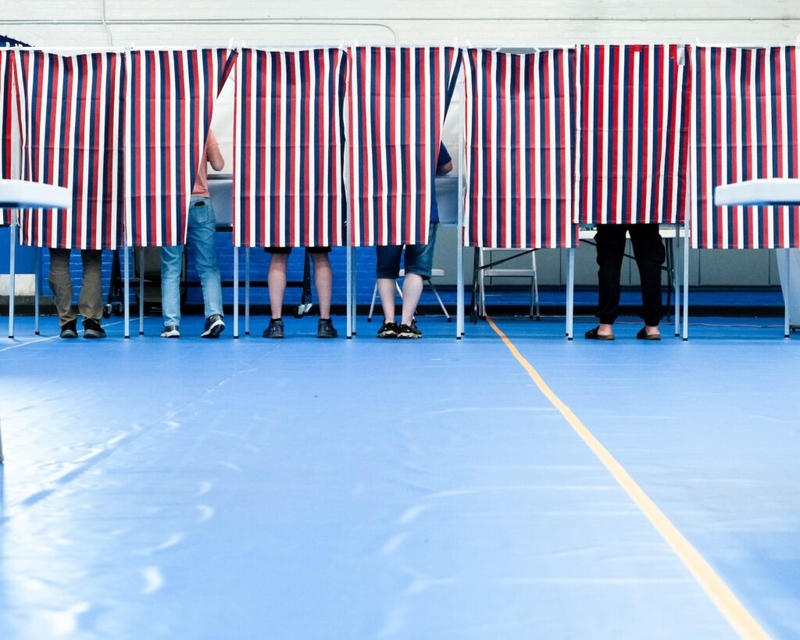
On Tuesday, voters will cast ballots for governor, Congress and State House positions in a a race that could have big implications in the battles for both Congress and New Hampshire state government. (Photo by Will Steinfeld/New Hampshire Bulletin)
In roughly 48 hours, voters across New Hampshire will be lining up at polls to cast ballots in a number of races that could tip the balance of power in both Washington, D.C. and Concord.
Here’s a look at some of the races that will be on New Hampshire voters’ ballots Tuesday.
A nationally watched Senate race
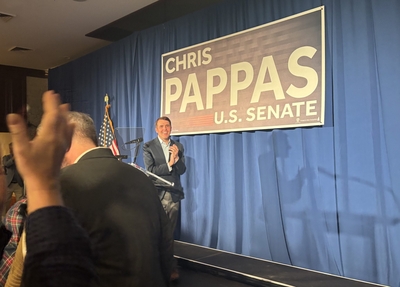
New Hampshire’s U.S. Senate race has attracted attention from spectators across the country. Democrats are expected to make big gains in the battle for Congress, but the national Senate map is still favorable to Republicans. That means if Democrats want to take control, they’ll likely have to hold onto seats like New Hampshire’s.
The seat has been held for almost 18 years by Democratic Sen. Jeanne Shaheen, who announced she was stepping down early last year. That set up an open race.
On the Democratic side, U.S. Rep. Chris Pappas, who has been a reliably centrist voter in the House since 2018, was the first to get in the race and became the party’s nominee in September.
Republican John E. Sununu held this same seat from 2003 until 2009 when Shaheen defeated him in his first reelection bid. Now Sununu is trying to get New Hampshire to send him back to Congress. Sununu has a recognizable last name in the state. The candidate is the son and brother of two former governors and his father served as White House chief of staff to President George H.W. Bush.
Both candidates have sought to make this race about affordability, which has been a driving force across the country this election cycle.

Pappas blames President Donald Trump for inflation that’s been hitting Americans’ wallets, particularly his war in Iran which has driven up gas prices and tariffs which have raised costs for local businesses. Pappas has tried to tie Sununu to the president, who is suffering from very low approval ratings. To address inflation, Pappas has pitched increased funding to the Low-Income Home Energy Assistance Program (or LIHEAP) and exempting small businesses from tariffs.
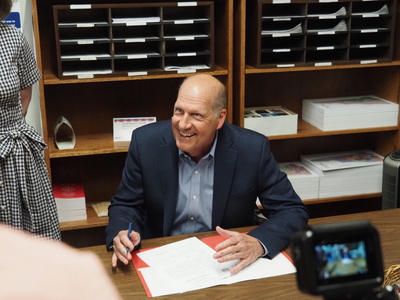
Sununu has pitched old school Republican market-based solutions to economic problems. That includes changing permitting regulations to build more energy infrastructure and reining in federal spending to address the deficit. He’s tried to distance himself from Trump and eschewed Pappas’ accusations that he’d be beholden to the president, even going so far as to say in one campaign ad, “I’ve never even met the man.”
Pappas has attacked Sununu for spearheading a plan during his time in Congress to explore privatizing Social Security. Both candidates publicly oppose cutting benefits, but Pappas argued that Sununu’s privatization plan would put the program at risk of failure. Sununu contends that the program would be in better fiscal shape today if the plan went into effect.
Sununu has argued that during Joe Biden’s presidency, Pappas supported a Democratic agenda that spurred inflation. During a WMUR debate Wednesday, the two disagreed on who contributed to inflation more: Biden or Trump.
A quieter gubernatorial race
In elections where a state has a highly contested Senate battle, the race for governor can sometimes feel overshadowed.
Gov. Kelly Ayotte is seeking reelection for the first time against a challenge from former Executive Councilor Cinde Warmington.
Ayotte was elected in 2024 (New Hampshire is one of two states with two-year gubernatorial terms) and has pushed a tough-on-crime agenda as well as a series of housing laws in her first term. Before being elected governor, Ayotte served in the U.S. Senate and as state attorney general.

Warmington was the only democrat on the Executive Council — an elected body unique to New Hampshire that serves as a check on the governor — from 2021 to 2025. This is her second run for governor. In 2024, she was defeated in the primary by Manchester Mayor Joyce Craig, who ultimately lost to Ayotte.
Warmington was a health care attorney and lobbyist before entering elected office. Among her clients were Purdue Pharma, the drug manufacturer largely blamed for the opioid crisis, and an opioid clinic chain. Ayotte has repeatedly used her work with Purdue to attack Warmington, saying, “We can’t elect an opioid lobbyist to be our governor.”
Warmington has in turn attacked Ayotte’s record, specifically budget cuts she signed into law, the school voucher-like Education Freedom Account Program she expanded and, especially in the later days of the campaign, her opposition to marijuana legalization.
In a second term, Ayotte says she wants to implement the housing bills she signed into law and continue focusing on public safety.
Warmington has promised to reverse the budget cuts, legalize marijuana, and dismantle the Education Freedom Account Program.
Both candidates are now calling for a moratorium on new data centers amid intense public pushback.
A battle in the 1st District

In the first Congressional District, which covers Manchester, Laconia and the Seacoast, Democrat Stefany Shaheen faces Republican Anthony DiLorenzo.
Shaheen is a former Portsmouth city councilor. She’s also the daughter of Sen. Jeanne Shaheen. The younger Shaheen has tried to center health care in her campaign in opposition to Trump’s biomedical research cuts and Health Secretary Robert Kennedy Jr.’s antivaccine efforts.
DiLorenzo is a Portsmouth car dealer who owns more than 20 dealerships. He’s tried to pitch himself as a pragmatic businessman who can fix problems in Washington, D.C. He’s argued he’ll bring fiscal responsibility to Congress.
Shaheen has supported a single-payer Medicare for All system, something DiLorenzo opposes. She also pitched reforming ICE, the agency behind Trump’s controversial mass deportation effort, though when she’s pressed on the issue, she has been inconsistent about whether that means she wants to “dismantle” ICE.
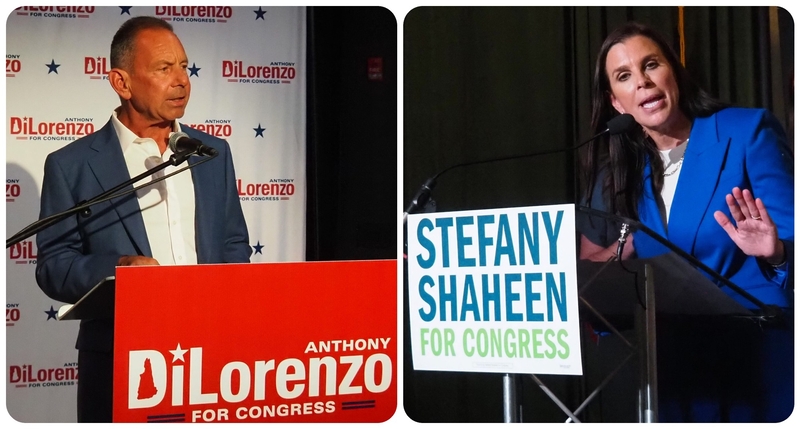
DiLorenzo has said he wants to keep transgender men out of women’s restrooms and sports teams and he wants to protect the 2017 tax cuts Trump signed into law during his first term. But he’s often tried to balance conservative ideals with moderate proposals in the historically purple district. For example, DiLorenzo says he opposes federal abortion legislation.

DiLorenzo earned the president’s endorsement but has refuted Shaheen’s accusations he’d be a “rubber stamp” for Trump’s agenda.
Democrats have accused DiLorenzo of hiding much of his wealth on his financial disclosure forms by placing many of his assets into trusts so that his net worth appears lower than it actually is. DiLorenzo has defended the move by arguing it was done to protect his businesses, the money he wants to leave to his family and the charitable causes he donates to.
Republicans, on the other hand, have accused Shaheen of nepotism. DiLorenzo has consistently said he doesn’t believe she’d be on the ballot if her last name wasn’t Shaheen. He calls her “Silver Spoon Shaheen” in campaign ads.
A rematch in the 2nd District
New Hampshire’s 2nd District covers the western half of the state, including Nashua, Concord, and West Lebanon.
Here, Democrat Maggie Goodlander is again facing Republican Lily Tang Williams. The two battled for the seat in 2024 but this time Goodlander is the incumbent.
Originally from Nashua, Goodlander is now a freshman representative who lives in Concord. She had an eventful career in Washington, D.C. before returning to her home state to run for Congress. There, she worked at the Justice Department under Biden; as a foreign policy adviser for the late U.S. Sens. John McCain and Joe Lieberman; and as a clerk to former U.S. Supreme Court Justice Stephen Breyer.
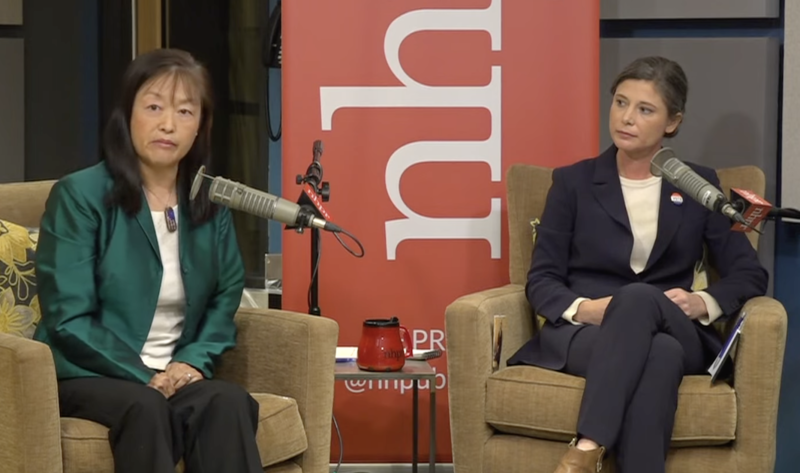
Williams was born in China but moved to Colorado in 1999. There, she had a few unsuccessful campaigns for public office as a libertarian. She then moved to New Hampshire as part of the Free State Project — a political migration movement in which a group of libertarians have attempted, with varying success depending on who is asked, to move to New Hampshire and transform the politics — though she denies involvement with the group today. Williams also ran in 2020 but did not secure the GOP nomination.

Goodlander has touted her vote for the bipartisan 21st Century Road to Housing Act, Congress’ biggest housing legislation in decades. She has also tried to position herself as someone who will vociferously oppose the Trump administration. She’s cited her work on lawsuits against his tariff policies and opposition to the war in Iran.
Williams has tried to cast herself as more centrist this cycle. She’s pitched congressional term limits, banning stock trading by members of Congress and an amendment to the Constitution mandating a balanced budget.
In previous campaigns, she’s been criticized for being too far right. She faced allegations of antisemitism for sharing memes online that claim the Holocaust was spurred by Jews who “gave up their firearms to Hitler.” And during a 2024 debate, she declined to say that Biden defeated Trump in the 2020 election.

In the primary, Goodlander faced progressive attacks, particularly over her vote for the Laken Riley Act. Goodlander was one of 46 House Democrats who voted for the bill, which was pushed by Republicans following the death of a Georgia nursing student at the hands of an immigrant. Progressives and immigration advocates argued the law disregards immigrants’ due process rights, gave too much power to state attorneys general, and empowered ICE ahead of a series of aggressive crackdowns in Minneapolis, Chicago, and elsewhere. Opponents also argue crimes by immigrants are rare and that Riley’s tragic death was an outlier. Progressives have also criticized her for being noncommittal on Medicare for All, and for her past support for military aid to Israel (though her stance on the issue has changed and she voted for an unsuccessful effort to cut aid to the country and called for a “reset” on the U.S-Israel relationship).
Getting to the polls and voting
The polls will open at varying times on Tuesday morning depending on the municipality. Voters can find out where their polling location is and which races will be on their ballot on the Secretary of State’s website at https://app.sos.nh.gov/pollingplacesampleballot. New Hampshire allows same-day voter registration. To register to vote on Election Day, voters will need to provide proof of their identity (driver’s license, government-issued photo ID, or passport), age (also driver’s license, government-issued photo ID, or passport), U.S. citizenship (birth certificate, passport, naturalization papers, or other proof), and domicile (government-issued ID or documentation with an address on it).
Shown here is a sample ballot for voters in Manchester’s First Ward.
Concord, NH