Visa delays, hospital closures and the abandonment of rural Missouri
Aug 15, 2025 | 7:00 am ET
Description
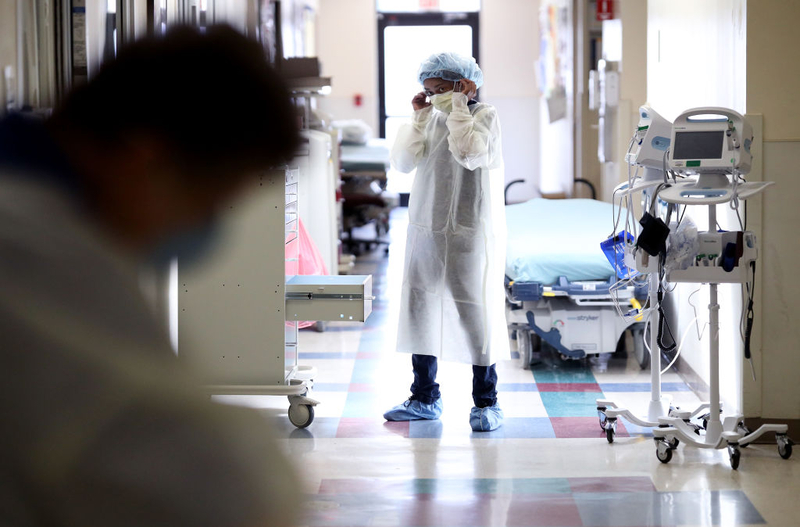
More than 200,000 health care workers, including many physicians, are stuck in the employment-based green card backlog (Win McNamee/Getty Images).
Shannon County has no hospital-based maternity care.
While the local health center offers limited prenatal services, pregnant women often drive 60 to 90 minutes to reach a hospital equipped for labor and delivery. That kind of loss does not just change where babies are born. It changes whether they survive.
Across rural Missouri, the health care crisis is no longer slow moving.
It is here.
Hospitals have closed. Clinics are short-staffed. Entire counties have lost access to basic services like maternity care, mental health treatment, and pediatric visits. Patients wait longer, drive farther and face greater risks for conditions that are treatable. In some communities, proximity to a hospital is now a matter of life and death.
Missouri is one of the hardest-hit states in the country. Since 2014, 18 hospitals have closed statewide, including at least 12 in rural counties, according to the Missouri Hospital Association. The vast majority of Missouri counties are now designated Health Professional Shortage Areas for primary care.
As of 2024, 95 of Missouri’s 114 counties are classified as primary care shortage areas. Some have no full-time OB-GYN, no general surgeon, no psychiatrist, and no pediatrician. And the problem does not stop with doctors. Nurses, lab techs, and mental health workers are stretched thin or missing entirely.
Many of the physicians who are serving rural areas today are international medical graduates working on J-1 visas. These doctors complete U.S. residency programs and agree to serve in underserved communities for at least three years. Without them, many critical access hospitals in Missouri could not keep basic departments open. They fill key gaps in primary care, psychiatry, internal medicine, and pediatrics.
Yet instead of supporting these physicians, our immigration system places them in punishing and unstable positions.
During their mandatory service, J-1 doctors are often unable to change jobs or move if their situation becomes unsafe or unsustainable. Many face visa paperwork delays, legal complications or green card backlogs that can drag on for years.
More than 200,000 health care workers, including many physicians, are stuck in the employment-based green card backlog. Some face decade-long waits for permanent residency, despite serving the communities with the greatest need. In the worst cases, visa complications have forced doctors to leave the communities and patients they served.
The numbers are staggering. More than 70 million Americans live in primary care shortage areas, according to the Health Resources and Services Administration. The Association of American Medical Colleges projects a national shortfall of up to 86,000 physicians by 2036. No region is more vulnerable to this shortfall than rural Missouri.
We are also limiting who gets to become a doctor in the first place.
Fewer than 3% of U.S. physicians are Black men, a number that has barely changed since the 1970s. In fact, the number of Black male medical school applicants has remained virtually stagnant since 1978, despite population growth and increased awareness of diversity gaps. Black students with similar qualifications apply to medical school at comparable rates but face systemic barriers throughout the admissions process.
Rural students and students from low-income backgrounds face many of the same challenges, often without the support or networks to navigate medical school applications, entrance exams, and interview hurdles. They are the most likely to return home and serve. But they are also the most likely to be shut out.
These issues are not separate. They are connected by the same policy failures that delay immigrant physicians, exclude underrepresented students, and leave rural communities without care. In reality, the people most willing to serve rural Missouri are the ones most likely to be pushed out.
I have seen this firsthand. As a nurse, I have worked alongside J-1 physicians, Black physicians, and rural providers who stayed late, picked up weekend shifts, and cared for patients no one else could reach. When visa delays force these providers to leave, it is not just a staffing problem. It is a loss that patients feel deeply. We do not just lose physicians. We lose continuity, safety, and trust.
A hospital closure in Missouri can mean the loss of the only emergency room for 50 miles. It also means job losses, local revenue decline, and shrinking investment in the community. In many rural towns, the hospital is one of the largest employers and anchors the entire local economy. It can mean a pregnant woman goes without prenatal visits. It can mean a cancer survivor misses a follow-up appointment because there is no oncologist nearby. These are not just statistics. They are the consequences of policy choices.
This crisis is not unsolvable. It is being ignored.
While Missouri has filled all 30 available slots in recent years, most have gone to specialists in urban areas. In 2018, only 7% of Missouri’s waiver physicians practiced in rural communities, and just 7% worked in primary care. These patterns raise important questions about whether the program is achieving its intended goals.
At the same time, immigration policy continues to destabilize the very workforce rural health systems rely on. We can reduce the green card backlog that leaves essential workers trapped in legal uncertainty while hospitals go understaffed. We can protect health care providers from immigration enforcement that disrupts care and fractures communities. And we can invest in real pipeline programs that help rural and underrepresented students become the physicians their hometowns desperately need.
Missouri cannot afford to keep losing providers. And we cannot afford to make it this hard for the people who are ready to serve. This is not just about workforce numbers. It is about whether we choose a system that protects rural communities, or one that lets them quietly vanish.
Jefferson City, MO