To change the narrative, you have to change the reality that created it
Jun 08, 2026 | 7:00 am ET
Description
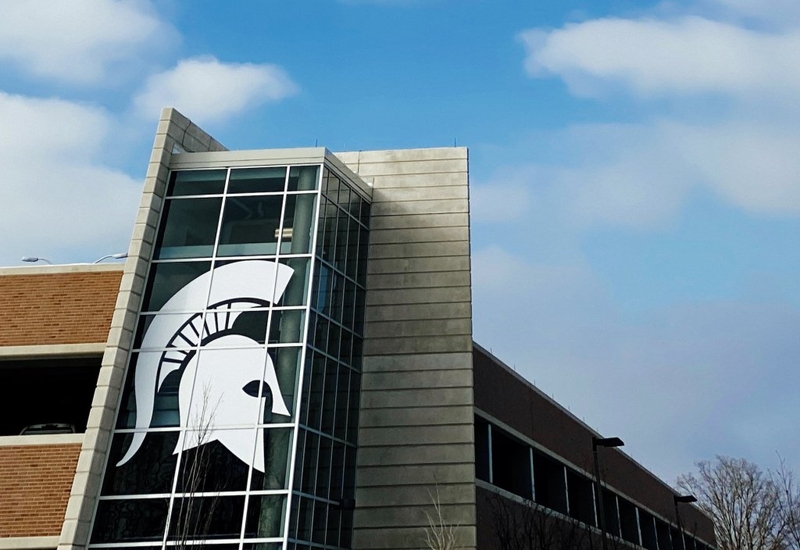
Michigan State University | Susan J. Demas
When an institution is in crisis, the universal instinct is to manage the narrative, better messaging, positive stories, and staying ahead of the news cycle. Manage what people think until they start thinking about something else. That instinct is not always wrong. But messaging alone is never enough.
In a recent message to the Spartan community, the Michigan State University trustees shared that they have begun evaluating next steps for the university’s leadership. They said they will conduct “a facilitated discussion with an advisory group of representatives from key university constituencies to provide input about the immediate next steps of identifying interim and long-term leadership for the university.”
That may be a worthwhile exercise. But if the university wants to show its next president that it is working from a foundation of shared values, shared goals, and genuine trust, it has to change more than the process for selecting leadership. It has to change the structure of how it governs.
If MSU can fix the foundation that caused the crisis, the narrative will change on its own, and any candidate seriously considering leading the university will see how committed its leadership is to moving forward.
MSU President leaving for Clemson amid contention among trustees, just after salary increase
If you want to change the story, you have to change what the story is about.
Some want to change how trustees are selected. Others want to dwell on the dynamics of board leadership. Both are easier conversations than the harder one: what is broken, and what will it take to repair it?
The answer is structured dialogue, led by a neutral outside party, that brings the people responsible for MSU’s governance, and the stakeholder groups who depend on that governance, into direct, honest conversation. Not a listening session or a box to check. Structured dialogue is a disciplined process that surfaces what is broken, builds enough shared understanding to make hard decisions, and creates the conditions for a new leader to walk into an institution that is genuinely ready to move forward.
Organizations across the country have used structured dialogue to move issues that conventional approaches have failed to move, in healthcare, energy, education, child welfare, and more.
The Convergence Center for Policy Resolution is a Washington, D.C.-based nonpartisan, nonprofit that convenes leaders with diverse or conflicting views to build trust, identify solutions, and form alliances. When conventional approaches have failed and stakeholders have hardened into adversarial posture, the Convergence Center is called in to design and lead the structured process that breaks the impasse.
In Kentucky, access to high-quality childcare had been stuck for years. Providers were struggling. Workforce shortages were worsening. Kindergarten readiness rates were falling. Everyone agreed the problem was urgent. No one could agree on how to frame it, who was responsible for solving it, or what a sustainable system would require.
The Kentucky Chamber of Commerce Foundation, recognizing that the issue would not move through conventional advocacy, brought in Convergence to convene a statewide collaborative of stakeholders — childcare providers, employers, business leaders, advocates, faith leaders, policy experts, and representatives from rural and urban communities across the political spectrum.
Over 18 months, Convergence built the conditions for honest conversation across genuinely competing perspectives. The result was not another report. It was legislation. House Bill 6, addressing childcare regulations, quality standards, affordability, workforce development, access for children with special needs, and community-based solutions. In April, HB 6 passed the Kentucky House 83 to 10 and the Kentucky Senate 36 to 1, with near-unanimous bipartisan support, with the governor signing it into law.
Convergence has used the same approach at the national level, convening health systems, insurers, housing organizations, community-based nonprofits, and federal policymakers in Washington who had spent years in adversarial posture over the social determinants of health. What emerged was a Blueprint for Action, consensus solutions on system integration, workforce development, and data sharing that no single sector could have produced alone.
In both cases, the issue was not a shortage of ideas or goodwill. It was the absence of a process designed to move it. MSU’s governance crisis is no different. The trustees and stakeholders who need to move forward together are not short on opinions. What they lack is a structured process, led by a neutral outside party, that creates the conditions for honest conversation and builds agreements that hold.
In Colorado, the Keystone Policy Center facilitated the Timothy Montoya Task Force, a two-year process convened by the state’s Child Protection Ombudsman to examine why youth run from out-of-home placements and what a more effective response would require. The task force brought together child welfare professionals, advocates, and state officials with competing perspectives on mandatory reporting, state intervention, and family support. The result was concrete recommendations that changed how the state responds to vulnerable children.
On education, Keystone partnered with the Colorado Community College System on a statewide listening process that placed community voices at the center of a five-year strategic plan rather than delivering one from the top down.
In child welfare and in higher education, Keystone did not convene people and hope for the best. It understood the problem first, identified who needed to be in the conversation and worked towards a defined outcome.
MSU’s trustees would benefit from the same discipline. The advisory group they have announced is a start. But convening people without first designing the process wont resolve the underlying issues.
While MSU works through its immediate crisis, the University of Michigan is navigating its own presidential search. New regents will be elected in November. Knowing the uncertainty that lies ahead, U-M’s current regents have an opportunity, before those regents take office and before a new president is selected, to do something almost no university in this situation chooses to do build the relational infrastructure before it is needed.
That means convening the incoming board, the outgoing board, university leadership, faculty governance, and key stakeholders in a process designed not to produce a statement of shared values, but to answer specific, practical questions. What does functional governance look like at the University of Michigan? What are the conditions under which a new president can succeed? What would have to be true about how the board operates for the most qualified candidates to see Michigan as a place they want to lead?
Most presidential searches hire a search firm. They conduct interviews, announce a selection, and hope the new leader is strong enough to manage whatever they walk into. As we have seen at Michigan State University, the University of Michigan, and Wayne State University, often it does not work because the structural conditions that made the previous leadership untenable are still in place.
A new president should not have to fix a broken board. The current leadership can do that work now, repair the fractured trust, demonstrate through action that the institution is ready to move forward, and show any incoming president that what they are walking into is genuinely different from what they read about.
Crisis management controls what people think. Structured dialogue changes the conversation and the conditions that made the crisis possible in the first place. Institutions that recover are not the ones with the best PR firms. They are the ones that change what is broken and then let that changed reality speak for itself.
The difference between the story and the reality underneath it is the difference between an institution that recovers and one that keeps cycling through the same crisis under different names.
I believe there is always a path forward. But we have to start the conversation.
Lansing, MI