Valley North’s proposed transmission line has sparked a familiar debate over land, resources, power
Oct 26, 2026 | 6:00 am ET
Description
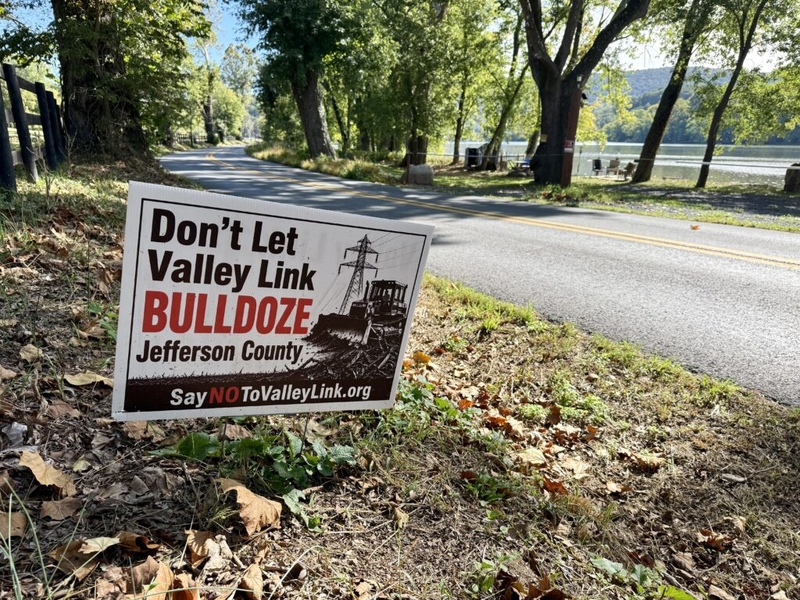
Along the Shenandoah River in Jefferson County, West Virginia, a roadside sign delivers a pointed message about the proposed Valley North transmission line, which has become the focus of a growing grassroots opposition movement. (Photo by Mike Chalmers for West Virginia Watch)
The view from Marc and Elizabeth Shockley’s front porch could easily land in an outdoor magazine. The historic landscape slopes gently downhill away from their home (circa 1790), and tumbles like a painting across Bloomery Road in Charles Town, West Virginia, eventually spilling into the Shenandoah River at the base of the Blue Ridge Mountains on Jefferson County’s eastern edge.
For 13 years, the Shockleys have lived and farmed hay, beef cattle and corn on their 96-acre postcard of a plot, which they named Mulberry Hill Farm — just 15 minutes from downtown Charles Town.
Like their neighbors, the land in this part of the county represents many things — above all else, a living, a dream setting. A forever home.
As fate would have it, the swath also means something else to someone else — a potential opportunity for Valley Link Transmission Company LLC, a joint venture among Dominion Energy, FirstEnergy Transmission and Transource Energy. Its proposed Valley North Project would span approximately 260 miles, carrying new 765-kilovolt transmission lines from the coal-fired John E. Amos Power Plant in Putnam County, West Virginia, to Frederick County, Maryland — a colossal infrastructure undertaking that could cut through 20 West Virginia counties and gobble up nearly 7,000 acres of farmland, forests, and residential property along the way.
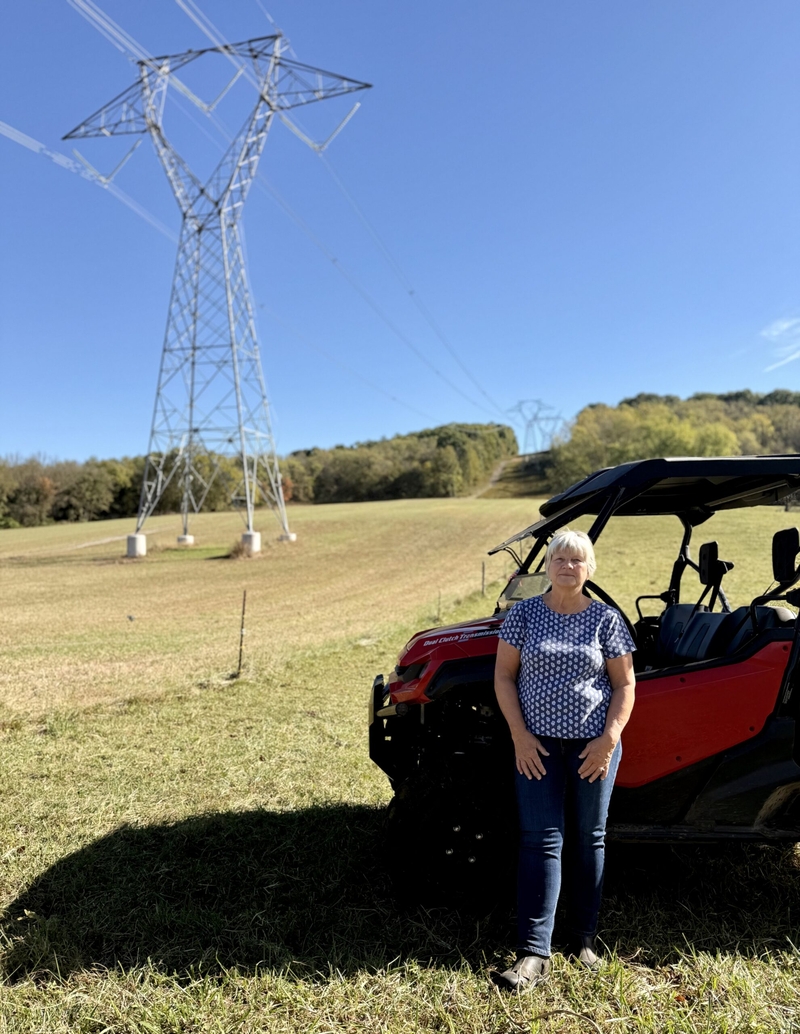
When the Shockleys sit on their front porch in the evenings, like many nearby, they’re reminded of why they chose this part of West Virginia to call home. When they spend their days working out back — already bordered by power line towers over 100 feet tall — they can’t help but wonder what the future holds, and if there’s even a place in it for them and their family.
“Between here and the highway, which you can see through the trees in the winter, there could be four sets of transmission lines within walking distance of us if Valley Link gets approved,” Elizabeth said. “What’s the ramifications of that?”
For Shockley, the prospect of another transmission corridor raises questions that extend well beyond the view from her back door. Mulberry Hill Farm is a working agricultural operation, with hay and corn fields and a cow-calf business that helps support the family, including a son-in-law employed in the operation. The possibility of massive transmission towers rising through those fields presents a host of practical concerns.
“There have been things written about fertility in cattle, and that’s what we do,” she said. “That’s a serious worry for us.”
Water is another pressing concern. The Shockleys recently drilled a replacement well that had to reach six times deeper than the original. The experience has heightened their anxiety about what extensive drilling required to stabilize towers that could reach nearly 200 feet high might mean for the underground water sources sustaining their farm.
“What will all that drilling do to the water table here and the aquifer system?” she asked. “We can’t survive here without water for our cattle.”
Beyond water and livestock, the family has reservations about navigating farm equipment around transmission structures in cultivated fields, the potential for wildfires, and the possibility of herbicide applications along maintained rights-of-way. The latter is particularly troubling for a family that tries to minimize chemical interventions in its agricultural practices.
“We try really hard to avoid that stuff,” Shockley said, referring to the potential spraying within Valley Link’s projected 200-foot easement surrounding either side of the proposed towers. “We try to keep our cattle as free of antibiotics or anything else as we can.”
And then there are questions about exposure. While the health implications of transmission-line exposure remain a subject of scientific research and debate, the uncertainty itself weighs heavily on Shockley and her husband. “My grandkids run around here. What are the health risks for them? That’s a real concern for us.”
Land, legacy and leverage
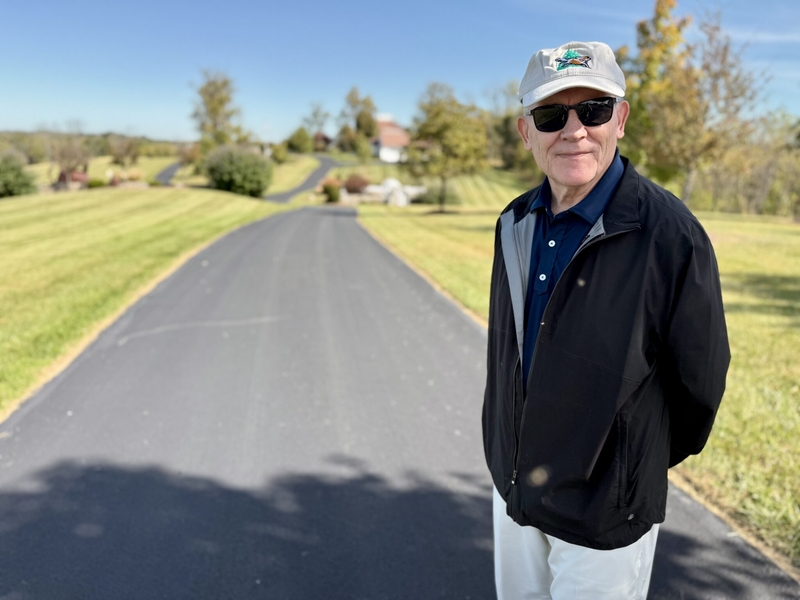
For Dan McGinn, the fight against Valley North is about more than transmission lines. It’s about history, property rights and an all-too-familiar West Virginia predicament — sacrificing land and resources for the benefit of someone somewhere else.
McGinn and his wife moved to Jefferson County in 2012, undertaking an extensive restoration of a 270-acre property overlooking the Shenandoah River. The land, anchored by a home dating back to approximately 1740, has documented ties to George Washington and the region’s early westward expansion. Under two proposed route alternatives, transmission towers and the 200-foot easement could cut through the property’s fields or pass directly in front of the historic home.
“We came here because we love history,” McGinn said. “We feel like the history in this county is underappreciated and under-promoted. This is one of the five most historic counties in America, and I say that without any hesitation.”
McGinn has since become one of the project’s most vocal opponents, publishing commentary through his Substack and the website Say No to Valley Link, organizing residents, and personally funding research and mailers throughout Jefferson County. Alongside groups such as Jefferson County VOLT (Voices Opposing Line Transmission), opponents have been pressing elected officials and raising public awareness about a project they believe offers little to no local benefit.
At the center of their argument is a fundamental question: Why should West Virginians surrender thousands of acres of land to accommodate growing electricity demand elsewhere — particularly northern Virginia’s sprawling data center industry?
“This is just an extension cord,” McGinn said. “No one can give you any legitimate reason why this benefits the state of West Virginia.”
Opponents argue that without a local substation to deliver electricity to Jefferson County, residents would bear the environmental and property impacts without receiving a corresponding direct power supply. McGinn also disputes the project’s underlying demand projections and warns that West Virginia ratepayers could face substantial costs for infrastructure he believes primarily serves northern Virginia.
“This is not just a power line fight,” he said. “It’s an electric utility bill tax fight because every single resident and every single business is going to pay a higher electric bill to support this.”
Through McGinn’s reach, the movement has attracted support from prominent figures, including filmmaker Ken Burns, author Malcolm Gladwell, musician Marty Stuart, and Bass Pro Shops founder Johnny Morris. Yet McGinn maintains that the opposition’s greatest strength lies with ordinary residents — farmers, tradespeople, teachers, veterans and families facing the possibility of losing control over land they’ve spent generations maintaining.
“Who’s going to fight for them?” he asked.
For McGinn, the disparity is especially troubling given the possibility of eminent domain, which could ultimately allow the acquisition of property rights without landowners’ consent.
“It’s a ridiculously imbalanced fight that we’re trying to wage here,” he said. “But what I told the community is we have the moral high ground, and I don’t say that lightly. We do.”
And increasingly, he believes, the public agrees. “The more people know about it, the more opposed they are,” he said.
Jefferson County Commissioner Cara Keys shares McGinn’s concerns. Although the commission has formally opposed Valley North, submitted public comments and held town halls, it has no direct authority to approve or reject the project — a reality Keys finds particularly troubling given the potential consequences for local landowners and the county’s long-term planning.
“I think it’s frustrating as a local leader when decisions, in this case at the West Virginia (Public Service Commission), and of course the PSC in other states, and federal, have the authority to negate our planning for economic development — our planned areas to remain agricultural in nature,” she said.
Like McGinn, Keys questions the absence of any direct energy benefit to Jefferson County, comparing the proposed transmission corridor to “… highways in the sky that have no on- or off-ramp. Without a local substation, the county would bear the impacts of infrastructure intended to serve electricity demand elsewhere.”
Still, Keys believes coordinated opposition from affected counties across West Virginia, Virginia and Maryland could influence the regulatory process. “Though county commissioners don’t have a codified voice, potentially working with all of the impacted counties as a whole package will show strength to the PSC.”
Promises and property lines
Valley Link, however, disputes the characterization that Valley North is primarily intended to serve northern Virginia’s data centers.
“The Valley North Project is not being developed for a specific data center, county, customer or industry,” said Lauren Siburkis, spokesperson for the project. She explained that PJM Interconnection, the regional electric grid operator, selected Valley North to address long-term reliability needs driven by growing electricity demand from manufacturing, economic development, population growth and emerging technologies.
Siburkis also pointed to projected economic benefits, including nearly $14 million annually in property tax revenue across West Virginia, with approximately $9 million supporting schools. Jefferson County alone could receive nearly $1 million annually, according to the company’s estimates.
She emphasized that no final route has been selected and that public feedback is helping shape the process.
“The goal is to avoid or minimize impacts to homes, farms, businesses and important community resources wherever feasible,” she said. “If a property is ultimately located along an approved route, Valley Link would work directly with the landowner to discuss easement needs, property-specific considerations and fair compensation. In most cases, landowners retain ownership of their property and can continue many of its existing uses.”
For Jefferson County resident Lisa Boyer, those assurances offer little comfort.
She and her husband, James, own a 113-acre Jefferson County farm that has been in his family for more than a century. Alongside their dog-boarding business, the couple raises hay for their animals and for sale, while maintaining roughly 5 acres of wildlife habitat threaded with trails where Boyer rides her horse.
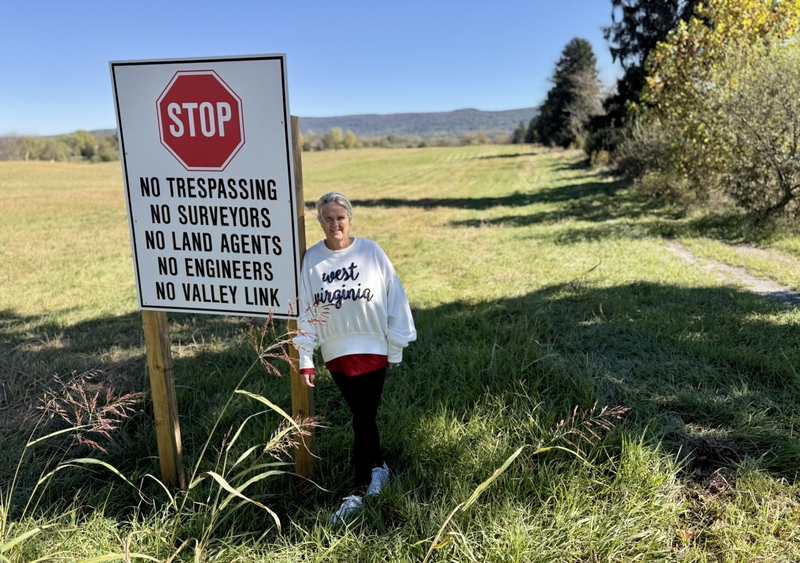
Boyer said neither she nor her husband have been contacted directly by Valley Link. From conversations with neighbors, she believes others in the area have been similarly overlooked.
“It just feels like this giant corporation is coming in and doing whatever it wants, without any consideration for the people who actually live here,” she said.
Under one proposed route, Boyer fears losing a substantial portion of their hayfield and much of the habitat, along with facing potential impacts to their well, property value, and retirement plans.
“It’s devastating,” she said. “It’s the last thing I think about when I go to bed, and the first thing I think about when I wake up in the morning.”
Already crossed by existing transmission lines, the property could ultimately be surrounded on three sides by high-voltage infrastructure. Boyer questions why alternatives along existing utility corridors, highways, or railroads weren’t pursued instead.
“It’s exhausting to think that we’ve taken care of this land for a hundred years in the family, we’ve paid taxes on it and they’re allowed to come and bulldoze through it,” she said.
For Boyer, the uncertainty has shaken something more fundamental than the future of the farm itself. “You think you’re protected on your own land. And then one day, you realize: do I even really own it?”
Looking ahead
Ultimately, the Valley North Project’s future rests with state utility regulators. Although regional grid operator PJM Interconnection selected the project to address electric grid reliability needs, Valley Link must still obtain separate approvals from the West Virginia Public Service Commission, Virginia State Corporation Commission and Maryland Public Service Commission before constructing the proposed transmission line.
In West Virginia, regulators must determine whether the project addresses electricity needs or regional reliability, serves the best interests of West Virginia customers and citizens and strikes an acceptable balance between power demands and environmental impacts. Proposed routes, landowner concerns and evidence submitted by opponents could all factor into that review.
Valley Link currently anticipates filing regulatory applications in early to mid-2027. Until then, residents can continue submitting comments, attending public meetings, gathering evidence and pressing elected officials. Once applications are filed, the process will shift toward formal regulatory proceedings, where testimony, technical evidence, and legal arguments could play decisive roles. Under West Virginia law, property owners within the preferred transmission corridor must also receive notice by certified mail at least 30 business days before the PSC’s deadline for filing petitions to intervene, giving affected landowners an opportunity to participate formally in the proceedings.
For opponents, those proceedings will represent a critical opportunity to challenge the project’s necessity, proposed routes and impacts. And should West Virginia regulators deny the required certificate, that decision could present a major obstacle to Valley North’s construction along its proposed corridor.
Charleston, WV