Low-income advocates ask UTA to pause its fare increase proposal
Oct 26, 2026 | 7:01 am ET
Description
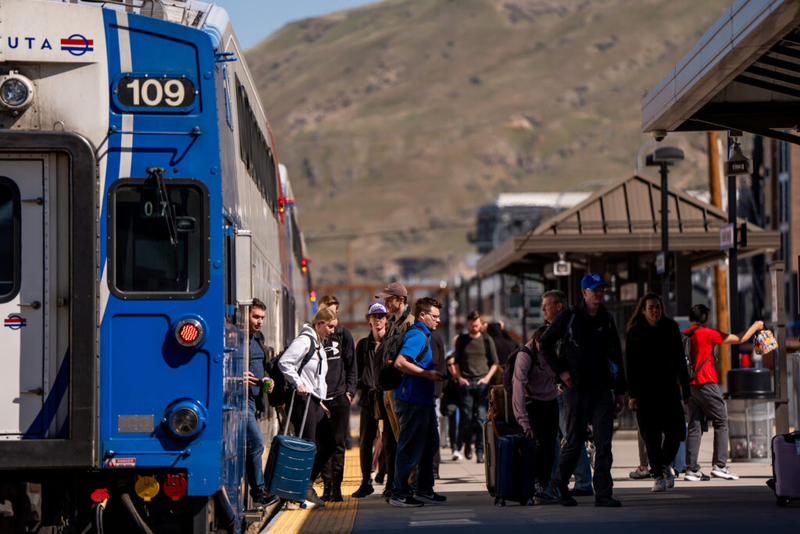
Passengers board and disembark a UTA FrontRunner train in Salt Lake City on Thursday, April 18, 2024. (Photo by Spenser Heaps for Utah News Dispatch)
As the Utah Transit Authority proposes a 20% fare increase, a low-income advocacy group is asking the agency to take a step back and consider putting more resources toward increasing enrollment of available discount passes before hiking fares.
The Crossroads Urban Center sent a letter to UTA last week as part of the public comment period assigned for the authority’s proposed budget, which includes an increase to the base fare for buses and TRAX from $2.50 to $3. If approved, this would be the first fare increase in the services in 13 years.
However, the increase would come at “a really bad time,” said Bill Tibbitts, deputy executive director at Crossroads Urban Center.
He pointed to the rising cost of living, which has led close to half of Americans to struggle to pay for basic needs.
“I would feel better about a price increase if I knew that the people who are going to be hurt by it the most were all enrolled in the discount pass program. I am not confident that that’s the case,” Tibbitts said. “And so I think that they should pause, put some effort into making their discounted pass programs work. And then, if that doesn’t increase revenue in ways enough to make a fair increase not necessary, then then they can look at increasing prices.”
UTA proposes an increase to a $3 base fare. But first, it wants to hear from Utahns
UTA has a reduced fare program for people with disabilities, seniors, youth and low-income households, which allows some to pay $1 for local trips and $2 for premium services, like FrontRunner or express and ski buses.
UTA hasn’t published how many riders use the program. However, nationally, discounted fare programs struggle to attract participants, with fewer than one in three eligible people enrolling, according to the Urban Institute, a think tank.
In Salt Lake City, for example, the Hive Pass, which allowed access to Utah Transit Authority buses, TRAX and other routes for $42 a month, was terminated in the last city budget cycle. The program was available to all Salt Lake City residents regardless of income, but on average it only had 443 users per month.
UTA’s programs are great, Tibbitts said, especially with the established caps, which could limit riders’ spending to $8 a week. But not many people know about them.
Crossroads Urban Center gives out one-day UTA passes at its Downtown Salt Lake City food pantry, but there’s a “general lack of awareness” on the programs, Tibbitts said.
Two Salt Lake City transportation programs didn’t survive budget cuts — here are the updates
“There’s room for real growth,” he said. “I just know that we are seeing over 12,000 people per month in our food pantries. We give away 50 day passes for UTA service in our downtown pantry every Monday through Friday, and they’re always gone within an hour or two.”
With people struggling to afford the cost of living, including high gas prices, the need for public transportation is growing.
“For low-income people, public transportation can be such a big part of them having healthy and productive lives,” Tibbits said. “If you’re having trouble paying to ride the bus, you’re not going to take an Uber instead. But you could stay home. You could just not go to something.”
UTA officials hadn’t reviewed the letter when they were asked for comment last week. However, Gavin Gustafson, public information officer at the authority, told Utah News Dispatch on Friday that proposals aren’t final and that all received comments will be considered before any final decisions are made.
“We’re still in the evaluation process at this point,” he said.
The authority will hold a public open house on Monday at 5:30 p.m. at UTA’s headquarters (669 W. 200 South, Salt Lake City). The meeting will also be livestreamed on UTA’s website. Those who wish to participate in the public comment period online must register in advance.
Salt Lake City, UT