UPDATED: Public Service Commission to take up NorthWestern, Black Hills merger
Oct 23, 2026 | 3:40 pm ET
Description
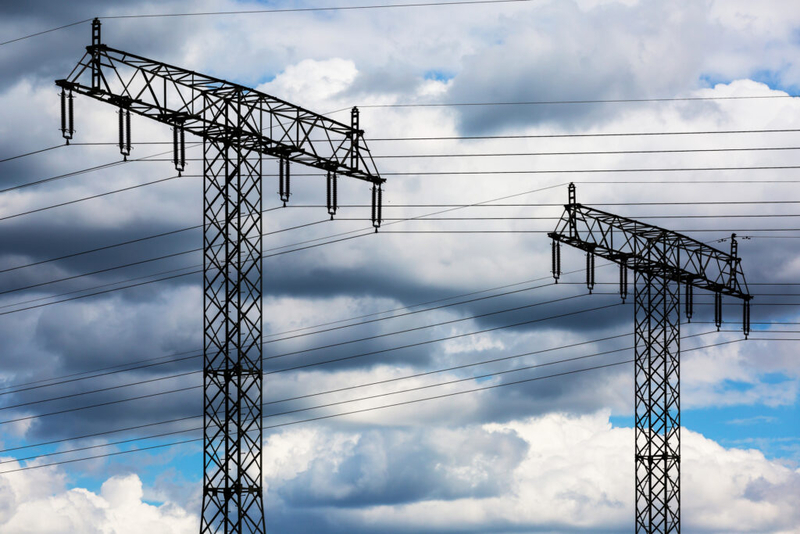
Electricity pylons (Photo by Getty Images).
The Montana Public Service Commission is scheduled to take up the $15.4 billion merger proposal by NorthWestern Energy and Black Hills Corp. on Tuesday.
PSC legal and regulatory staff recommend approval of the merger.
NorthWestern Energy, the largest public utility in Montana, has argued the merger will not harm Montana customers, and some of the parties in the case are in support of the deal following their own settlement agreements with the utilities.
PSC staff recommend approval based on those four agreements, including one with the Montana Consumer Counsel, which advocates on behalf of customers.
Released on Friday, a PSC staff memo said the merger will not harm customers.
“The concerns of all intervenors — with the exception of 350 Montana and Montana Farmers Union — were addressed” in the settlements, the staff memo said.
For example, the Laborers International Union of North America Local 1686 requests approval of the merger given the utilities agreed to take steps to support union workers.
Those steps include a “new commitment” giving preference to contractors hiring workers in or near their own communities, Local 1686 said in a filing.
But 350 Montana and Montana Farmers Union describe the merger as “a shell game” that will place financial risks on Montanans. 350 Montana is a nonprofit with a mission to reduce atmospheric carbon dioxide.
The two parties urge the PSC to reject the merger — or set conditions that protect Montanans, especially from the potential costs of data centers.
The PSC is a five-member body, currently all Republican, that regulates monopoly utilities in Montana.
“In the end, this is not about love. This is about money,” wrote lawyer Monica Tranel on behalf of 350 Montana and Montana Farmers Union. “Enforceable conditions are the necessary prenuptial here.”
The Public Service Commission is scheduled to consider the merger at its 1:30 p.m. meeting Tuesday, Oct. 27. The meetings are available by video on the PSC website.
Proposed order
The draft order, released Friday with the staff recommendation, quoted Moody’s in an announcement about the merger.
It said the transaction is “strategically sound,” and NorthWestern Energy would “benefit the most” from the geographic diversification.
In calculating savings from the merger, the utilities estimated labor savings to be $36 million, and total savings to be $48 million to $70 million, according to the draft order, which redacts savings details.
In explaining support for the merger, the draft order said the utilities won’t bill customers for the costs of the merger or any “golden parachute” costs.
An earlier Securities and Exchange Commission filing outlined nearly $30 million for five NorthWestern executives if the merger closes without jobs for them (one retired after that filing).
“NorthWestern will continue doing business as NorthWestern in Montana for the foreseeable future,” the draft order said.
It also said the utility in Montana will remain subject to the PSC’s regulatory authority after the merger. “Commission oversight of NorthWestern will not change,” the draft order said.
Already, protections are in place that insulate NorthWestern from “the business activities of its parent,” the draft order said. The new company is named Bright Horizon Energy.
For example, the Montana utility “must be maintained as a separate subsidiary” with separate books and records, and it can’t guarantee debt of its corporate affiliates, the draft order said.
As cited in the draft order, a witness for the Montana Consumer Counsel said Montana will continue to get “appropriate resources and management attention” if the companies merge.
The utilities argue customers will benefit, including from “more efficient access to capital,” and Northwestern said the merger will make the companies “financially stronger and more resilient” in facing industry volatility.
The draft order notes the utilities are chasing data center deals, and they’ll be doing so whether the merger is approved or not.
“The (utilities) also believe the merger will better position them to capture data center customers,” the draft order said.
350 Montana, Montana Farmers Union are holdouts
The groups holding out on the merger, 350 Montana and Montana Farmers Union, outline the conditions they argue are needed to protect Montana customers, especially given the goal of the utilities to invest in data centers.
The parties said NorthWestern and Black Hills couldn’t make the projects safe enough to attract capital on their own, so they are putting Montanans at risk.
Bright Horizon investors “capture the returns when the data center bets pay off,” the parties said. “Montana ratepayers hold the risk when they don’t.”
They argue the PSC should ensure all the costs to develop data centers, including transmission and distribution upgrades and generation reserves, are allocated to those customers, and not to “captive residential and commercial ratepayers.”
The parties also said conditions should include a “minimum investment commitment for Montana,” a dollar figure that’s approved in NorthWestern’s pending Integrated Resource Plan, a roadmap for how to meet future energy needs.
Additionally, they said the PSC must require NorthWestern “to prioritize least-cost generation resources” to serve Montana’s captive customers first.
A merger also should ensure Montana ratepayers don’t have exposure to wildfire risk from other states, the parties said.
Montana last to vote on merger
In response to 350 Montana and Montana Farmers Union, the draft order argues the PSC can deal with the issues the parties identify, such as data centers and future energy needs, in separate cases, and it is dealing with them.
The draft order said those two parties have treated the merger proceeding as “a bazaar, a place to trade support for goods unrelated to the transaction.”
Nov. 12 is the deadline for a final decision.
Montana is the last state that needs to approve the merger, according to the South Dakota Searchlight. Regulators in South Dakota, where Black Hills is based, approved the deal in June.
If approved, the new company will operate in Montana, South Dakota, Arkansas, Colorado, Iowa, Kansas, Nebraska and Wyoming.
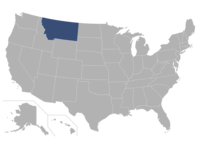
Helena, MT