U.S. scientific instruments in oceans off Alaska and elsewhere to remain in place
Jun 19, 2026 | 9:15 am ET
Description
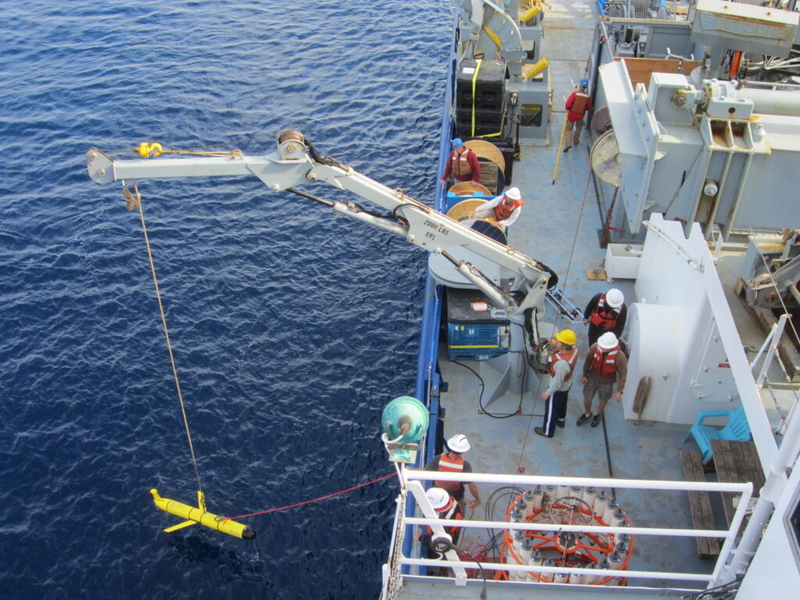
A glider is deployed in the Gulf of Alaska as part of the National Science Foundation's Ocean Observatories Initiative program. Gliders are autonomous underwater vehicles that can gather data for weeks or months. The glider was deployed as part of Global Station Papa Array, a collection of instruments positioned in the Gulf of Alaska through the Ocean Observatories Initiative. (Photo provided by the Station Papa Science Team)
Hundreds of sophisticated monitoring instruments will remain in place in the nation’s oceans, thanks to a National Science Foundation reversal of its plan to partially dismantle the system.
The federal agency announced on Thursday that it is dropping its plan to remove hundreds of instruments from the Ocean Observatories Initiative program.
The program encompasses more than 900 instruments monitoring ocean currents, temperatures, sea life and other conditions. Information gathered is used to analyze weather and prepare for extreme weather events, manage fisheries, record climate change and other functions. The $386 million system was installed a decade ago and was intended to last for three decades.
News that the Trump administration planned to pull out hundreds of the instruments – including those positioned in Alaska’s ocean waters – triggered outrage from scientists, the fishing industry, members of Congress from coastal states and others.
Alaska’s Murkowski among Congress members seeking to save ocean science network
Late Wednesday, the U.S. Senate approved a bill to prohibit federal spending for decommissioning of any of the Ocean Observatories Initiative without a thorough review, including review by people and organizations using the information provided by the system
The bill was introduced and brought to the floor by Sen. Lisa Murkowski and Sen. Jeff Merkley. Called the “Saving the OOI Act,” it passed by unanimous consent.
The following day, the National Science Foundation announced the reversal of a decision that it previously classified as a mere “descoping” of the observatories network.
“The U.S. National Science Foundation appreciates the concerns raised by the range of stakeholders that have informed us they rely on data from the Ocean Observatories Initiative (OOI),” said a statement released by the agency. “Effective immediately, NSF will not proceed with further removal or descoping of equipment from the remaining arrays and will continue operations including planned maintenance.”
The National Science Foundation said it had already removed part of the system, called the Endurance Array, which is a number of instruments that were placed along the coasts of Oregon and Washington. But now, the agency said, “we are developing plans to redeploy the equipment after servicing.”
Murkowski, one of the prominent defenders of the Oceans Observatories Initiative, emphasized the importance of the system to Alaska, which has more coastline than the rest of the states combined, a fisheries industry worth billions of dollars annually and coastal communities vulnerable to extreme storms.
In a statement, she and Merkley said they welcomed the new decision to keep the Ocean Observatories Initiative intact.
“The National Science Foundation’s decision to leave the Ocean Observatories Initiative’s buoys in place is a massive win for coastal communities and fishermen around the country,” Murkowski said. “The data accessed through OOI is important for so many, and I’m immensely grateful that NSF listened to our calls. Today we saw the federal process at work—with the Senate quickly passing legislation and the executive branch responding to our position. I’m pleased to have partnered with Senator Merkley and a number of my colleagues to preserve this valuable system.”
Merkley said the OOI’s work is vital that he and Murkowski would continue to be champions of the initiative: “We’ll keep fighting to ensure scientists, fishermen, and coastal communities can continue to utilize the critical data the OOI provides.”
While most of the sponsors of the bill were Democrats from coastal states, a second Republican had signed on as of Wednesday as a cosponsor: Sen. Dan Sullivan, R-Alaska.
Support from senators of both parties was important, said a statement released by the environmental group Oceana.
“We commend the bipartisan group of lawmakers who acted quickly to oppose the dismantling of this critical tool for monitoring the health of our oceans,” Oceana Senior Campaign Director Gib Brogan said in the statement. “Strong ocean science benefits everyone, and this reversal will ensure this tool continues to provide benefits for all of us for years to come.”

Juneau