A Union for Home Care Workers? Many Are Wary.
Jun 29, 2026 | 5:00 am ET

Description
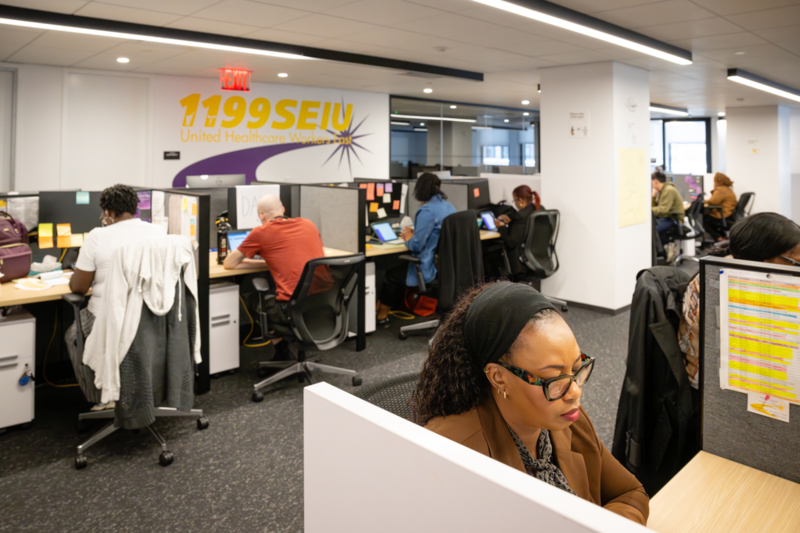
On the 16th floor of a Midtown office building, dozens of union members are running the largest organizing drive in modern US history. Six days a week, from morning to night, members of powerhouse health care union 1199SEIU call low-wage home health aides and ask them to sign union cards.
For months, they’ve been talking to workers in 12 languages, including Creole, Yoruba, and Burmese. There are about 200,000 aides to reach, and the union needs signatures from at least 60,000 to even call for an election. Then it still has to win.
If it does, 1199 hopes to boost aides’ wages and benefits, as it has successfully done in other states. Since the aides are paid by New York state, 1199 will seek more taxpayer funding for home care, on top of the current $11 billion budget — a tough sell when Governor Kathy Hochul has spent years pursuing cuts.
Any boost would be welcome news to the aides, who make less than $21 per hour doing hard physical work: feeding, clothing, bathing, and toileting infirm and disabled New Yorkers. Family members can serve as aides, so the job is often personal.
But many workers are reluctant to trust the union. New York Focus independently spoke to more than a dozen aides for this story, and eight were either against it or leaning in that direction.
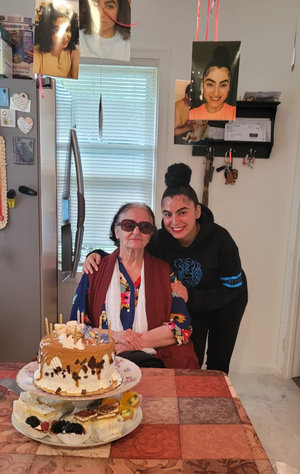
Saba Nakhai, 32, who cares for her mother in Westchester full time, told New York Focus that she doesn’t see a place for the union in her work. “Maybe if I was working at a corporation, I would want a union,” she said. “But here, who’s the enemy, my mom?”
To win, 1199 must convince workers like Nakhai that they need an advocate — not against their patients, but against the sprawling bureaucracy that sets their wages and benefits.
If it’s successful, 1199 — already one of New York’s political kingmakers — will become even more powerful. Its membership and dues revenue will balloon, enabling more organizing and lobbying.
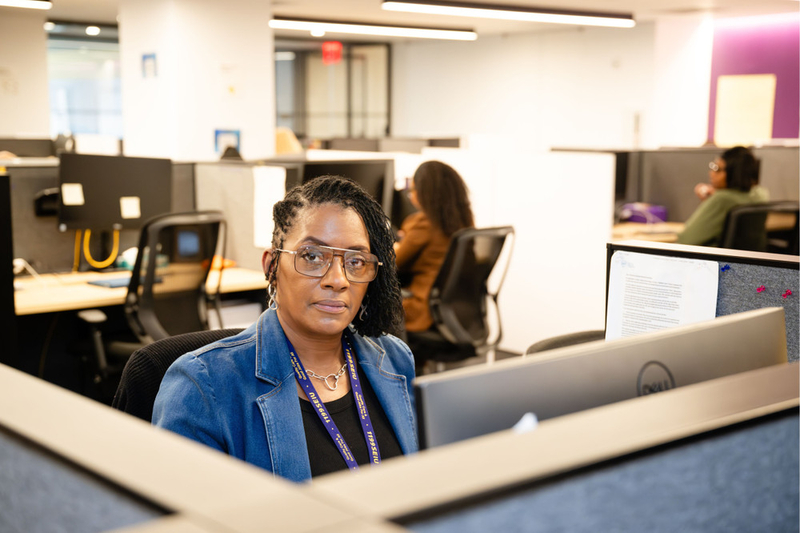
The union plans to ask for an election this fall. At the call center, its organizers dial away, working with quiet focus. “Believe in yourself,” a sign on the wall reads. “You got this.”
The engine of the campaign is workers like Jeannine Hutchinson, 54, who has been a member of 1199 for two decades. She spent more than half of that time working at a hospital in Far Rockaway, Queens, the neighborhood where she grew up and raised her own family.
She liked her most recent job as a patient navigator, guiding people through labyrinths of paperwork and treatment options. She could walk to work in 10 minutes, and spend lunch breaks on Rockaway Beach.
But late last year, when her union rep asked Hutchinson to spend a year working at 1199 headquarters in Manhattan, more than an hour’s commute away, she didn’t even ask what the role was.
“I said, ‘Bet, when do I start?” she told New York Focus. “This is the faith that I have in my union.”
It’s easy to understand that faith. Hutchinson’s husband was in 1199 as a nursing home worker before he retired, and two of her three children, who are social workers, are also members. The union has given her family “an opportunity to have a fair chance,” she says.
Five days a week, Hutchinson leaves her house around 7:00 am, and gets back a little after 6:00 pm. She brings her work phone home, and takes calls at family dinners, at church, and from bed.
Workers are often dubious, and ask Hutchinson if joining the union will really get them better wages.
“We can’t guarantee anything,” she tells them. “But there are some dreams and aspirations that you have that you may not ever reach without having a union.”
She strives to get 25 cards signed a week, the goal that 1199 has set for each organizer. Getting her first card took four calls to the same person.
“Every time I called it was a bad time, but I did not give up,” she said, “and the fourth time was the slam dunk.”
She signed up for one year as an organizer, but she’d like to stay until the union wins, however long that takes.
“I’m the kind of person who likes to see things through,” she said.
The program that 1199 wants to unionize is officially called the Consumer Directed Personal Assistance Program, or CDPAP. Since its launch in 1995, it has expanded to serve hundreds of thousands of disabled and infirm New Yorkers.
The program grew explosively in the past decade. New York’s booming population of senior citizens flocked to care they could get in their own homes for free, and that kept them out of nursing homes. That the care could come from family members was an added bonus.
The union’s big opportunity came in late 2024, when New York hired a company called Public Partnerships, LLC to run the program. Previously, the state paid over 600 companies to do the job, a few of which had been unionized by 1199. PPL’s takeover meant that 1199 would be able to unionize the entire program in one fell swoop.
But the transition to PPL has been rocky, and home health aides have often gotten the short end of the stick. Last week, PPL announced that it had agreed to pay $162 million to settle a wage theft lawsuit alleging that it had chronically underpaid home health workers. It did not admit wrongdoing in the case. And earlier this month, the US Department of Justice sued PPL and New York state, accusing them of rigging the bidding process that led to PPL’s selection. Both New York state and PPL have denied the allegations, and the lawsuit is pending.
The wage theft and bid rigging claims have been circulating for more than a year, but they haven’t dissuaded 1199 from working with PPL. In 2024, before PPL took over, 1199 announced its plan to organize the entire CDPAP workforce, and asked PPL and other companies that bid on the contract not to oppose its union drive. In September 2025, PPL agreed to remain neutral. It also gave 1199 contact information for the home health aides. Through the transition, the union publicly supported PPL despite fierce opposition from many lawmakers and activists.
That bargain made 1199’s campaign possible: Since there’s no central location where aides congregate, 1199 needs to be able to reach them remotely. But workers told New York Focus that the deal also turned many aides against the union, because they see it as too cozy with their unpopular employer.
Since PPL took over the program, Sophie-Anais Renois, 26, who spends most of each weekend caring for her legally blind grandmother on Long Island, has been repeatedly underpaid for her work, she told New York Focus. As she cooks, does laundry, and injects insulin to manage her grandmother’s diabetes, PPL’s timekeeping system shaves hours off her shifts. Many workers have complained of similar bureaucratic hassles.

She spent months trying to get PPL to address the problem as her credit card bills mounted. When she finally reached someone at the company, the person who answered said there was nothing they could do.
PPL declined to comment on Renois’s case, but company vice president Patty Byrnes said, “All personal assistants who submitted fully compliant timesheets in accordance with program rules have been paid on-time and in full.”
Some months ago, Renois learned about the agreement between 1199 and PPL. “It really made me go, ‘Hmm, is this union looking out for my best interest?’” she said. So far, she’s refused to sign a union card.
When asked about PPL’s alleged wage theft, 1199 press secretary Rose Ryan said that the union “strongly supports ending wage theft across the home care industry,” and that it is “vital that these workers be made whole for missing pay.”
The union has a simple defense of its partnership with the bosses: It works.
Every year, it joins forces with New York’s main hospital lobby to pressure lawmakers for more Medicaid funding. If lawmakers refuse, they face barrages of attack ads. Generally, 1199 wins.
This is why, despite the bitter complaints that workers like Renois have against PPL, 1199 doesn’t treat the company as an enemy.
“We know that our interests are aligned,”said Keith Joseph, 1199’s vice president for home care workers, “because the funding comes from the decision the elected official makes in Albany.”
Union leaders are aware that some aides have issues with PPL. The answer to those problems is the union, according to 1199 vice president of new organizing Lystra Sawney, who is leading the campaign.
“We can work together collectively to make those changes,” Sawney said. “Because they can’t make the changes on their own.”
The union has also vowed that it won’t go on strike against PPL.
“Strikes will not be a tool,” said Helen Schaub, 1199’s political director. “There are lots of other ways workers can make their voices heard.”
This isn’t an unusual stance for 1199. When Rose Ryan, the union’s press secretary, recently tried to figure out the last time the union went on strike in downstate New York, no one on staff could remember.
In Massachusetts, 1199 organizers have won significant gains for home care workers. But recently, those wins have come with cuts to other parts of the state’s home care budget.
In 2023, 58,000 state-funded home care workers in Massachusetts represented by 1199 won a contract that included raises, holidays, and paid training. Following the deal, higher wages and growing enrollment pushed spending on the program above $1.7 billion, leading Governor Maura Healey to seek budget cuts. The union initially succeeded at pushing back, but it didn’t last: This year, the state slashed $32 million from home care. Healey is currently asking lawmakers to cut another $68 million.
The cuts didn’t touch the wages that 1199 won for its members. Instead, almost all the savings came from slashing the hours that workers could spend preparing food for their patients, who often cannot cook for themselves. The next round of cuts could further curtail care.
Marcus Johnson, a disability rights activist who is paralyzed from the neck down, fears the impact cuts would have.
His aides are on duty full time: They get him out of bed, feed him meals, and brush his teeth. Tampering with this schedule could make it impossible for him to live at home.
“I don’t want to make it consumers against workers,” he said. “We want the union to support the workers. But are they supporting our community?”
Progressive economists have argued that higher wages benefit patients, too, by attracting more workers and reducing turnover. Higher wages would increase spending and likely create more political pressure for cuts. But 1199 would use its power in Albany to push back.
“Workers are going to fight to make sure the program is funded,” Schaub said. “Especially when many workers are directly related to the consumers.”
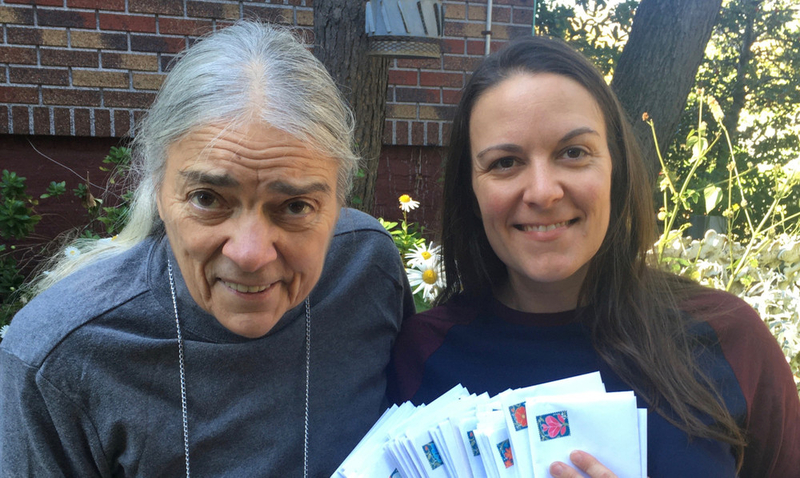
Two aides who spoke with New York Focus for this story support the union. Maggie Ornstein, 48, who cares for her mother in Queens, hopes that it can win her better health insurance.
“Will it come to fruition? I don’t know,” she said. “But without being in the union, it definitely won’t happen.”
But outright opposition was more common, or at least wariness, like from Carolyn Wember, 68, who cares for her daughter in Brooklyn and doesn’t plan to sign a card.
“My level of trust in the system at this point is just zero,” Wember said.
At 1199 headquarters, organizer Bertha Motta, a home care worker herself, presses on. As she dials for hours a day, she’s fueled by devotion to the union, which she’s belonged to for almost all of the 40 years since she emigrated from Peru.
The work is repetitive, but Motta, 66, is persistent. She was recently woken up at 1:00 am by a call back from an aide who was visiting family in India and forgot about the time difference. They spoke for 45 minutes, and she convinced him to sign up.
When one woman accused her of being a scammer, Motta invited the skeptic to come to 1199 headquarters and meet her in person. The woman traveled from Queens to visit the call center, and then signed a union card in the building’s lobby.
On another recent call, an aide asked Motta how the union would help him. She said it already had — the 55-cent-per-hour raise that all home health aides received at the beginning of 2026 was thanks to a law that 1199 lobbied for in 2023.
To Motta’s surprise, he started laughing, incredulous that she’d brag about 55 cents.
“I told him, ‘But you don’t have idea how we fight for you to get those 55 cents,” Motta said in Peruvian-inflected English. During the campaign for the raise, she told him, she had traveled from her home in Queens to rallies and lobbying days in Albany many times, leaving at 3:30 am and not getting back until the evening.
“You get easily, but you don’t have idea how hard it was for us,” she said.
He signed a card.
Albany