Two years after McCook Lake disaster, Corps of Engineers agrees to help with new flood-control plan
Sep 15, 2026 | 7:05 pm ET
Description
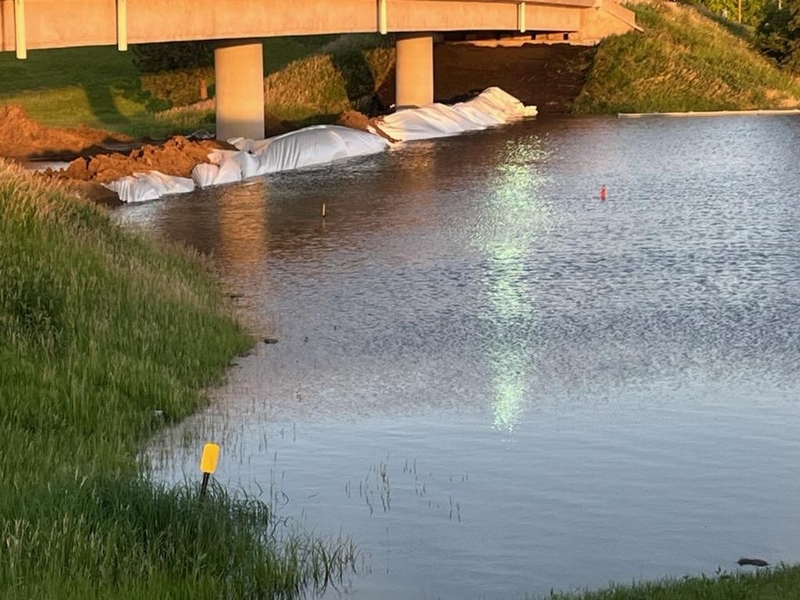
A temporary levee stands at Exit 4 on Interstate 29 between McCook Lake and the Big Sioux River on June 24, 2024. As part of a decades-old plan, the levee diverted excess Big Sioux River water toward McCook Lake. But unlike past uses of the plan, when McCook Lake escaped major damage, the June 2024 flood overwhelmed the lake and some surrounding homes. (Courtesy of South Dakota Department of Transportation)
The U.S. Army Corps of Engineers and several local governments are partnering to study ways of better protecting the lower Big Sioux River area from high water, including the McCook Lake community that was devastated by flooding in 2024.
The Big Sioux River empties into the Missouri River at Sioux City, where the borders of South Dakota, Nebraska and Iowa meet. The feasibility study will examine whether improvements to the existing flood-control plan could better protect homes, businesses, infrastructure and agricultural land.
Local sponsors are Union County, the city of North Sioux City and the Dakota Dunes Community Improvement District.
The Corps announced the partnership Tuesday in a news release. The city administrator of North Sioux City, Jeff Dooley, said in an email response to South Dakota Searchlight that studies of this kind can last up to three years and cost up to $3 million in total, with the Corps funding half and the local partners funding the other half.
McCook Lake catastrophe shatters complacency around old flood plans
Three days of heavy rain totaling more than 17 inches in some locations caused the June 2024 flooding.
As record-high water rolled down the Big Sioux River, authorities who were following a decades-old flood plan installed a temporary levee that diverted water toward McCook Lake, where they hoped for a manageable rise that would later drain out of the lake.
Instead, floodwaters overwhelmed the lake. Emergency crews had to rescue some residents, more than 100 homes were damaged, and roads and other infrastructure were destroyed.
The disaster cost North Sioux City, which includes McCook Lake, millions in infrastructure repairs. Homeowners suffered millions in additional damage and received some assistance from federal disaster relief programs, though in some cases it wasn’t enough to replace their losses. Some also lacked flood insurance.
The existing flood-control plan “has generally performed as intended” in the past, according to the Corps’ website. “However, recent flooding events have highlighted changing conditions and new challenges that warrant further evaluation.”
The Corps said the study’s first public open house will be in North Sioux City in late October, but did not provide a specific time, date or place.

Pierre, SD