Trying to decipher the Ramaswamy-McColley ticket’s seemingly contradictory stance on energy
Oct 27, 2026 | 3:30 am ET
Description
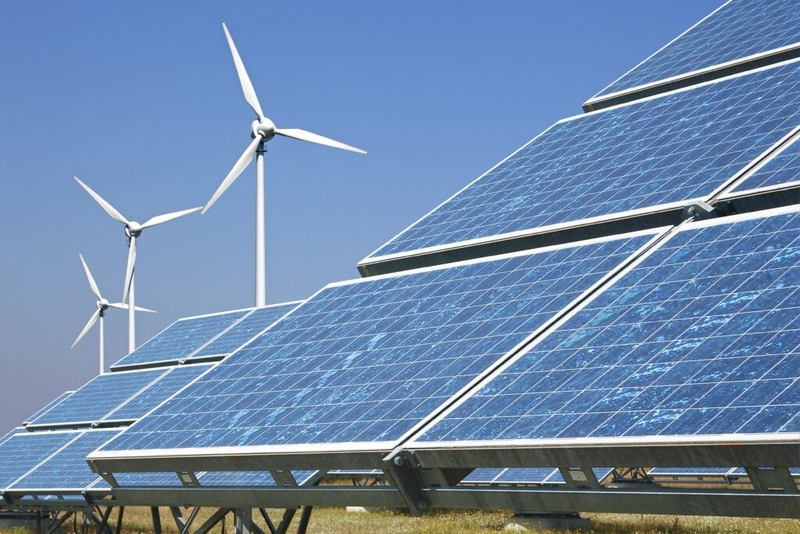
(Photo by Marga Buschbell-Steeger/Getty Images)
While it is not surprising that Vivek Ramaswamy and Amy Acton have different views on energy policy for Ohio, what is confusing are the diametrically opposed views that Ramaswamy and his running mate Robert McColley seem to have on the subject.
Ramaswamy has called for the rapid expansion of the number of generating plants, gas, coal, nuclear, and renewables in Ohio, and the streamlining of the permitting process to both facilitate and accelerate the construction of more generating assets in the state.
Indeed, that is the centerpiece of his agenda for reducing the price Ohioans pay for electricity. His plans, of course, rely heavily on the legal powers of the Power Siting Board to override any adverse, perhaps parochial, decisions by local governments in regard to permitting.
He is calling for am increased supply of diverse energy resources that would both better assure reliable energy production for the state, an approach that might also enable open competition in the market place as a means of disciplining prices, as opposed to excessive government interference in the marketplace.
That is where, at least in regard to large scale wind and solar plants, McColley deviates substantially from his running mate’s position.
McColley co-sponsored Ohio Senate Bill 52, signed into law in 2021, which gives county commissioners the authority to restrict or prohibit the permitting of large-scale wind and solar generating plants within their jurisdictions.
Instead of streamlining the process for permitting new plants, as called for by Ramaswamy, McColley has enabled increased government intervention in the marketplace to not only reduce the supply of energy resources, but also to limit the very type of robust competition in the marketplace that Republicans have could called for, and which could serve both consumers and the public interest more broadly.
Where Ramaswamy wants streamlined permitting, McColley has put in place a far more burdensome permitting process for wind and solar plants, so much more difficult that there is little prospect that such facilities can be built in Ohio.
Clearly the running mates have diametrically opposed views on how to facilitate additional generation, on government intervention in the marketplace, and on the benefits of a diverse portfolio of resources to Ohio’s supply.
There is are additional and very important aspects to the differences between Ramaswamy and McColley.
Ramaswamy’s position has been formulated as part of an effort to reduce Ohio’s electric bills. Whether his plan is effective, or even sufficient, for doing so or not is debatable; the objective of the plan Ramaswamy has called for is that Ohioans are to be assured of reliable energy supply at an affordable price.
McColley has taken action to do the exact opposite, to make reliable supply less certain more and less affordable.
McColley’s sponsorship of Senate Bill 52 will inevitably result in higher electric bills for consumers in the state.
Of all the generating options Ramaswamy has called for, the ones with the lowest marginal cost of producing energy are wind and solar, yet those are the very resources McColley sponsored legislation designed to discourage, if not actually exclude from the state’s energy portfolio.
Because of the dispatching protocols on the PJM regional grid, wind and solar, with their zero marginal cost of production, will inevitably drive down the prices of other, more costly, sources of energy, the very objective that Ramasawmy says he wants seeks to accomplish, but which McColley by sponsoring S.B. 52 was making almost impossible to accomplish.
Moreover, wind and solar generation combined with batteries provide Ohio with protection against interruptions in the supply of fossil fuels that occasionally occur, thereby assuring the state with greater reliability of supply.
There is an additional aspect of McColley’s legislation that has a notable adverse impact on Toledo and Northwest Ohio, an ironic effect, given that the McColley hails from Northwest Ohio.
That adverse consequence is its impact on Toledo’s efforts to use its traditional role in the glass market to become a center for the production of solar panels, a product which McColley has attempted to keep out of the Ohio market, a result that, presumably, Ramaswamy is not endorsing.
Ohioans deserve to know which of the highly divergent, indeed, quite contrary plans, the two running mates will follow if they are elected.
Ramaswamy’s stated desire for a more competitive, less costly, and more reliable supply of energy, or McColley’s plan for government to intervene to make energy less affordable and less reliable?
To support Toledo’s efforts to produce solar panels to improve the region’s economy, or to set back if not foreclose that option, as McColley’s S.B. 52, is likely to do?
Ashley C. Brown is a former PUCO Commissioner, and retired Executive Director of the Harvard Electricity Policy Group of Harvard University’s Kennedy School.
Columbus, OH