A classroom-spending mandate could cost students with special needs
Oct 26, 2026 | 2:00 pm ET

Description
(Photo via Getty Images)
What if a plan to increase teacher pay and improve Arizona schools actually hurts our most vulnerable population — our students with special needs?
I’m a mom to a child with Down syndrome. I am also an educator with nearly two decades of experience as a teacher and school administrator in both district and charter schools. While the idea of mandating schools spend 60% of their money in the classroom in order to raise teacher pay sounds great — like most people, I agree that teachers deserve more money — the reality is that more state control over our local budgets is not the answer.
While Proposition 320 would impose that mandate, it would not offer one dollar more to school district budgets to increase teacher pay. Rather, it would mean that the state simply will expect them to adjust their budgets.
And how would they do that? By making cuts to critical components that are not “direct instruction” — things like special education services, transportation, facility maintenance, technology, nutrition services, fine arts and sports may experience budget cuts because they are not direct instruction.
The most concerning of those potential cuts would be to special education.
Students with IEPs (an Individualized Education Program, which are required by federal law) receive specially designed instruction, usually in small groups of five or fewer students. Many also receive related services, such as speech therapy, occupational and physical therapy, and behavioral support.
With many districts reaching a staggering 25% of their students on IEPs, special education is a major expense. Schools can’t cut these services completely as long as students need them, but they can decrease the amount of support they give, or pack more and more students in these sessions. For example, instead of a student receiving speech therapy in a small group, they might receive the services in groups of a dozen or more students, rendering them ineffective.
Class sizes will increase, making the individual attention these students need, even harder to get. We also risk losing our seasoned and talented special education staff due to the increased student case load and additional demands on their time.
Another possible consequence: Bus routes may be cut, causing a student with special needs to be on the bus even longer. Many in rural areas already ride the bus for hours a day.
Of course, special education isn’t the only place cost-cutting measures will be enforced. Here are other likely scenarios.
- Consider, a teacher in Arizona supplements her income with after school tutoring, mentoring new teachers, and sponsoring the yearbook club. These additional duties provide her with extra earnings, while providing valuable support to her school and students. Implementing Prop. 320 may allow her base pay to go up, while the stipends that she depends on are cut. Her total earnings are now less than they were the year before.
- Cuts could be made to a school’s maintenance budget. Many of our Arizona schools are in desperate need of repair and remodel. With cuts to their budget, the quality of our facilities and pride in our schools will decrease.
- Many feel that the salaries of top administrators should be reduced. Reducing the salary of a few individual employees and spreading that money to the teachers of a district will not go far. And it will make it even more difficult for schools, especially rural ones, to recruit the qualified and talented leaders that every district needs.
- One current trend in American schools is a 1:1 ratio of students to student computers. As the world becomes even more technology-driven, schools have to stay current to compete and can’t move backwards. But that costs money, and districts will have much less budget flexibility to meet those needs under the requirement to spend 60% of money in the classroom.
- Vice principals, counselors, and school resource officers may be cut, leaving teachers without behavioral support and reducing the safety of our schools.
The public has put a lot of pressure on Arizona lawmakers to increase teacher pay and improve our schools, as well they should! But every school district has different needs, and more government control over each school district’s budget to impose a one-size-fits-all spending model is not the answer.
The actual answer is giving more money to our schools. Lawmakers could have done that. They chose to send Prop. 320 to voters instead.
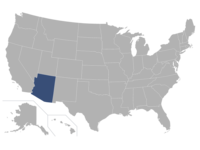
Phoenix, AZ