For Ohio voters, here’s what the law says regarding federal interference in state elections
Oct 27, 2026 | 3:35 am ET
Description
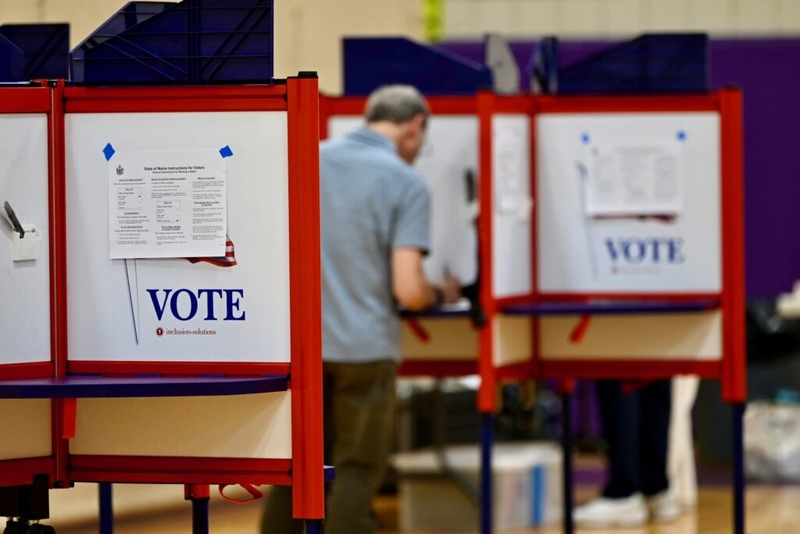
A voter casts a ballot. (Photo by Jim Neuger/States Newsroom)
At a time when the stakes could not be higher, it is essential for Ohio voters to know exactly what the law states about the many threats that are appearing in regard to the federal government interfering in elections which are administered at the state and local level.
These threats have been manifesting in regard to all states as well as here in Ohio. The University of Wisconsin Law School has performed a great public service by surveying the entire body of both federal and state law and publishing a report on which laws would come into play in the event that the threats being anticipated are actually implemented.
The entire report is too lengthy to reproduce, but it is possible to highlight the most relevant excerpts.
In the interest of creating an informed citizenry, this writer has undertaken to do so for the readers of the Ohio Capital Journal.
The format is to identify a specific issue, and then quote directly from the law school report in regard to what the law states.
THE ELECTORAL AUTHORITY OF THE EXECUTIVE BRANCH –
“The Executive Branch, including the President, has no unilateral authority with respect to election administration or voting.”
THE DEPLOYMENT OF FEDERAL TROOPS OR NATIONAL GUARD TO POLLING PLACES –
“Several federal laws prohibit the deployment of federal troops or armed officers to the polls and bar military disruption of elections. Under 18 U.S.C. § 592, federal officers may not send “troops or armed men” to “any place where a general or special election is held, unless such force be necessary to repel armed enemies of the United States.” Under 18 U.S.C. § 593, officers or members of the Armed Forces of the United States may not, among other things, interfere with election officials’ duties or prevent by force, threat, or intimidation any qualified voter of any State from fully exercising the right of suffrage. Those who violate either law can face fines, imprisonment, and disqualification from office.”
THE POTENTIAL USE OF ICE AGENTS TO INTERVENE IN STATE AND LOCAL ELECTIONS –
“18 U.S.C. § 595 prohibits any federal administrative employee from using his official authority for the purpose of interfering with, or affecting, the nomination or the election of any candidate for federal office.”
INTERFERENCE IN THE DELIVERY OF MAIL-IN BALLOTS –
“Any postal worker who unlawfully secretes, destroys, detains, delays, or opens mail and anyone who knowingly and willfully obstructs or retards the passage of the mail can face fines and/or imprisonment.”
POTENTIAL REFUSAL TO ABIDE FEDERAL LAW –
“Some federal officials have suggested that they may not abide by these prohibitions, and there are concerns that federal prosecutors will look the other way…..If federal officials decline to enforce federal law, then state criminal laws could provide a necessary backstop for holding them accountable…….States uniformly have some regulations that are intended to protect the sanctity of the voting process and ensure that voters may cast a ballot free from any intimidating presence. State election codes throughout the country criminalize conduct related to intimidating voters, interfering with the delivery of ballots, and inappropriately possessing ballots or accessing voting equipment.”
Another resource for Ohioans to be aware of is the American Civil Liberties Union. The ACLU is an officially non-partisan organization, so it does not favor a political party, but it has prepared a concise guide for how to deal with the appearance of any federal agents at the polls.
The transcendent issue that rises above all partisan politics in this election is the question of whether fundamental election law is going to be enforced.
Every citizen — no matter what political stripe — has the right to ask any government official related in any way to the election process in Ohio — from the County Board of Elections right up to the Secretary of State and the governor — whether there is a commitment to follow electoral law and administer the upcoming election in a fair, transparent, and legal manner.
It is exceedingly important for such officials to go on the record as to where they stand.
Columbus, OH