Trump freezes $25M in funding for WV schools, districts on the hook to cover necessary costs
Jul 23, 2025 | 6:00 am ET
Description
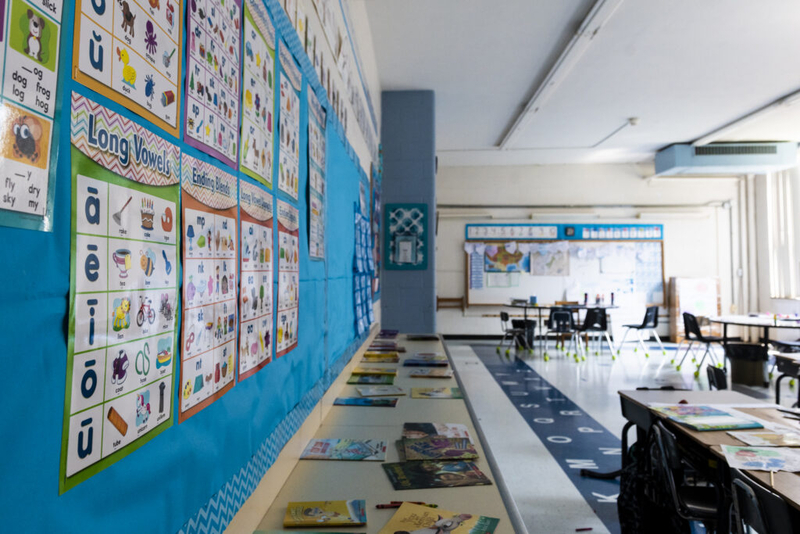
Inside a Kanawha County elementary classroom in West Virginia. (Lexi Browning | West Virginia Watch)
West Virginia is set to lose more than $25 million in federal education funding this coming school year after President Donald Trump’s administration withheld billions in federal money for after-school and summer programs, adult literacy and English language instruction to ensure spending aligned with the White House’s priorities.
The federal funds were supposed to be distributed July 1, and it’s another blow to districts’ budgets across the state.
School districts are already struggling financially due to West Virginia’s declining population and kids exiting public schools to use the education voucher program. Other school systems are under state scrutiny for how they’ve spent money, including Roane County, where the district is facing a projected $2.5 million budget deficit due to overspending.
Cabell County just laid off around 100 teachers and staff due to a budget crunch, said Drew Rottgen, treasurer for the school system.
Federal grants had helped the county pay for portions of some salaries, professional development and more. The window for schools to issue reduction in force (RIF) notices to teachers and staff has closed, so Rottgen said they’re figuring out how to pay for personnel and programs since the federal funds are not guaranteed by the start of school next month.
“Any kind of decision that we make, you know, it’s going to be, ‘How can we limit the impact on our students?’” he said. ”We’re looking at alternative funding sources to see what other money we have available.”
In Ohio County, the now-frozen federal dollars had paid for a mental health counselor.
“We have a counselor that we have available to our students to do Tier Three intervention with students who are struggling with things in the school setting,” said Walt Saunders, director of federal programs for Ohio County Schools. He noted those grants are also shared with the county’s private schools, which will also be impacted by the funding loss.
They’ll also have to cover some teacher salaries through the schools’ general fund, he explained, saying that the district was able to carry over a budget surplus this year.
“We weren’t planning for Title II and Title IV to go away. But we have a healthy carryover, and if need be, we can absorb it,” he said. “We’ll have to cut some travel and professional development out of the Title II funds. But we’re not going to cut our mental health program, and we’re not going to cut enriching our students.”
Every district in West Virginia receives funding from multiple federal grants, according to the state education department. The West Virginia Center on Budget and Policy estimates that federal funding brings more than $350 million annually into the state’s 55 county school districts.
Amon Gilliam, director of the Elementary and Secondary Education Act, Improvement and Support for the West Virginia Department of Education, said that last year, the state received the impacted federal money for the following programs:
- Adult Basic Education: $3,822,557
- Title II-A, which funded professional development initiatives, salaries for individuals who support educators and more: $13,043,347
- Title III-A, for English Language Acquisition to support students whose home language is not English: $554,694
- Title IV-A, Student Support & Academic Enrichment: $7,694,546
“Title IV-A supports student safety, mental health, a well-rounded education and the effective use of technology,” Gilliam said in an email. “The absence of these funds will prevent or greatly decrease the ability of [local education agencies] to maintain and increase their capacity regarding the use of technology in the classrooms, address the needs of students and the opportunities to provide additional educational learning opportunities within West Virginia schools.”
Cabell County had been using Title IV money to help pay for school resource officers.
“It’s disappointing, because I think about $150,000 of that grant goes towards our SROs each year, and so that’ll be a cost that we’ll have to find another funding source to be able to pay for this year,” Rottgen said. “We prioritize student safety, so we’re not going to cut police officers or cut back hours or anything … We will find a way to make that work,” Rottgen said.
Elsewhere, Marion County had expected to receive $800,000 from the affected grants. Raleigh County had counted on $500,000 for professional development.
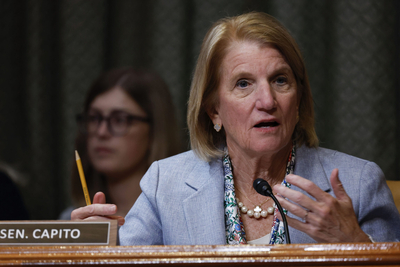
Last week, Sen. Shelley Moore Capito, R-W.Va., announced that the U.S. Department of Education will release a portion of the frozen money — $6 billion — that funds after-school and summer learning programs for students. Capito led a group of Republican colleagues to send a letter to the White House Office of Management and Budget advocating to release anticipated education funding. Sen. Jim Justice, R-W.Va.. signed onto the letter.
West Virginia had expected to receive roughly $7.4 million in 21st Century Community Learning Centers funding, according to the WVDE.
“This program supports states in providing quality after-school and summer learning programs for students while enabling their parents to work and contribute to local economies. We should be supporting education opportunities like these,” Capito said in a statement. “I made this clear to [Office of Management Budget Director Russell Vought] and was glad he followed through on my request to release these critical funds.”
Attorneys General from 24 states have sued the Trump administration to prevent the education funding cut, but West Virginia Attorney General J.B. McCuskey is not in the group. A coalition of school districts filed a lawsuit over the frozen money, as well.
School officials are hopeful the federal money will be unfrozen so they can reimburse themselves.
“We’re hoping that things get put back, but we’re preparing as though it could be a lesser amount or no amount at all,” Rottgen said.
Logan County Schools Treasurer Rhonda Justice said, “We are taking the wait and see approach until the federal government makes it a final decision. Then, if necessary, we will reallocate essential program costs to other areas of our budget because we want to ensure services continue uninterrupted for our children.”
Charleston, WV