Hardesty stresses WV public schools must accommodate families, will change Pre-K enrollment policy
Jun 04, 2026 | 11:21 am ET
Description
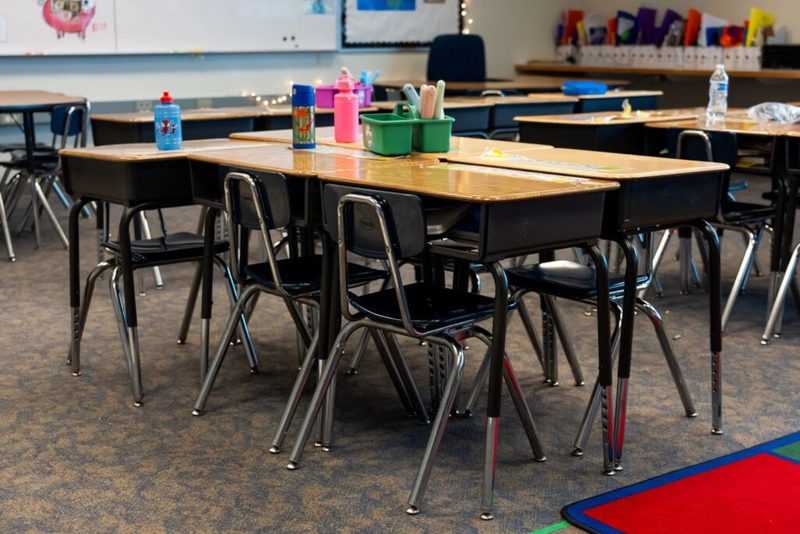
A classroom at Woodrow Wilson Elementary School in South Salt Lake City, Utah, on March 12, 2024. (Photo by Spenser Heaps/Utah News Dispatch)
West Virginia is changing its Pre-K enrollment eligibility rule to give families more flexibility to enroll 5-year-olds in the program rather than moving them to kindergarten if parents feel that would benefit their children.
The change has kicked off a robust public school policy review, according to West Virginia Board of Education President Paul Hardesty, who wants to remove outdated policies that could keep parents away from public schools.
During a state school board meeting Wednesday, Hardesty stressed that public schools must be more accommodating to families in the wake of growing school choice options strongly supported by the state Legislature.
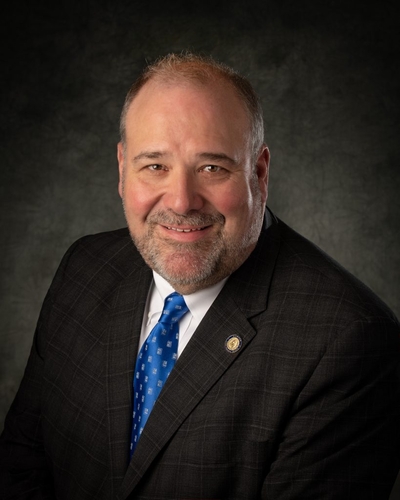
“You might not like what I have to say, but I don’t really care. School choice is here to stay,” he said. “Our 55 county superintendents and boards need to understand that. We are one of the school choice options. We need to make our options more accommodating to parents and children.”
Hardesty directed the state Department of Education to eliminate old policies in hopes of making the public school system more appealing to families compared to school choice options, like private schools or homeschooling.
“We’ve got to change the image, change the mindset, and the way we’ve always done business in the past,” Hardesty said.
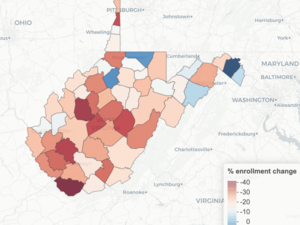
West Virginia’s public system has lost students due to the state’s overall declining population, and growing school choice options – bolstered by the state’s school voucher program – have contributed to declining numbers.
There were 234,957 students enrolled in West Virginia public schools in October of this recently concluded school year – a 2.5% decrease from fall enrollment from the 2024-25 school year. West Virginia has experienced a roughly 6.4% decline in student population from 2021–2022, according to the state enrollment data.
The student population drop has contributed to a wave of statewide school closures and teacher and staff job cuts.
James Paul, the newest member of the state board appointed by Gov. Patrick Morrisey earlier this year, encouraged county school officials to submit requests for policy waivers to the state school board.
“If it is going to improve efficiency, thoroughness, academic outcomes in the schools, we are open to that” said Paul, the former executive director of the state Professional Charter School Board. “If there are policies that are creating unnecessary burdens for the counties or schools, the right path is to bring those requests here. There’s a process to do it.”
Pre-K enrollment change gives parents flexibility
The state school board approved a waiver to give families the option to enroll their 5-year-old children in pre-K rather than requiring that they move directly into kindergarten.
Parents and guardians were already able to choose to send their children to kindergarten at age six if they felt it was best for the child’s academic and/or social development. Parents may decide that a child with a summer birthday should wait a year before entering kindergarten so they’re not the youngest in their class.
West Virginia offers free Pre-K to all students the year before kindergarten in all 55 counties through its universal pre-K program.
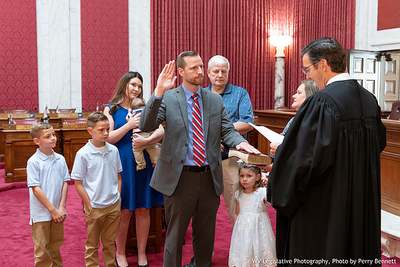
Del. Jordan Maynor, R-Raleigh, had decided to send his five-year-old to kindergarten closer to his sixth birthday in the summer. Then, he learned that his child would age out of the eligibility window for Pre-K services.
He flagged the issue for Hardesty, saying “every child has a right to Pre-K in the state.”
“I know that I’m not the only parent that has dealt with this, and I felt like my child was being denied their right to go to Pre-K because he was going to be seven in kindergarten,” Maynor said. “Hopefully, this opens the way for a lot of parents to take advantage of this and better prepare their kids for the future that may need an extra year to get ready.”
Maynor complimented Hardesty and state schools Superintendent Michele Blatt for working with him to promptly change the policy to accommodate families who need the flexibility.
“I think that the fact that they reached out and they worked so diligently and quickly on this one issue, I think that bodes well across the board that they want to be innovative (and) they want to be responsive to what parents are saying,” Maynor said.
Charleston, WV