Trump administration sues Maine for denying immigration agents covert plates
May 28, 2026 | 3:25 pm ET
Description
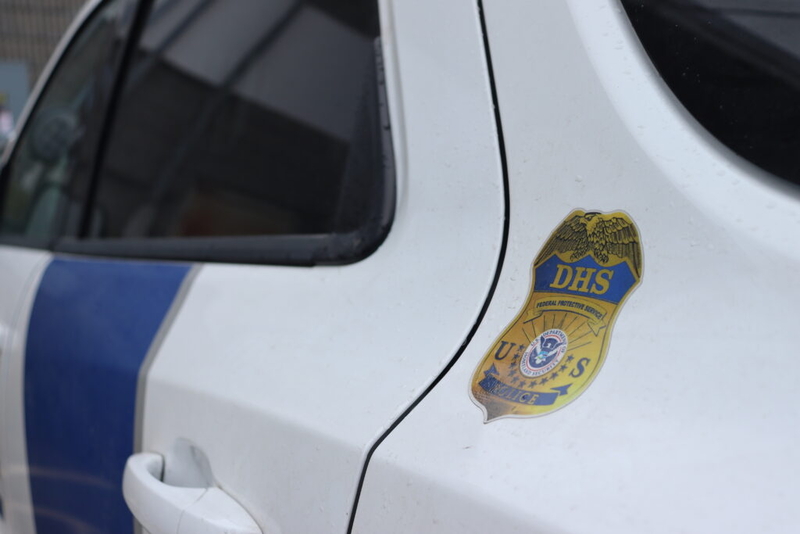
A U.S. Department of Homeland Security vehicle parked outside the Immigration and Customs Enforcement field office in Scarborough on Jan. 15, 2026. (By Emma Davis/ Maine Morning Star)
President Donald Trump’s administration sued Maine on Wednesday for refusing to provide immigration authorities with covert license plates.
The 18-page complaint filed in the U.S. District Court accuses the state of discriminating against federal immigration agencies by requiring that vehicles could only be granted such plates if they aren’t used for civil immigration purposes.
“Federal law enforcement agencies should not be subject to the challenged BMV policy, which is unconstitutional and recklessly disregards officer safety, public safety, and federal operational needs,” the lawsuit reads.
The Trump administration has also filed similar lawsuits against Massachusetts, Oregon and Washington.
Maine Secretary of State Shenna Bellows had received a request from federal authorities for undercover license plates a week before U.S. Immigration and Customs Enforcement’s large-scale operation in the state began in January, and amid a major surge in Minnesota where federal agents shot and killed U.S citizens.
Citing the need for assurance that Maine plates wouldn’t be used for lawless purposes, Bellows denied the federal agents covert plates, a decision that’s up to her discretion under state law. However, this marked the first time Bellows, a Democrat who is also running for governor, suspended such plates during her tenure.
Bellow then updated the state’s covert plate policy to require that applications include assurances such plates wouldn’t be used for civil immigration enforcement.
Trump’s Department of Justice gave Maine a deadline of last Friday to rescind the decision, “otherwise the United States intends to seek judicial relief,” Assistant Attorney General Brett Shumate wrote in a letter to Maine Attorney General Aaron Frey on May 12. The department followed through on that Wednesday with the lawsuit.
“Like I said on Friday, if the DOJ wants to sue us, we’ll see them in court,” Bellows said in a statement Thursday. “We’ve beaten them in court before, and I’m confident we’ll win here again. Secret police have no place in Maine, and I will never stop fighting to keep Mainers safe and free.”
As Shumate alleged in his earlier letter,, he argued in the federal lawsuit that Maine’s policy violates the Supremacy Clause of the U.S. Constitution, which prohibits states from interfering with the operations of the federal government.
“Maine seeks to regulate the federal government’s operations within the state by restricting which official duties an agent may execute and which federal laws the federal government may enforce,” he wrote.
Maine Attorney General Aaron Frey had written in a response to the DOJ last week that the program reflects a legitimate and constitutional policy choice by the Secretary of State “not to allow its resources to be commandeered by the federal government for use in civil immigration enforcement activities that have, in Maine and elsewhere, resulted in multiple incidents of abusive and unconstitutional conduct.”
Out of the nearly 200 people arrested during ICE’s operation in Maine, about 80% had no criminal convictions or pending criminal charges, according to data obtained by the Deportation Data Project. Nationally, the vast majority of people ICE has detained during Trump’s second term have no criminal convictions.
Augusta, ME