Tennessee approves license for nuclear fusion facility in Clinton, Bull Run Energy Complex
Aug 31, 2026 | 6:12 pm ET
Description
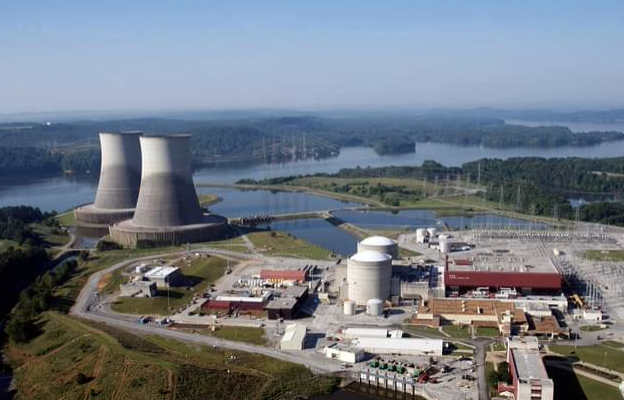
The Tennessee Valley Authority's Sequoyah Nuclear Plant in Chattanooga, one of three nuclear facilities the energy giant operates. Tennessee is under consideration for a U.S. Department of Energy program to increase the state's nuclear capacity. (Photo: Facebook)
Officials approved an application for the state’s first nuclear fusion site, as Tennessee leaders continue to advance their multi-year plan to make the state an epicenter of a new type of energy technology.
The Tennessee Department of Environmental Conservation approved Type One Energy’s permit to break ground on a research and development facility for nuclear fusion power at the Bull Run Energy Complex run by the Tennessee Valley Authority, TVA.
The Bull Run complex is located in Anderson County across the river from Oak Ridge, a city made famous for its integral part in the Manhattan Project to build an atomic bomb during World War II.
Type One Energy will break ground on the campus this year, with plans to finish it by 2034, the company said in a news release announcing the permit approval. The campus will allow the company to work on research in tandem with the Oak Ridge National Laboratory, TVA, and the University of Tennessee.
The company hopes to build a 400-megawatt nuclear fusion power plant in a second phase of the project.
Tennessee, local governments will forgo sales taxes on $4.5B nuclear facility
For several years, Tennessee has been clearing the way for nuclear energy-related projects, after federal regulators agreed in 2023 to treat fusion facilities under a less stringent regulatory framework than full-scale nuclear fission reactors.
Nuclear fission reactors, the traditional way nuclear energy is produced, carry a risk of meltdown and produce radioactive waste.
Nuclear fusion facilities carry almost no risk of a meltdown and no high-level radioactive waste, according to the International Atomic Energy Commission, but the technology is relatively new and still needs to be proven as a reliable energy source.
Tennessee wrote new rules classifying nuclear projects as green energy, allowing them to qualify for several tax breaks and offering multimillion-dollar state grants to companies like Type One.
The state is also a finalist for the nuclear lifecycle campus, a federal program designed to provide financial incentives to states to bring in nuclear power plants and agree to store the radioactive waste.
Gov. Bill Lee called the lifecycle campus an “incredible opportunity” and touted the Type One Energy project as the “next generation” in creating “abundant American energy.”
But several state representatives have opposed Tennessee taking on more nuclear projects.
State Sen. Heidi Campbell, a Nashville Democrat, and state Rep. Ed Butler, a Rickman Republican, questioned in separate letters the economic value of any new nuclear project if the state has to agree to store radioactive waste.
Nashville, TN