Sussex County Council approves affordable housing reforms
Jun 10, 2026 | 6:00 am ET
Description
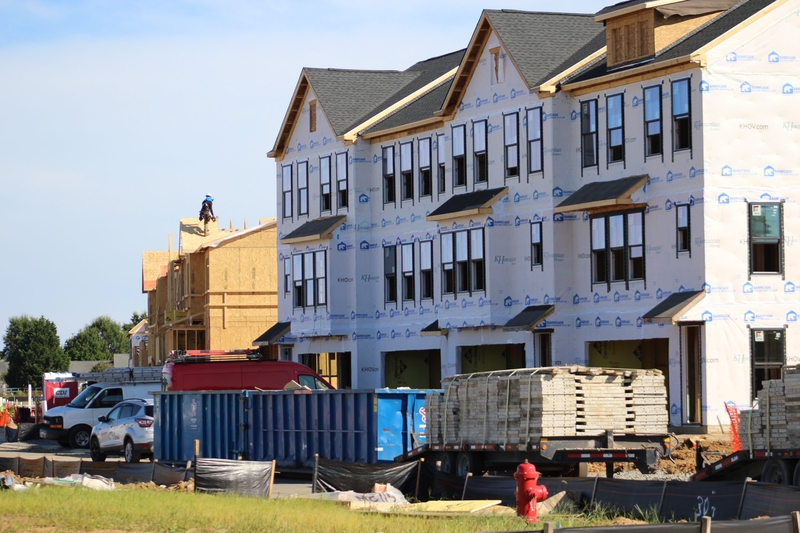
Photo courtesy of Spotlight Delaware
Why Should Delaware Care?
Booming population growth, high rent prices and a lack of housing diversity have been prominent issues in Sussex County in recent years. The county government has now made changes to increase the region’s affordable housing supply, but whether the new measures will have the intended effects remains to be seen.
Following more than a year of discussion over booming growth in Sussex County and how to diversify the housing supply, the county council passed two measures on Tuesday aimed at encouraging more affordable housing.
The ordinances, which will allow higher rents and more density within the county’s historically underutilized affordable housing program, passed the five-member council unanimously.
The two reforms represent one of the few times in recent years that Sussex County has instituted regulatory changes focused on addressing the region’s population boom and housing crunch.
The measures were taken from recommendations proposed by the Sussex County Land Use Reform Working Group, but are less expansive than what the group originally proposed last fall.
Council members gave limited insight during the meeting into their reasons for casting votes in favor of the reforms.
Councilwoman Jane Gruenebaum did, however, express concern that the ordinances do not require an assessment of “the adequacy” of roads, schools, Emergency medical services and other infrastructure when developers are applying to build new housing.
Gruenebaum said she is “disappointed” both the land use reform group and the current ordinances did not address the need for infrastructure studies.
Concerns over road capacities and the current county infrastructure’s ability to handle new developments were a major point of contention surrounding the controversial Atlantic Fields and Belle Mead project proposals last fall.
Despite her hesitations, Gruenebaum voted in favor of the reforms.
The changes also come on the heels of attempts by the state legislature in recent months to address affordable housing shortages across the state by forcing municipalities to increase housing density.
Councilman John Rieley said during Tuesday’s meeting that he is pleased the county is taking action, so the state cannot “override all of our authority and take it up to Dover.”
County staff made clear they view the reforms as just the first step in solving the region’s housing crisis. The policies, they said, will need to be reviewed and assessed over the next year to ensure they are serving their intended purposes.
“This is going to be a living ordinance,” County Attorney Vince Robertson said.
What will the reforms do?
The first of the two adopted reforms allow for higher rents within the Sussex County Rental Program, enacted in 2008 to incentivize developers to incorporate affordable rental units in their projects, in hopes of encouraging more participation from housing developers.
Currently, in order for a project to qualify for the rental program, 25% of its housing units must have a maximum rent of $810 for a one-bedroom, $970 for a two-bedroom and $1,120 for a three-bedroom.
These rents are meant to be affordable for households earning half the county’s median income, or about $40,749 a year.
Under the new regulation, housing developments will need to keep the 25% affordable housing threshold, but will now have a range that the rent caps can fall within.
The rents will need to be between $970 and $1,295 for a one-bedroom apartment, between $1,165 and $1,550 for a two-bedroom and between $1,345 and $1,790 for a three-bedroom.
The reform is an effort to make building affordable homes more appealing to developers, County Administrator Todd Lawson said at the public hearing for the ordinances on May 19, since only two projects have used the rental program since its creation in 2008.

The change is not as far-reaching as first proposed by the land use working group, which would have raised the rent caps to be affordable for households making 80% of area median income and lowered the required threshold of affordable units to 15%.
Developers still say they believe the amended regulations will incentivize more participation in the program.
The second measure passed on Tuesday amends certain aspects of the county code to allow for more dense housing developments.
The ordinance aims to address the need for the county to move away from large-tract, single-family home developments toward more mixed-use, multi-family housing. That debate has been at the forefront of the land use working group’s discussions since it first convened last spring.
Councilman Steve McCarron said at Tuesday’s meeting he believes the new regulations are something all council members will have to vow to “keep our eye on,” evaluating how they function over the next year.
“If we didn’t get it exactly right, we turn right back around and make sure we get it right eventually,” McCarron said. “But we do have to start from somewhere.”
Maggie Reynolds is a Report for America corps member and Spotlight Delaware reporter who covers rural communities in Delaware. Your donation to match our Report for America grant helps keep her writing stories like this one; please consider making a tax-deductible gift of any amount today by visiting https://spotlightdelaware.org/support/.

Dover