Summit pipeline ruling in North Dakota called a win for local control
Oct 09, 2026 | 6:44 pm ET
Description
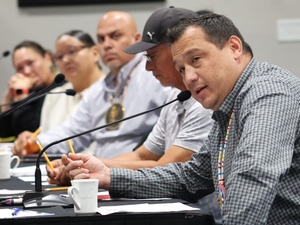
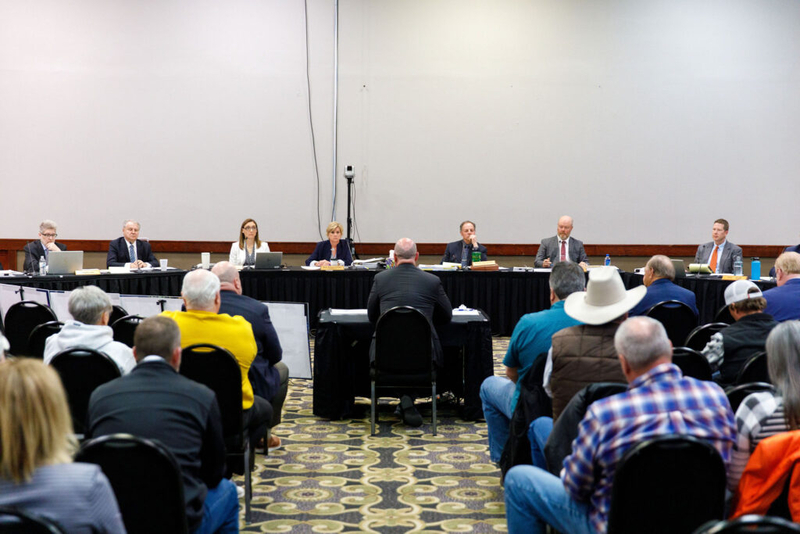
The Public Service Commission holds a public hearing April 22, 2024, in Mandan on the Summit Carbon Solutions pipeline. (Photo by Kyle Martin/For the North Dakota Monitor)
A North Dakota judge ruled Friday that state rules on where infrastructure such as pipelines can be built do not automatically trump local zoning ordinances.
The ruling comes from a case in which a group of landowners and Emmons and Burleigh counties sued the Public Service Commission and pipeline developer Summit Carbon Solutions.
Bismarck attorney Derrick Braaten, who represented Emmons County, said the ruling is a win for local government authority and its ability to set rules on how far a pipeline route must be from homes and other buildings, which is known as a setback.
“It’s really significant because what the judge is saying is that he agrees with the local government that the statute preserves local control and there’s still a place for local control,” Braaten said.

Braaten said the ruling goes beyond pipelines. The Legislature in 2025 copied the language that had applied to pipelines and used it to give the PSC authority over power lines as well.
Preemption of local zoning was an issue during PSC hearings on the JETx power line that is to run from Jamestown to Ellendale.
South Central District Court Judge Jackson Lofgren’s order says the pipeline route permit that the PSC issued to Summit in November 2024 remains in place. However, the court says the PSC must address problems identified in the ruling.
Issues the PSC need to address include:
Public welfare: The PSC must better explain why it thinks the pipeline route will not impair public welfare. An attorney for the PSC argued in July it was not responsible for safety, with pipeline safety standards enforced by a federal agency. But Braaten said the judge’s ruling is clear that the state agency can and should address safety when considering the effect of a pipeline route on public welfare.
Alternate route: The judge said the PSC did not adequately address why it felt an alternate route through southern Burleigh County had been sufficiently analyzed.
Plume model: Summit created a model for how carbon dioxide might disperse if there were a rupture in its high-pressure pipeline. The PSC agreed with Summit that the information should not be made public. The judge ruled that a redacted version of the model should be made public or the PSC should better explain why the information should not be made public in light of evidence that Summit had given some members of the public access to the model.
Local ordinances: The PSC must make a determination on whether setbacks set by Emmons and Burleigh counties were unreasonable. If deemed unreasonable, then state rules apply.
Safety not a factor in determining North Dakota pipeline routes, attorney says
A spokesperson for the PSC said Friday its legal team was reviewing the judge’s findings but would need time to determine the agency’s next steps.
Summit Carbon Solutions did not return an email Friday afternoon seeking comment.
The future of Summit’s project in North Dakota remains unclear. The Iowa-based company’s original plan was to gather carbon emissions from ethanol plants in five states and use a network of pipelines to bring the CO2 to western North Dakota for permanent underground storage.
But the company has been unable to obtain a permit for a pipeline through South Dakota to get to North Dakota.
In addition, Lofgren ruled a North Dakota law allowing the underground storage was unconstitutional, echoing a ruling in a different court. An appeal seeking to retain access to some of that storage is pending with the North Dakota Supreme Court.
Summit has developed an alternative plan to use underground storage in Wyoming.
Reach North Dakota Monitor deputy editor Jeff Beach at [email protected]
Bismarck, ND