Standing Rock Sioux Tribe files lawsuit to shut down Dakota Access Pipeline
Oct 09, 2026 | 6:24 pm ET
Description
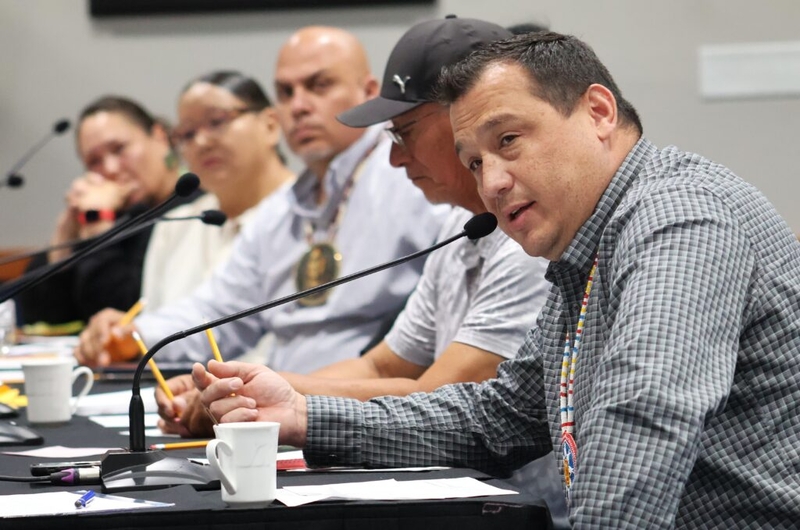
Standing Rock Tribal Chairman Steve Sitting Bear speaks during a meeting of the Tribal and State Relations Committee in Fort Yates on July 22, 2026. The tribe filed a new lawsuit challenging the Dakota Access Pipeline. (Photo by Michael Achterling/North Dakota Monitor)
The Standing Rock Sioux Tribe on Friday filed a new lawsuit to try to shut down the Dakota Access oil pipeline, continuing a decadelong battle over the project.
The tribe filed the case in U.S. District Court for the District of Columbia against the U.S. Army Corps of Engineers, the U.S. Pipeline and Hazardous Materials Safety Administration and three federal officials of those agencies. The lawsuit seeks to overturn the Army Corps’ May record of decision granting an easement for the pipeline’s river crossing upstream of the tribe’s reservation, among other actions.
“For ten years, Standing Rock’s concerns about this pipeline have not changed, and for ten years we have fought to protect our water, our Treaty rights, and our people,” Standing Rock Sioux Tribal Chairman Steve Sitting Bear said in a statement. “The Army Corps has now chosen to move forward without addressing those concerns. Until this pipeline is shut down, we will continue to defend what generations before us protected for our children.”
In 2016 and 2017, thousands of people gathered near the project’s Missouri River crossing to demonstrate against the pipeline, which the tribe views as a threat to its water supply from a potential rupture.
In 2020, a federal judge ordered a more rigorous environmental review of the pipeline’s river crossing. In May, the Army Corps issued its record of decision granting the crucial easement for the pipeline, which has continuously operated since mid-2017.
Army Corps grants final approval for Dakota Access Pipeline, 9 years after oil began flowing
The tribe said the final environmental impact statement issued by the Army Corps in December 2025 does not resolve issues surrounding the safety of the pipeline, spill response, threats to the tribe’s sole source for drinking water, treaty rights and the federal government’s obligations to the tribe.
The tribe also expressed concerns about the pipeline potentially increasing capacity to 1.1 million barrels of oil per day which the tribe said would change operational risks related to spill volume and emergency shutdown, according to court papers.
“We should not have to live with unanswered questions about the safety of our water,” Sitting Bear said.
The pipeline transports an average of 500,000 to 525,000 barrels of oil per day from North Dakota’s Bakken oil field to Illinois. The environmental review considered a capacity of up to 1.1 million barrels per day. The pipeline’s operational capacity is 750,000 barrels per day, North Dakota Pipeline Authority Director Justin Kringstad said.
The federal pipeline safety agency declined to comment on the lawsuit. Officials with the Army Corps and pipeline developer Energy Transfer did not return emails seeking comment Friday.
State and industry officials have said the pipeline is safe and needed infrastructure for transporting oil from North Dakota, the No. 3 oil-producing state in the U.S. Energy Transfer has said the pipeline is among the safest in the world, complies with regulations and crosses at least 95 feet below the riverbed.
The tribe argues a spill would threaten the health and welfare of the Standing Rock community. The lawsuit also seeks to rescind the federal pipeline safety agency’s approvals of spill response plans, and block the transport of oil through the river section until spill response plans meet federal law, according to court documents.
North Dakota Supreme Court orders judge to halt Dutch suit against Dakota Access Pipeline developer
“The Tribe files this action to require the defendant agencies to respect the Treaty rights and sovereignty of the Tribe and to protect the waters of the Missouri River and the ancestors resting at the water’s edge,” the tribe said in court papers.
In 2024, Standing Rock filed a federal lawsuit against the Army Corps over its ongoing environmental review. In 2025, a judge dismissed the case. The tribe appealed, but dropped its appeal earlier this year.
Other court cases still linger in connection with the protests, including Energy Transfer’s lawsuit against several Greenpeace organizations and a Dutch lawsuit brought by Greenpeace International against the pipeline developer.
Last month, tribal citizens, council members and others who were at the protests attended a first-time renewable energy event at Standing Rock and reflected on the decade since the demonstrations and how they have moved forward, despite not blocking the pipeline.
North Dakota Monitor reporter Michael Achterling contributed to this story. Mary Steurer also contributed to this story.
Reach Monitor reporter Jack Dura at [email protected].

Bismarck, ND