Coloradans prepare to monitor polls for voter intimidation, election issues during midterm
Oct 09, 2026 | 6:32 pm ET
Description
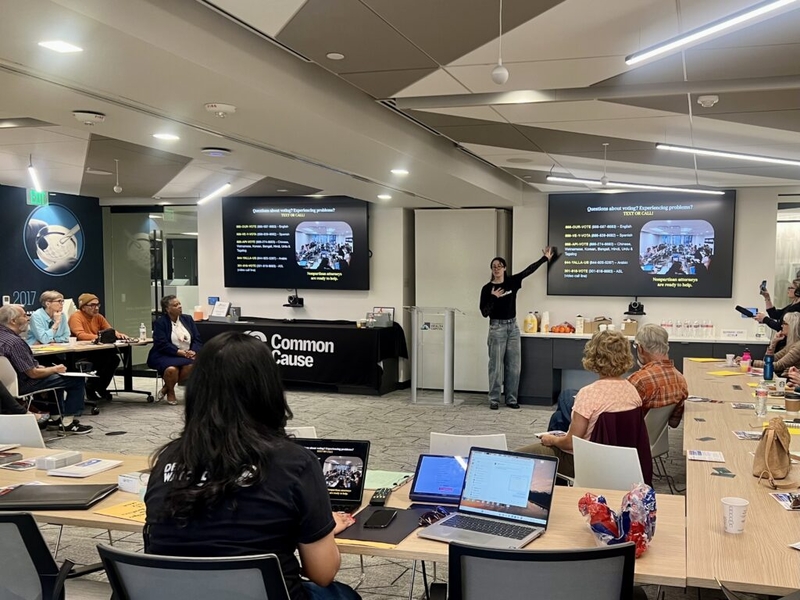
Aly Belknap with Colorado Common Cause leads a poll monitor training in Denver on Oct. 9, 2026. (Photo by Sara Wilson/Colorado Newsline)
Around 50 Coloradans gathered in a conference room down the street from the state Capitol on Friday morning to become trained poll monitors ahead of the midterm elections, a subset of the 1,000 volunteers statewide who plan to observe polling sites and dropboxes as part of a pro-democracy effort.
“We’re obviously nonpartisan. We’re there to report any issues,” Luana Charnes, a senior organizing manager with Common Cause, told trainees. “We’re also there as a community. You’re most likely going to volunteer in a county you live in, your local library, your neighborhood school down the road, and be that friendly face.”
Colorado Common Cause is part of the Just Vote Colorado assistance project that is seeking to station volunteers at polling locations around the state. The goal is to support voters, maintain a positive environment and report and document any issues at the site, such as lengthy lines, inaccessible entrances, high numbers of provisional ballots or students being told they can’t vote.
Organized, nonpartisan poll monitoring in the state is nothing new, but organizations say they are training more volunteers than before. Participation in Colorado Common Cause’s program is up from 300 volunteers two years ago.
“Just Vote Colorado is prepared to protect every eligible person’s right to vote from unfair barriers and intimidation so they have an equal say in decisions impacting their lives,” Aly Belknap, Colorado Common Cause’s executive director, said in a statement. “We’re here to send a clear message to the federal administration desperately trying to prevent people from voting to hang on to their power: Hands off our vote.”
People at the training learned about Colorado’s election laws, how to help voters facing issues using a national hotline and how to report concerning activity, such as intimidation or federal immigration enforcement. The goal isn’t for poll monitors to de-escalate conflict, Belknap said, but to have resources and confidence on how to navigate specific situations.
It is Judith White’s first time volunteering as a poll monitor, though the Denver resident has previously done other election-related activities like phone banking and is part of the left-leaning Indivisible movement. She said she’s alarmed by reports of armed guards at postal facilities and conflicting announcements from the federal government over whether U.S. Immigration and Customs Enforcement will be near polling sites.
“This feels like it’s adding a presence of force, rather than supportive protection,” she said. “We have to understand that maybe it’s all for the drama, but even the announcement that there’s this forceful presence is enough for people to say ‘Maybe not this year.’ Anything that disrupts your planned vote means you’re less likely to vote.”
She recalls experiences growing up in the American South and the region’s history of racial voter suppression.
“It can happen in lots of ways,” she said. “You can distort an election by keeping eligible voters from voting.”
‘They want to silence our voices’
As Friday’s training session started, Charnes asked people to share what a healthy democracy could look like for everyone. Participants shouted out responses like increasing the time window for people to vote, lessening anxiety around voting and removing corporate money from campaigns. Everyone agreed that trusting the election process in the face of misinformation is important for democracy. One man, a former election judge from Broomfield, said he wished every citizen could know the careful process of sorting, counting and double-checking ballots.
Vita Lantz-Brown of Arapahoe County said she has done some type of poll monitoring and election volunteering for the past two decades. A grandmother of 25 and great-grandmother of 10, she said she wants to safeguard democracy for future generations and make sure everyone who wants to vote feels empowered.
“I feel right now that we are not in a safe space for democracy,” she said. “This administration has attacked us at every level, and they want to silence our voices. How we can be heard is to vote.”
President Donald Trump and other federal officials have repeatedly shared falsehoods about widespread fraud and security concerns with mail-in ballots, including persistent false claims casting doubt on Trump’s defeat in the 2020 presidential election. Tina Peters, the former Mesa County clerk who was convicted of multiple felonies for her role in a failed attempt to breach secure elections equipment to prove Trump’s claims of fraud, reportedly met with the president this week to talk about federal involvement in the November midterm elections.
The U.S. Supreme Court recently blocked Trump’s bid to restrict mail-in ballots in November. Colorado is a universal vote-by-mail state with systems in place to ensure ballots are counted accurately. There is no evidence of widespread fraud in the election system.
Lantz-Brown worries that some people, especially naturalized citizens, won’t vote because they are afraid to be targeted by federal immigration enforcement at the polls.
“We have people who want to vote, but may be afraid,” she said. “That’s why it’s important to volunteer and that we’re seen in these places, so people know it’s ok. They’ll have someone to stand up for them and protect them.”
County clerks have mailed ballots to Colorado voters. The state recommends sending a ballot back via mail by Oct. 26 to ensure it gets counted. Otherwise, voters can drop it at a polling site or drop box until 7 p.m. on Nov. 3.
Denver, CO