Suicide deaths and attempts among Alaska youth continue at high rates, report shows
Sep 03, 2026 | 9:55 am ET
Description
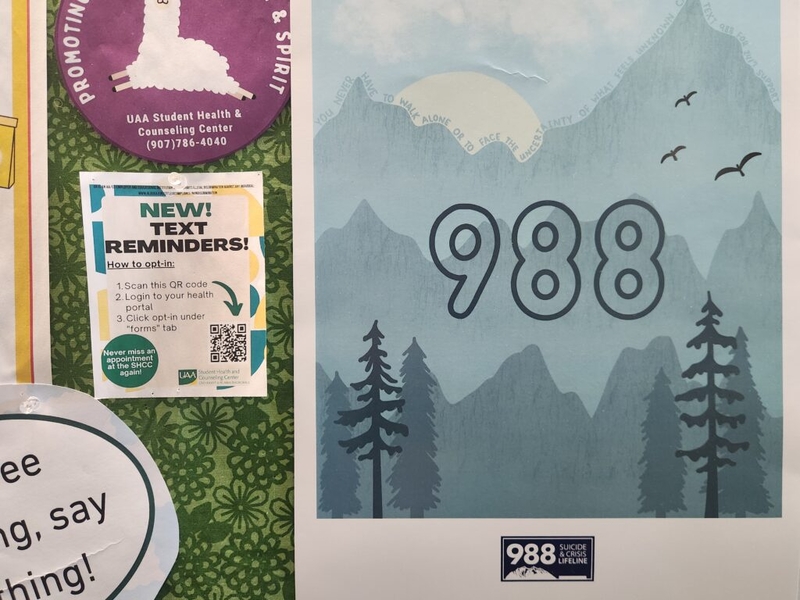
A flier seen Wednesday on a bulletin board at the University of Alaska Anchorage campus publicizes the 988 Suicide and Crisis Lifeline established in 2022. The 988 hotline is one of many programs aimed at preventing suicide. (Photo by Yereth Rosen/Alaska Beacon)
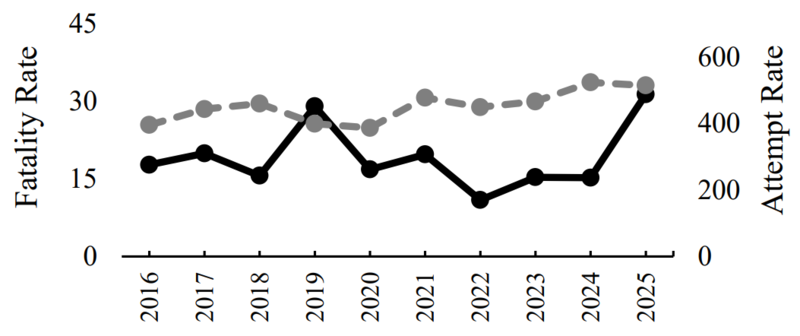
The suicide-death rate for young Alaskans hit a 10-year high last year and the rate of suicide attempts has increased over the past decade, state health officials reported.
From 2016 to 2025, there were 174 suicide deaths among Alaska youths under the age of 18 and 4,101 documented suicide attempts, according to a bulletin released by the Alaska Department of Health’s epidemiology section. The median age of those who died was 16, the bulletin said. The fatality rate, 19.2 per 100,000 children aged 10 to 18, was the highest rate since 2016.
Overall, Alaska’s youth suicide rate is nearly six times the nation average, the bulletin said.
Boys were victims in the vast majority of youth suicides over the 10-year period, accounting for 81% of the deaths, and most used firearms. Girls accounted for about three-quarters of the documented suicide attempts, according to the bulletin.
Those statistics point to “the need to prioritize timely follow-up and intervention following attempts among females and efforts to reduce access to highly lethal means (particularly firearms) among males during periods of crisis,” the bulletin said.
For Alaska Native youths, the statistics are especially grim. Over the decade-long period, the suicide fatality rate among Alaska Natives aged 10 to 18 was 47 per 100,000 children, more than twice the state rate. The rate of documented suicide attempts was 1,098 per 100,000 children, also more than twice the state rate, according to the bulletin.
Special care should be used to address the problem among Indigenous youth, the bulletin said.
“The disproportionate burden of suicide among Alaska Native youth underscores the need for prevention strategies that are culturally responsive and community informed,” the bulletin said.
Statistics cited in the bulletin come from the Alaska Violent Death Reporting System and the Alaska Health Facilities Data Reporting system. The bulletin noted that statistics on suicide attempts likely understate the numbers because some attempts do not result in encounters with the healthcare system and therefore probably go unreported.
Suicide is also a major threat for adults in Alaska, state records show.
There are some prevention programs in place in the state.
One is the national 988 crisis line, which in 2025 alone received nearly 44,000 calls from Alaskans.
Other programs are tailored to Alaska Native communities. One of those was designed for the rural Yukon-Kuskokwim region in Western Alaska by the Center for Alaska Native Health Research at the University of Alaska Fairbanks. And the Indian Health Service has a national program called the Zero Suicide Initative.
While suicides have been inching up over time, that “doesn’t necessarily mean that prevention strategies haven’t been successful,” Ashley Hannigan, a state epidemiologist who helped write the bulletin, said by email.
“It’s difficult or impossible to pin down the number of suicide attempts prevented by programming like the careline/988 or the Zero Suicide initiative,” Hannigan said. “The peak we see in 2025 for youth and adolescent suicide does emphasize the need to focus on youth-specific, and culturally tailored suicide prevention strategies, however.”
One idea for preventing youth suicide emerged this year in the Alaska State Legislature, but it was rejected by the governor.
Lawmakers passed a measure, Senate Bill 41, that would have established mental health guidelines for public schools. Sen. Elvi Gray-Jackson, D-Anchorage, the bill’s prime sponsor, described youth suicide as “a crisis that impacts every community in our state,” and said the bill would expand mental health services to children who need them but might otherwise lack access.
Gov. Mike Dunleavy vetoed the bill on June 18. In his veto message, he said student mental health was important but that the bill would place the state “in the role of imposing upon school districts to mandate the development of mental health education at a time when districts are already working to meet existing requirements.”
Lawmakers attempted the next day to override the veto but fell short of votes to do so.
Juneau