The Sturgeon Moon cast light on lunar mining and public land
Sep 01, 2026 | 6:32 pm ET
Description
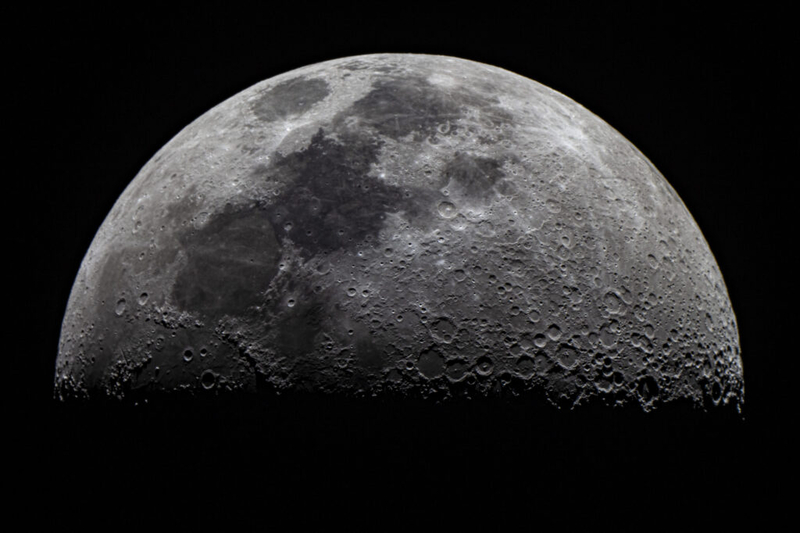
The Artemis Accords plainly allow extraction and utilization of space minerals. But what about the testing grounds here on Earth? (Stock photo by Leonardo Fernndez Lzaro via Getty Images)
One goal behind the successful Artemis II mission that sent humans (and Rise) further into space than ever before is to advance space mining. We are living through a time of remarkable scientific development across the universe that touches even the Fishlake National Forest in the Tushar Mountains.
Marysvale, Utah, locals face potential mining activity only recently made possible after seismic nodes were backpacked into the Tushar Mountains to survey underground mineral deposits. Fleet Space Technologies owns these purse-sized devices and markets them as interstellar prospecting equipment that may allow humankind to extract minerals from celestial bodies. Other companies share a dream to mine the moon, and it is legal. The Artemis Accords plainly allow extraction and utilization of space minerals. But what about the testing grounds here on Earth? An Australian company’s outer space beta test is taking place unregulated, in the backcountry, on our public lands.
This is a symptom of international companies gaining more control over our public lands. Numerous priorities of the current presidential administration are in the interest of both terrestrial and cosmic mining companies over we, the people. They include: the persistence of the grossly outdated 1872 Mining Law; the dismantling of the U.S. Forest Service; the coercion of professionals out of the civil service across national public land agencies; and the weakening of the valuable Clean Water Act — a law that supports sturgeon health and is key to restoring endangered Atlantic Sturgeon and Shortnose Sturgeon populations.
National land management agencies, the policies that they enforce, and the laws that govern them are supposed to serve each of us and the land, water and wildlife we love. They are meant to protect us and keep extraction-based businesses in check. I’ve written substantive public comments on a handful of regulatory proposals and environmental assessments pertaining to public lands on behalf of the national nonprofit organization, GreenLatinos, over the last four years. Something greater than the substance of these comments I’ve observed is the crucial importance of public input on natural resource management.
Democratic processes are responsible for allowing us to live well on our one and only home planet. As Americans, we are responsible for passing public lands on to future generations in a better condition than we received them. We shouldn’t let companies make those decisions for us. Yet, President Donald Trump’s Forest Service permitted the use of underground mineral survey technology in our national forest without public comment. The full Sturgeon Moon we just witnessed should embolden us to get a grip back on our natural and cultural inheritance, and fight for the democratic processes that make public input at the foundation of decisions about public land.
As the Sturgeon Moon transitions into a Harvest Moon on Sept. 26, we also ought to ask ourselves and each other: what would it mean to bore into and extract from the lunar subsurface? The poet Camille Hernandez called lunar craters, “evidence of care.” Each of the moon’s blemishes represent every time that the moon pulled a space rock into its orbit and saved Earth. The moon has remarkable effects on our lives and the rest of nature. The moon controls ocean life, allowing us to enjoy coasts and eat seafood. Moon light is essential for Utah’s abundant ephedra plant (Mormon tea) to pollinate. And the moon protects us from extinction by asteroid.
In conversation with colleagues aboard the International Space Station, Artemis II Astronaut Christina Koch stated that looking back at Earth, “emphasized how alike we are.” As members of creation on Earth, we should remember the “‘hum” in human, humility, and humble. It comes from the Latin humus, meaning “earth” or “ground.”
75% of voters in Utah prefer that leaders place more emphasis on protecting water, air, wildlife habitat, and recreation opportunities over maximizing the amount of land available for drilling and mining. We on Earth, given to the characteristics of the moon, have a lot more in common than we tend to recognize most days.
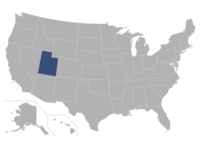
Salt Lake City, UT