Storm-Scarred Areas Of Big Island Brace For Another Hurricane
Sep 25, 2026 | 6:01 am ET
Description
Photo courtesy of Honolulu Civil Beat
It was eerily quiet in Ka'ū on Thursday, as people filled sandbags, boarded up windows and wearily crossed their fingers as Hurricane Nolo made its way toward the Big island.
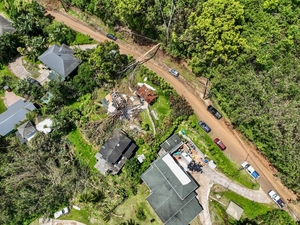
Kent Kawakami, the patriarch of the family that lost a portion of their home and multiple farm structures in mid-August during Hurricane Lala, had an escape plan. But, like many in the area, he wasn’t in a big hurry to follow through.
The family had positioned their cars in their driveway so they’d be able to leave quickly, packed go-bags, and a neighbor down the road has offered to let them stay if need be.
Kawakami’s son and nephew were prepared to stay up all night Friday to watch the water levels rise. If the water gets too high, they plan to leave the house, which remains open to the elements and covered on one end by a patchwork of tarps.
“I’m just praying we don’t lose the house,” he said.
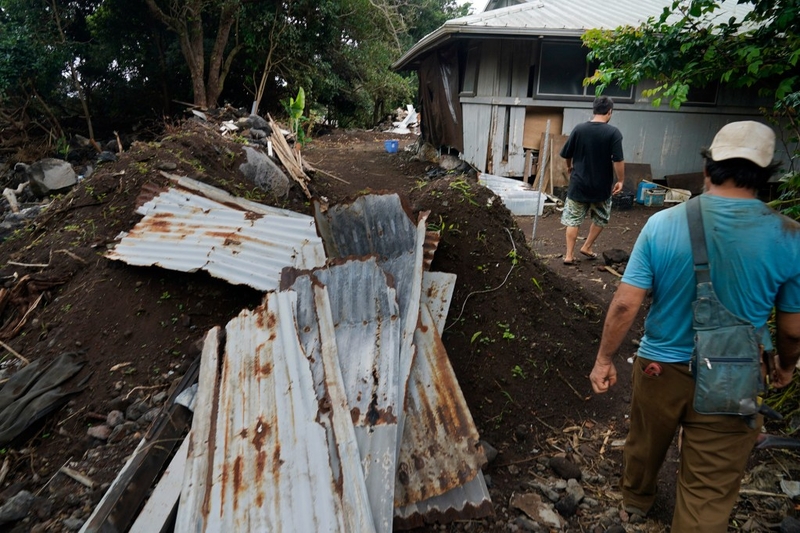
The Kawakamis weren’t the only ones resisting the urge to leave. Some residents of the area have been staying in hotels on the Kona coast since the last storm, but many are packed into homes with friends and family members. And some may still be in shock, in denial or in disbelief about the fact that another big storm could hit Ka'ū so soon after the last one.
Troy Gacayan, a high school teacher and pastor at River of Life Church said he has been on edge over even the slightest bit of rain or wind.
“I'm kind of freaking out. It's like nobody understands that unless they live here,” he said. Among his students, he added, “the PTSD is off the charts.”
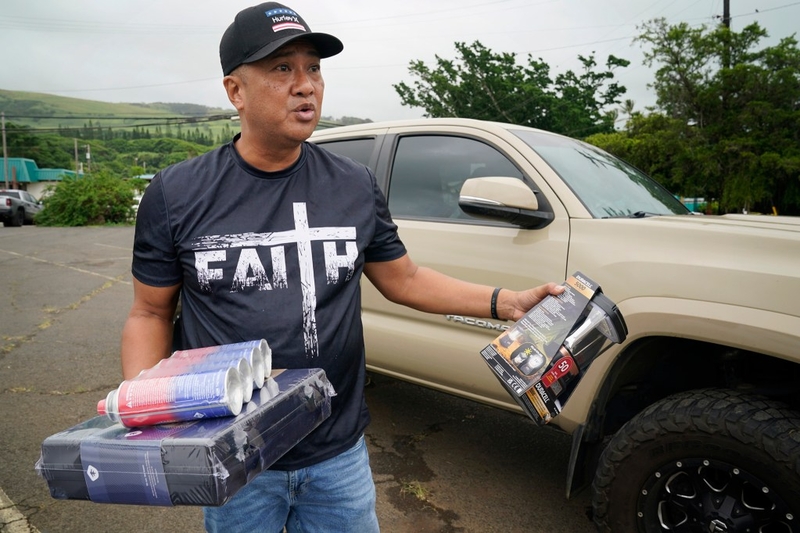
Gacayan ran a community support hub at the church for several weeks after Lala, and the provisions poured in from all over the state, as well as from some churches on the mainland. For that reason, he said the families he knows are much better positioned for the short term — most have water and food and many have generators — but there’s only so much preparation possible.
“We're slowly starting to rebuild, but now it's almost like if this storm hits, it’ll smash us back down,” he said.
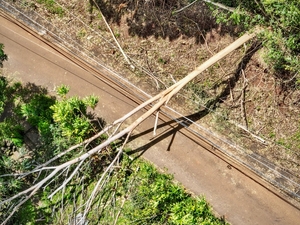
And while contractors for the county have been working overtime to prepare for the next storm, the real mystery lies above the region’s towns. That’s where flash flooding created rivers and deep scars in the earth where there had been none before, ripped up trees and boulders and washed them through town, and tore corpses out of a village cemetery.
In the weeks since Lala hit, construction crews deployed by the state and county have cleared culverts and bridges and dug down into drainage channels to make them deeper. In many areas they have built up berms along bends in the channels to try to corral the flows inside those pathways.
Jeff Silva, president of the Colony I Homeowners Association in Punaluʻu, said those bulldozers and excavators put in an impressive effort in the past five weeks. But as Hurricane Nolo approaches, Silva said he worries about places farther upslope that they could not reach, places where the raging flows from Lala’s rain altered the landscape on the slopes of Mauna Loa.
“It’s all changed up above,” Silva said. “We can do whatever we want down below, and we can hope for the best. But it seems that if the problem is going to come from somewhere, it’s going to be above.”
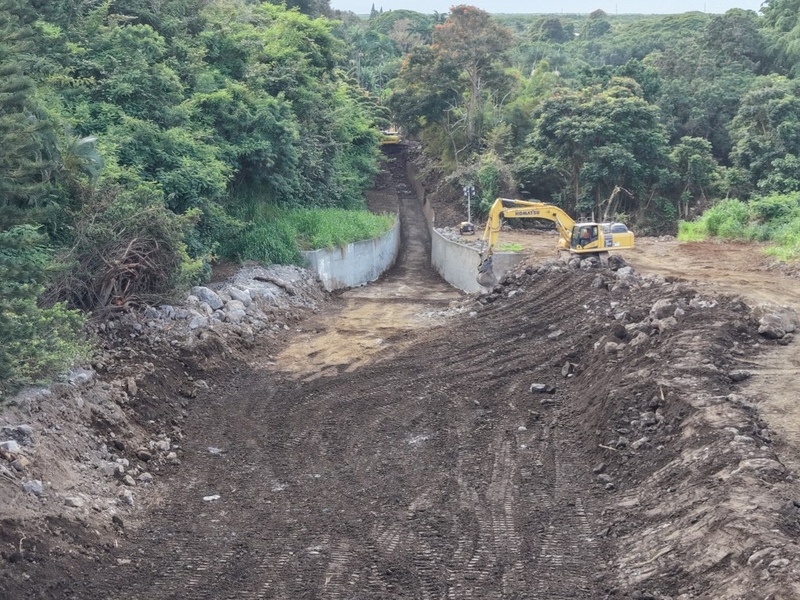
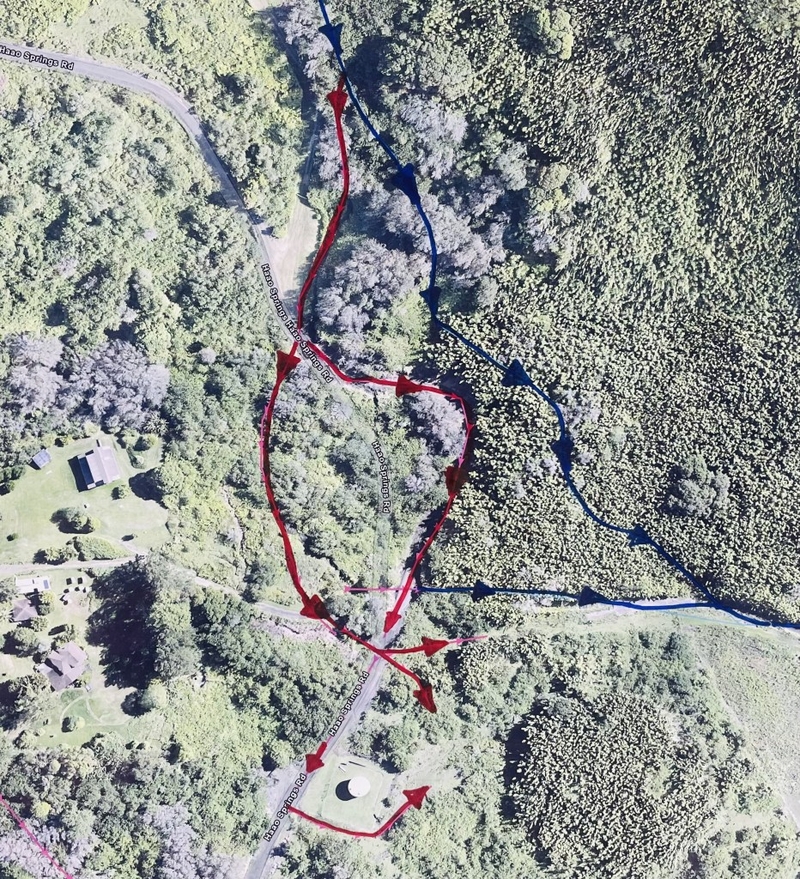
Darryl Oliveira, acting administrator of the Hawaiʻi County Civil Defense Agency, shares those worries as the county prepares. Ever since he and Hawaiʻi County Mayor Kimo Alameda saw how the land had been transformed above the towns while riding in a helicopter shortly after Lala, Oliviera said, “we don’t know what the future is with flooding for Nāʻālehu and Waiʻōhinu.”
“We didn’t have 40 inches of rain in the past,” said Alameda. “So maybe our flood channels just cannot handle it, and that’s why it’s creating new paths.”
As rains began on Thursday, Oliveira said that so far, runoff seemed to be flowing along the new paths at Mark Twain Park in Waiʻōhinu — where flood waters shoved a house off its foundation during Lala — and in an area near Punaluʻu Bakery.
The county has mapped the transformed landscape, Oliveira said, and has asked the U.S. Army Corps of Engineers for assistance in assessing exactly how it has changed.
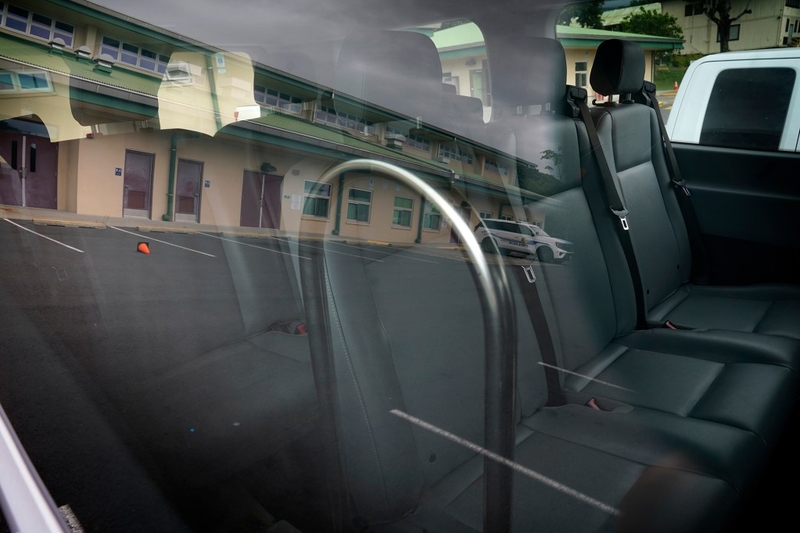
Civil Defense and Community Emergency Response Teams (CERT) went door-to-door this week in and around Nāʻālehu to remind residents in flood-prone areas of the danger posed by Nolo, and to urge them to evacuate early. The county staged buses at Nāʻālehu Elementary School Wednesday for people who wanted to leave the area, but there were no takers. Buses returned Thursday. One rider climbed aboard.
A Community In Waiting
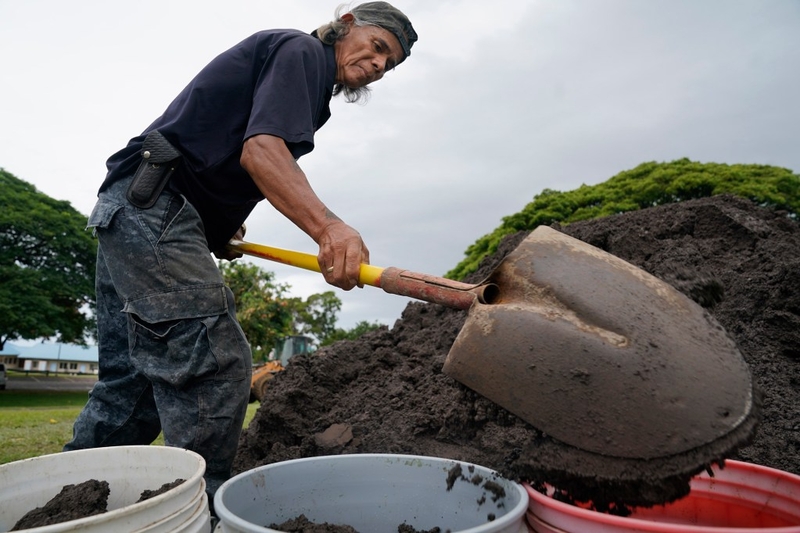
The gym and shelter in Pāhala was empty on Thursday, but its doors were open. Outside, a large generator was set up to power the building’s lights, outlets and HVAC system if the power goes out in town. Nearby, people filled sandbags using shovels at a park that abuts the local community center.
Jaffar Karasuta was back to fill up a second round of bags. He said the sand had been there before Lala, too, but he doesn’t remember people using it then. For Nolo, there was a consistent stream of residents coming to help themselves to the pile of gray sand.
“This time it's going to be bad because the water has a path now,” he said.
If it the water’s new path does result in more disaster, Gacayan said he wants to see a more distributed form of community support — more neighborhoods forming their own support hubs rather than large centralized support centers.
“It takes people to run these hubs,” he said. “And it's all done by people that are actually going through it themselves.”
Amanda Cruz, a legal clerk who lives and works remotely in Nāʻālehu and has spent the last six weeks starting GoFundMe accounts for flood survivors and collecting supplies, has started one of those unofficial neighborhood hubs.
“Never in a million years would I have imagined I was a hub,” he said. “Then last week I was dropping off mattresses at someone's house, and people were donating stuff, and then I was at church and my pastor was like, ‘If you want to help with Nāʻālehu, talk to Mandy,’ and I was like, 'OK, I guess I'm a hub.’”
Cruz lives in one of the subdivisions below the town, off the flood plain, and she has offered friends access to her home if theirs are damaged. She said she understands why Nāʻālehu residents didn’t want to take the county bus pre-emptively a half hour away to the shelter in Pāhala.
“What if they get stuck there, and can’t make it back to Nāʻālehu?” she asked.
She added that the area’s churches have helped affected families find temporary places to stay in second homes in the subdivisions. But in some places, “there's like 20 people in a house, so everyone is packed like sardines.”
It’s rough, she said, but she hasn’t seen people sleeping in cars or tents in recent weeks — except one person who already lived in his car before the storm.
The Last Restaurant in Town
Zane Monteleone is used to disasters now. He ran a business during the pandemic, and his shaved ice business and his kids’ school were both destroyed in the Lahaina fire. To give his sons a sense of normalcy, he moved to Nāʻālehu and took over a small restaurant called Hana Hou. Disaster followed them.
During Lala, four feet of water flooded the restaurant. Hurricane-strength winds stripped Monteleone’s shed of its doors. The restaurant lost power, water and propane tanks, but was able to reopen less than two weeks later, on Aug. 28.
On Thursday, Monteleone and his business partners were installing large sheets of plywood and placing sandbags in front of the restaurant’s entrance. And they gave away the last of the restaurant’s pie so it wouldn’t go bad. But they didn’t need to do much else – they had prepped when Tropical Storm Moke threatened the islands not long after Lala swept through. And they didn’t bother to take it all down then.
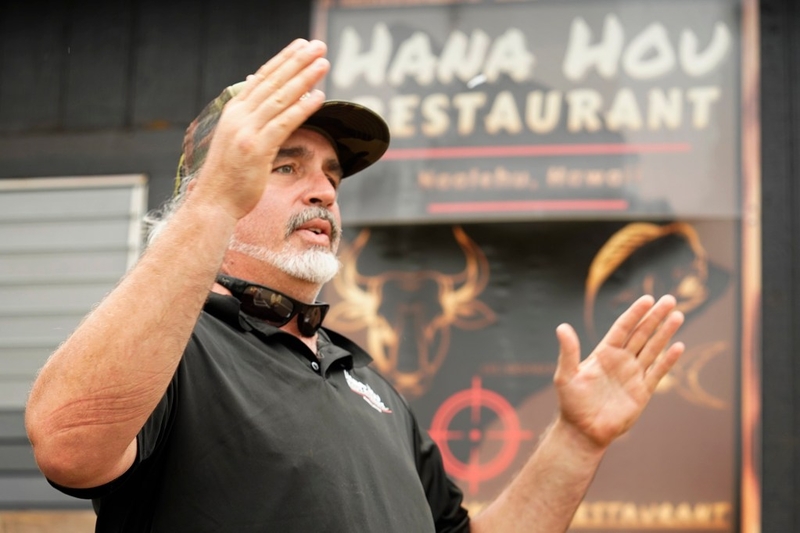
“We have the game plan now, we have our checklist,” Monteleone said. “Everybody's kind of set up. Just ... pray for the best. That's kind of where we're at."
Mark Umayam, a business partner who followed Monteleone from Maui and traded in his fishing poles for cowboy boots, said that after the Lahaina fires he had to protect his uncle’s house near the burn zone from looters. But in Nāʻālehu, he’s not too worried.
“This is thankfully a really good community,” Umayam said. “A lot of the guys look out for each other.”
Greg Febel, who also moved from Maui to help out Monteleone, said although he’s seen people all over the town prepare, he’s sure it will sustain damage. The hurricane was expected to bring winds up to 120 mph out in the ocean.
“That's a lot for a house to take,” Feeble said. “No matter how well built it is or how well prepared you are, it's a lot for everybody. We just gotta hope for the best, prepare for the worst.”
Honolulu, HI