Data centers take center stage, spur mudslinging, in competitive Gorge-based Oregon House race
Sep 25, 2026 | 9:00 am ET

Description
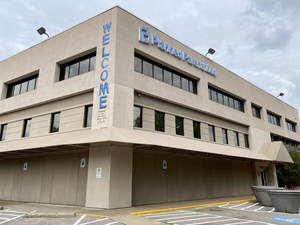
A driver passes a Google data center campus in The Dalles, Oregon. (Photo by Jordan Gale/Oregon Capital Chronicle)
A Republican Wasco County Commissioner who helped usher in two decades of Google data center development in The Dalles is running campaign ads painting his Democratic opponent for an Oregon House seat as an underhanded supporter of corporate tax breaks for data centers.
Scott Hege, 64, is a 16-year county commissioner and former executive director of the Port of The Dalles, running in the November election to represent the 52nd House District in the Gorge against political newcomer Hank Sanders, a 25-year-old former journalist and legislative aide to his mother, Portland-area Sen. Lisa Reynolds.

The district is home to Oregon’s first data center campus, where Google in 2006 began construction on an area at the Port of The Dalles along the Columbia River that today has several football-sized data storage buildings and continues to expand, consuming about 40% of the city’s water supply and putting pressure on the area’s available water sources.
The House seat is one of the only truly competitive and unpredictable ones in the state, and both candidates are straining to show the district’s voters — roughly 38% nonaffiliated, 30% Democrats and 25% Republicans — that they have something to say about data centers.
The server farms have become a lightning rod in political campaigns across the state and the U.S. as many voters sour on the facility’s demands for resources, lucrative tax credits they’ve received, and as many people weigh the potential costs and benefits that artificial intelligence and more computer automation could have on society and the future.
Sanders in recent months has called for a statewide moratorium of unspecified time on data centers — a call Democratic Gov. Tina Kotek echoed in her reelection campaign.
“We have to make sure that we’ve got a moratorium until we can figure out how to make sure that we’re resolving these complicated issues,” Sanders told the Capital Chronicle.

Hege, who declined a phone interview, said in an email that he believes decisions about data center development, including tax breaks and community investments, should be made locally.
“For Hank, a moratorium allows the state to develop more data center regulations and have centralized state control. I do not support taking local control away from communities who could benefit from the investment; they know best how to maximize the benefits to their community, or say ‘no,’” Hege wrote.
Mudslinging
Campaigning on the issue in the 52nd District hit an apex in August, when Hege’s political action committee set up the website hypocritehank.com and began running an ad with a voice reading over a montage of Sanders photos, a video of a hand counting money, and of a data center, among others.
“Higher taxes for us, tax breaks for AI companies. Don’t send Hank Sanders to Salem, otherwise…” the voice says, before an audio clip of Sanders voice plays from a June 2025 episode of his bygone podcast “Everything Oregon” where he says: “We’ll pay for it.”
The ad features several clips from episode eight of the now largely internet erased series where Sanders talks directly into the mic about his ideas for boosting economic development in Oregon.
Sanders shared a transcript of the episode with the Capital Chronicle. In it, he discusses potential tax breaks he’d advocate for small businesses and startups to get people to move to Oregon, including lowering tax rates for restaurants, subsidizing the costs of law school and programs at Oregon Health & Science University and offering free and subsidized office space to law firms, tech firms, start ups and companies with 50 or more employees in parts of the state.
“OK, great, we’ve got a restaurant incentive. It’s a specific restaurant incentive where you don’t pay these, you know, your tax rate is 5% lower across the board here and here. Oh, do you want to have an AI startup? Okay, we got the best, the fastest communication with AI data centers anywhere on the West Coast for a fraction of the price that it’s gonna cost you in San Jose or Seattle,” he says in the episode.
He goes on to say: “Office space costs you a million dollars a year? We’ll save you that money. We’ll pay. We’ll pay for it,”
Hege’s ad isolates Sanders saying: “Oh, you want to have an AI startup? Okay, we’ve got the best AI data centers anywhere on the West Coast for a fraction of the price,” and “We’ll pay for it.”
A new vehicle for affordability issues
Hege said his ad reveals contradicting stances from Sanders on data centers.
“Hank Sanders had formerly been positive about data centers, but changed his opinion, which is fine, but now he clearly does not support data centers in Oregon to the point of calling for a full stop to data center developments in Oregon with a moratorium,” Hege said in an email.
Hege, for his part, is not running away from a record of approving multi-million dollar tax incentive packages for Google in The Dalles during the last decade and a half, including $50 million in property tax breaks this year alone, according to reporting in The Oregonian/OregonLive.
As executive director of the Port of The Dalles, Hege approved selling land to Google to build data centers at the port. Hege said he’s been consistent on data centers as a county commissioner.
“I made sure they paid their fair share and delivered on their commitments to our rural community, while creating jobs and stimulating our local economy and supporting our schools,” he said.
He’s taken in more than $450,000 in campaign contributions ahead of the Nov. 3 election, including $8,000 from large construction and contractors’ unions and associations who’ve been outspoken in their support for data centers in the state.
Sanders has received about $170,000 in campaign contributions, mostly via small donations from individuals. His largest contributions came from Oregon’s Democratic Party, Oregon Democrats currently serving in the state House and Senate, as well as his mother’s PAC, Friends of Lisa Reynolds.
Sanders said Hege’s ads present false information about his stance on data centers.
“I want to make very clear: I was not, and am not, never have called for tax breaks for data centers,” Sanders said.
“We have an unlimited till to give to trillion-dollar companies, but can’t find resources to build a new high school or provide relief for families who are homeless. We can’t find support for small businesses, so 2nd Street in The Dalles continues to empty out, but we can find unlimited tax breaks and resources and incentives for data centers built by Google, from the same county commissioner who has worked for the company that Google hired to build those centers. That’s I think what people want less of in politics,” Sanders said,
Along with serving as a county commissioner and port executive director, Hege spent three and a half years between 2005 and 2008, according to his LinkedIn profile, as vice president of construction company Design Structures contracted to work on Google’s data center buildout in The Dalles that began in 2006.
Data centers have become, according to Portland-based DHM public opinion researcher John Horvick, the vehicle by which candidates from both parties are attacking one another on cost-of-living issues.
Along with legislative candidates from both parties, Kotek and Republican gubernatorial nominee Christine Drazan have dueling ads blaming the other for supporting data centers. Kotek called out Drazan for voting against the POWER Act that requires data centers to pay for the energy they use, while Drazan attacked Kotek for voting when in the House for property tax breaks for industrial investment that helped make Oregon a top market for data centers.
“They’re using data centers as a way to make an affordability case,” Horvick said.
He added that while polling shows most Oregonians support a data center moratorium, a candidate’s opposition to tax credits for data centers polls higher.
“I would bet he’s (Hege’s) got polling, or Republicans have polling, too, that shows that that (opposition to tax credits for data centers) gets more juice than moratoriums on their own,” he said.
Salem, OR