State’s troublesome driver’s license suspension laws need cleaning up, lawmakers told
Jul 15, 2026 | 7:43 am ET
Description
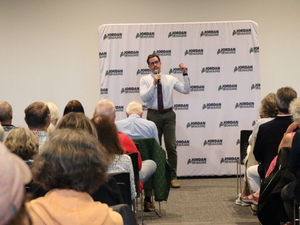
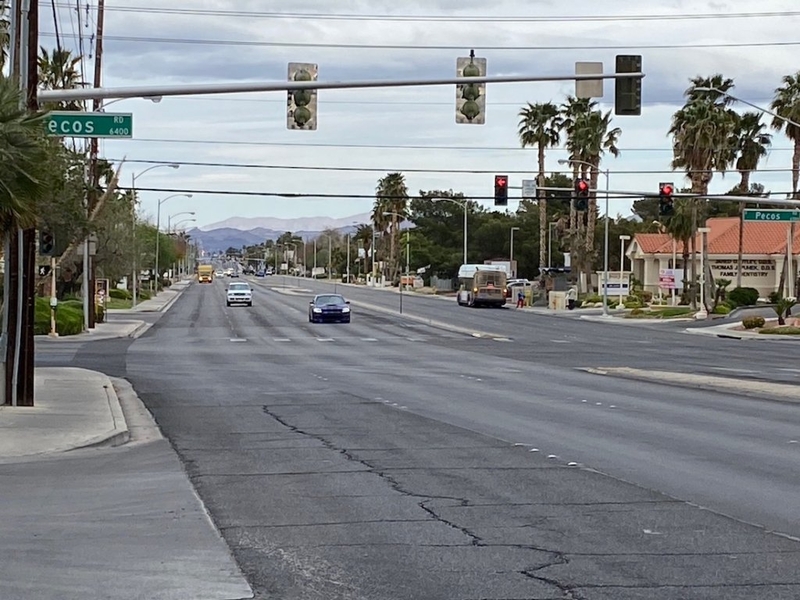
“One thing we know for sure is if you need money from an individual, taking away their ability to drive to work or to get their kids is actually a very counterproductive way of going about that,” said Nick Shepack with the Fines and Fees Justice Center. (Photo: Hugh Jackson/Nevada Current)
When the state decriminalized traffic tickets several years ago, conflicting legislative language inadvertently cleared the way for thousands of people to get their licenses suspended for unpaid traffic fines.
State lawmakers Tuesday were asked to consider corrective legislation in the upcoming 2027 Legislative Session.
Data presented to the Interim Judiciary Committee showed about 139,000 people in the state have their licenses suspended for either failure to pay or failure to appear, said Nick Shepack, the Nevada State Director of the Fines and Fees Justice Center.
The data was based on information from the Nevada Department of Motor Vehicles as of January.
“In 2025 alone, we suspended over 38,000 individuals’ licenses,” Shepack said. “While the stated goal of these suspensions is to get people to comply with their tickets and get their license reinstated, in 2025 we reinstated less than 5,000.”
Criminal reform advocates and civil rights groups had tried over various sessions to get state lawmakers to reform laws that criminalize minor traffic infractions.
In 2021, they were successful when state lawmakers passed multiple bills dealing with low-level traffic offenses.
Senate Bill 219, which came into effect Oct. 1 2021, ended debt-based driver’s license suspension and reinstated more than 30,000 licenses, Shepack said.
Assembly Bill 116, which decriminalized traffic tickets, making them civil infractions, went into effect in January 2023. Because of conflicting language in the legislation, which created a new traffic code, the bill led to courts “allowing driver’s license suspension again,” Shepack said.
In 2023, state lawmakers put forward Senate Bill 104 as clean-up legislation that sought to remove a court’s authority to suspend a person’s driver’s license or prohibit a person from applying for a driver’s license due to a delinquent fine.
The legislation passed the Assembly in a party-line vote and then passed the Senate unanimously.
The bill was vetoed by Republican Gov. Joe Lombardo.
“Though some of the ideas contained in this bill may be well-intended, we should allow more time to gain a complete understanding of that bill’s effects,” Lombardo wrote in his veto message at the time. “Moreover, even if these infractions are determined through civil adjudication, judges should still be empowered to suspend or uphold the suspension of a driver’s license for any legitimate purpose.”
With more data on the number of suspensions, Shepack said it’s time for lawmakers to revisit the topic.
Despite the state’s best attempt to get rid of debt-based suspension, Nevada is still one of “only 17 states that allow for full failure-to-pay suspensions,” Shepack said.
The states that have ended debt-based license suspension have seen economic benefits, he added.
“States who did comprehensive suspension reform – that means ending failure-to-pay and failure-to-appear (suspensions) – saw about a 2.2% relative gain in employment,” he said, adding that research showed “the average individual loses about $12,700 a year in income if they have their license suspended.”
“One thing we know for sure is if you need money from an individual, taking away their ability to drive to work or to get their kids is actually a very counterproductive way of going about that,” Shepack said.
Though DMV data showed roughly 139,000 suspensions as of January, Shepack said it’s hard to distinguish if people lost their licence because they failed to pay fines or appear in court.
“Different judges in different courts view not making that initial payment on your traffic ticket a failure to appear, while others deem it as a failure to pay,” he explained. “Some courts will say that each payment is an appearance, while others will say each payment is a payment. So we get confused by these types of suspensions.”
Either way, he argued it is clogging the judicial system.
Democratic state Sen. Melanie Scheible, who chairs the committee, asked about the process of reinstating licenses. The process, she was told, includes paying back-owed fees and a reinstatement fee.
“There are likely individuals who are actively working on paying off their court debt, but still don’t have money for the reinstatement fee as well,” Shepack said.
Las Vegas, NV