State’s eviction prevention program on shaky financial footing, lawmakers told
Jun 25, 2026 | 8:00 am ET
Description
(Photo by Ronda Churchill/Nevada Current)
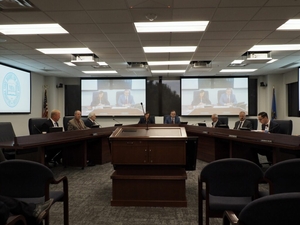
Rental assistance funding allocated by state lawmakers last year has prevented evictions for nearly 1,700 households in Nevada, but there still is a need for bolstering tenant protections, state lawmakers were told last week.
Officials approved a $21 million infusion into county and city run eviction diversion programs in the 2025 Legislation Session. The majority of other eviction reforms were vetoed by Republican Gov. Joe Lombardo.
The state will need an ongoing infusion of funds in future sessions if it wants to prevent evictions, Jonathan Norman, statewide advocacy, outreach and policy director for the Nevada Coalition of Legal Service Providers, told the interim committee on Commerce and Labor last week.
Counties have until September 2027 to use the allotted rental assistance funding, but “I think they’re going to run out earlier,” Norman said.
Local officials have been operating various forms of eviction diversion programs since the pandemic, which have been funded by federal measures including the American Rescue Plan Act.
Assembly Bill 475 passed in 2025 allocated an additional $21 million for eviction diversion and rental assistance programs to prevent those programs from running dry.
Clark County received $15 million, the City of Reno received $5.2 million to cover the Washoe area, and the Rural Housing Authority received $750,000.
When a person gets an eviction notice and files an answer to the court, there is a box where they can indicate if they are older than 62 years old or if there is someone in the household who gets their income from Social Security Disability.
If a case meets the age requirements, it is then routed over to eviction diversion.
The “Legal Aid Center (of Southern Nevada) provides an attorney for those folks when they’re responsive, and then the (Clark County) Social Services meets with them and starts talking about rental assistance and whether the housing is sustainable,” Norman said.
Clark County has served 577 households and allocated $2.5 million in rental assistance, Norman told lawmakers.
The eviction diversion program was initially only available at the Las Vegas Justice Center but in February expanded to include North Las Vegas and Henderson courts, Norman said.
The program, he added, is scheduled to expand to include families with children younger than 1 year old sometime in July.
Southern Nevada has seen a drastic spike in families with children experiencing homelessness in recent years.
The reason it’s limiting the expansion of the eviction program only to households with children younger than 1 year old is to ensure money doesn’t run out, Norman said.
“If we find in four months that we’re not spending as much money as we think, we’ll be able to expand the age range up and assist families with kids under the age of four or five,” Norman said.
The Reno Justice Court has served 179 households through its Housing Court. Another 757 households received rental assistance from Washoe County and the Cities of Reno and Sparks.
Combined Washoe has allocated about $2.5 million.
The Rural Housing Authority has allocated $385,000 in rental assistance that has served 169 households.
Lombardo, who supported efforts to fund eviction diversion, signed one tenant protection bill that put some regulations on application fees.
Assembly Bill 121, which went into effect Oct. 1, requires landlords to offer a fee-free way to pay rent. The legislation also prohibits collecting application fees to obtain a credit report or run a background check for a minor who resides in the house.
There have been some questions arising about “what does free mean” when it comes to an option to pay, Norman said, adding “I think some of these things will be ironed out in the courts.”
Among the 87 bills killed by Lombardo included legislation that sought to flip Nevada’s summary eviction process to align with the rest of the country by requiring landlords be the first to file with courts.
He also vetoed a bill that proposed revising the court process when a tenant has an unresponsive landlord who doesn’t quickly address needed repairs, as well as legislation to expand automatic sealing of eviction records.
Norman reminded lawmakers a version of AB 121 was vetoed by Lombardo in 2023 but it was revived. They should consider a similar path with failed legislation around reforming the eviction process and automatic sealing eviction records, he said.
People with previous evictions struggle with finding housing because of their records and can either be forced to rent from predatory landlords or become homelessness.
State lawmakers have previously supported the creation of Campus for Hope, a new homeless campus backed by the resort industry.
The campus is expected to include transitional housing for up to 24 months, Norman said. Helping people seal eviction records, he added, would likely help some of the clients exit homelessness.
“What are you going to do with a tenant who was evicted, fell into homelessness, got to Campus for Hope, they’ve done 24 months, they’ve changed their life, and they’re going to try to get housing,” Norman said. “Maybe that 24 months is a good amount of time to say, okay, at 24 months we’re sealing these records.”

Las Vegas, NV