Kansas higher education CEO warns of financial peril for athletics, celebrates university progress
Jun 25, 2026 | 11:54 am ET
Description
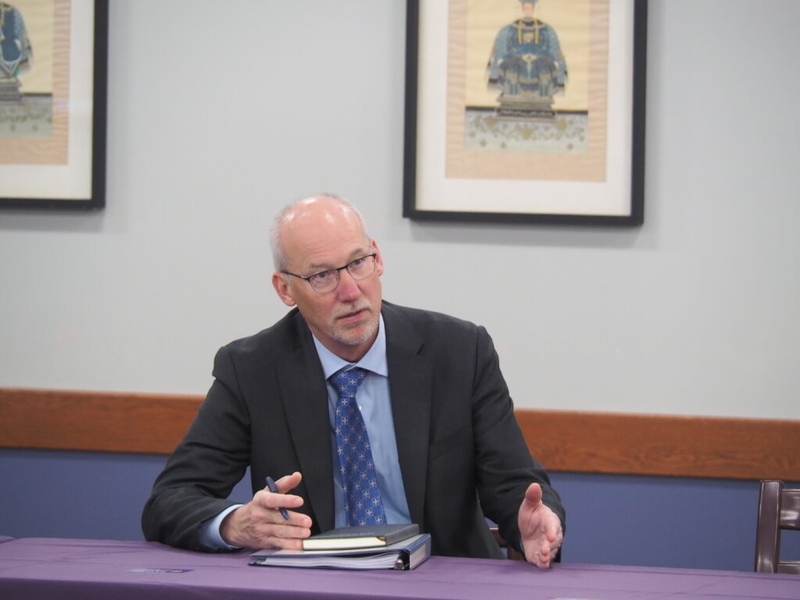
Blake Flanders, who served 10 years as president and CEO of the Kansas Board of Regents, is retiring July 31. During his final Board of Regents meeting in Topeka, he offers thoughts on the financing of collegiate athletics, child literacy, successes of university students and economic development. (Photo by Tim Carpenter/Kansas Reflector)
TOPEKA — Blake Flanders is preparing to retire after a decade as CEO and president of the Kansas Board of Regents, and he wants Kansans to recognize important achievements and daunting challenges in public higher education.
Flanders, who was born in Edison, population 300, and earned a bachelor’s degree in animal science at Kansas State University, concluded his career leading the university system that included his alma mater. In recent remarks to members of the Board of Regents and higher education administrators, Flanders said he was especially uneasy about pressure on Division I athletics programs to build extraordinary revenue streams in a new, turbulent college sports economy.
College athletes are being paid a share of sports revenue amid soaring personnel, construction and operating costs of athletics programs, which could further separate Division I programs based on creativity of money managers rather than sports prowess of students.
“It’s an ever-changing world,” Flanders said. “It’s harder and harder for athletic departments to raise those funds. Could there be some kind of state partnership or something? Those are things that need to be explored. I don’t believe that state assets should be sold, but that’s the board’s determination to see what to do there in terms of venture capital … that’s entering athletics.”
The University of Utah has finalized the first-of-its-kind private equity partnership that spun off commercial operations of the athletics department to generate an estimated $500 million for the sports program. Prominent donors can purchase a minority stake in the business.
Closer to home, the Big 12 Conference, which includes K-State and the University of Kansas, explored selling 15% of its equity and naming rights to Allstate for $1 billion. The Big 12 also struck an agreement with PayPal to be the conference’s exclusive athlete payment platform.
The idea of snatching quick cash in a quest for sports competitiveness has critics, especially among those alarmed the sale of university assets could lead to academic mission drift, loss of control to outside investors and the demise of non-revenue sports.
Flanders said he was pleased the Board of Regents took strides in building educational partnerships with the K-State Board of Education, but he emphasized more collaboration could occur. He said it would be necessary to keep working on literacy issues among K-12 students and to focus on reading instructional skills of new teachers emerging from universities.
“That’s a crisis we have in the state and we need to address it,” he said. “It’s not going to go away without action, and our universities know that.”
On Wednesday, Board of Regents general counsel John Yeary was appointed to serve as interim president of the board after Flanders’ retirement July 31. Before bringing his legal skills to the Board of Regents in 2022, Yeary was an attorney at three state agencies.
“We look forward to working with him in this role while we continue to conduct the search for the next permanent president of the board,” said Blake Benson, chairman of the Board of Regents.
Flanders graduated from Colby Community College before earning K-State undergraduate and graduate degrees in agriculture and a doctorate in education. He taught at Butler Community College and Manhattan Area Technical College prior to working his way up the hierarchy at Board of Regents’ headquarters.
“It’s been the honor of my life,” Flanders said. “It’s been great to have really created some long-lasting friendships while in this position and getting to serve Kansans.”
Flanders said state-funded financial aid for students had nearly quadrupled and the on-time graduation rate for the university system had climbed nine percentage points in the past five years. In addition, starting wages for graduates from the Kansas system increased by 29%.
He marveled at the influence of a state law signed by Gov. Sam Brownback providing millions of dollars in support for thousands of high school students eager to enroll in college-level technical education courses.
The higher education system voluntarily adopted a core general education curriculum and embraced raised economic development expectations for universities, Flanders said. Job growth driven by universities was important, he said, because those activities also benefitted Kansans who never stepped foot in a college classroom.
“Our institutions have engaged in economic growth, meaning they’ve recruited capital to Kansas, employees to Kansas and business to Kansas. I’m telling you that would not have happened without our talent pipeline. We still have a lot of work to do,” he said.
The nine-member Board of Regents serves as the governing board for six state universities and as the coordinating board for the state’s 32 universities, community colleges and technical colleges.
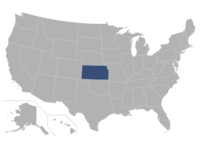
Topeka, KS