State help for flood survivors was disorganized and slow to arrive. For some, it never came.
Nov 16, 2026 | 3:20 pm ET
Description
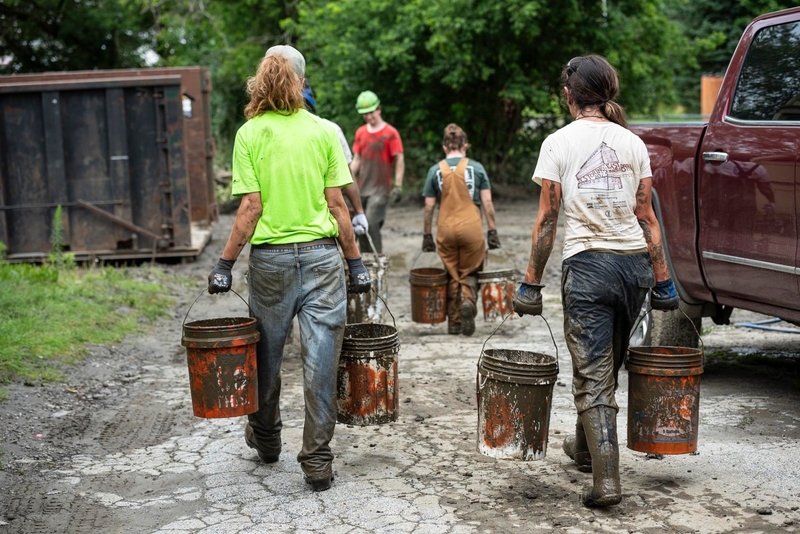
Workers from ReSource and the Montpelier Youth Conservation Corps clear mud out of a basement on Third Street in Barre on Friday, July 12, 2024. Photo by Glenn Russell/VTDigger

This story is part of The Coming Storm, a yearlong investigation by VTDigger, in partnership with FRONTLINE (PBS), into Vermont’s ability to help communities recover from natural disasters.
VERMONT — In November 2025, almost a year and a half after deadly floods hit communities across northern Vermont, state disaster case managers scrambled to contact almost 1,700 households. Their program was running behind schedule, and their window to help people was closing.
“I know it’s been 17 months since the disaster, but our goal is to make sure everyone gets the support they need,” workers were supposed to tell survivors, according to a call script.
State disaster case managers help survivors get as much federal aid and other funding as possible to pay for home repairs and relocation costs. But by the time Vermont’s program reached most people, recovery resources were dwindling.
“A lot of folks simply were out of luck by the time we came in,” said Charlotte Hackett, one of four former state employees who spoke to VTDigger about the program.
Similar problems had come up before.
A year-long VTDigger investigation found that Vermont’s programs aimed at helping the most vulnerable flood survivors failed to provide many with timely assistance. Following severe floods in 2023, the state’s case management program was slow to reach people and struggled to coordinate with community-based recovery groups – delaying much-needed assistance. After floods came again one year later, officials tried to fix earlier missteps and took a different approach, but the problems worsened.
The first challenge was figuring out how to reach storm survivors. In 2025, Vermont’s disaster recovery leaders did not use a key federal data set to locate them — for 10 months.
Although more than 2,000 households applied for aid from the Federal Emergency Management Agency in 2024, state case managers helped 70, Vermont officials said. The program would have likely helped more survivors if officials had been better prepared and acted more quickly, according to interviews with former employees and documents reviewed by VTDigger.
Poor communication from the state left community-led recovery groups confused, frustrated and overwhelmed, according to interviews with recovery groups and a state “after-action” report obtained by VTDigger through a public records request. The report was not publicly distributed, but was shared among state government officials in December 2025.
VTDigger’s findings are also based on emails between Vermont officials, and interviews with current and former state employees, emergency management experts and storm survivors.
Read more of The Coming Storm series in partnership with FRONTLINE (PBS)
The problems with Vermont’s case management system come as climate change is bringing more frequent and intense rain to the state, and as President Donald Trump’s administration has reduced federal support for disasters, requiring states to manage more of the recovery.
After the delays in 2023, state officials tried to help survivors faster when flooding returned in 2024, opting to use a different contractor, said Doug Farnham, Vermont’s governor-appointed chief recovery officer. But VTDigger found that the contractor didn’t speed up the process.
“Not one single Vermonter was turned away and not provided case management assistance” in 2024, Farnham said. He added that those who didn’t know about the program may not have received support.
Many storm survivors told VTDigger they did not know how the state’s disaster recovery system worked, or which government agencies might offer help.
After the storms, many relied on volunteers, donations and their savings. To pay for shelter and repairs, some took on new debt, went into foreclosure and took money out of retirement funds. Some lived in unsafe housing.
Jessica Farrar’s mobile home in Cavendish was pulled “off its piers” and partially “sunk into the water” after the 2023 flood, according to her FEMA aid application.
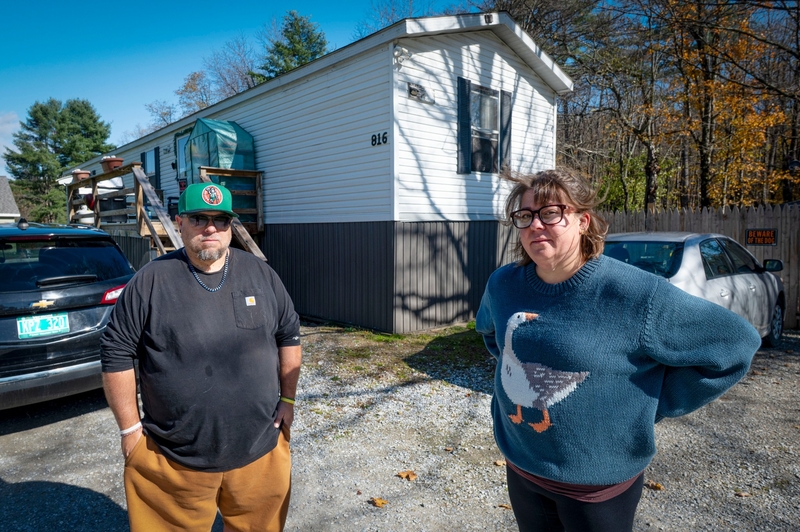
“We did not have the money to pay rent to live somewhere else while we’re trying to fix our house,” Farrar said in September 2026. “We lived in our house even though it was deemed unsafe.”
FEMA aid covered a fraction of the repair costs. She wasn’t aware that more help was available from the state – and no state case managers contacted her, she said.
Another person in St. Johnsbury had to walk “a great distance” up the “mini mountain” to her home after her mile-long driveway had been washed out, according to an email exchange, which VTDigger obtained through a records request. She had four children, was “very pregnant” and couldn’t afford to pay the estimated $20,000 to $50,000 for repairs. She had missed the deadline to apply for FEMA aid.
“I desperately need help,” she wrote in an email to state workers in July 2025, more than a year after the flood washed out her driveway.
Sarah Henshaw, who leads a community recovery group in Lamoille County, said that before the floods, some families who had been “financially stable and able to pay their bills, and might have had a small savings or small retirement, and now are in debt by tens of thousands of dollars, living in a place that’s unsafe, and living right on the edge.”
ABOUT THE COMING STORM: For a year, VTDigger, in partnership with FRONTLINE (PBS), has reported on Vermont’s capacity to manage recovery from natural disasters. VTDigger obtained emails from state officials regarding assistance to flood survivors, reviewed state and federal disaster funding and risk-reduction plans, examined federal proposals to change the Federal Emergency Management Agency, and analyzed FEMA data on disaster aid, with assistance from Eric Sagara of Big Local News at Stanford University. VTDigger also interviewed flood survivors, frontline recovery workers, state and local officials, lawmakers, emergency management experts, scientists, and social services providers, among others, for this series.
A slow launch
FEMA often funds case management programs after natural disasters so that states can pay the salaries of case managers and other administrators who work to help survivors recover.
When the 2023 flood hit, Vermont’s Agency of Human Services hadn’t run such a program since Tropical Storm Irene in 2011, which meant few employees had program experience, according to Jason Gosselin, Emergency Management Director for the state’s Agency of Human Services.
In 2023, FEMA provided Vermont $3.3 million, and the state contracted with Capstone Community Action, a nonprofit social service agency, to run the program. But it took eight months for the program to start helping survivors, said Liz Scharf, who helped lead case management at Capstone. Due to the organization’s low pay scale, they “hired less experienced staff who needed more training and supervision,” she said.
Capstone “could not launch quickly enough to meet early survivor needs,” according to the state’s after-action report.
Capstone used FEMA data to find survivors, but – due to confidentiality rules – case managers could not share that information with local volunteers already on the ground, said Sue Minter, who led Capstone at the time. (Minter’s husband, David Goodman, is a columnist for VTDigger.) It was “extremely, extremely frustrating — and enraging in some cases to other organizations.”
“Unclear roles, turf friction, inconsistent referrals, and uneven partner capacity” led to “fragmented and uncoordinated long-term recovery efforts,” after the 2023 flood, according to the report. The delays “left communities relying on informal or ad hoc networks.”
More than 6,000 households applied for FEMA aid after the 2023 floods, which were among the most destructive in Vermont’s history. By the time the program closed, it had opened 404 cases and secured more than $550,000 for survivors.
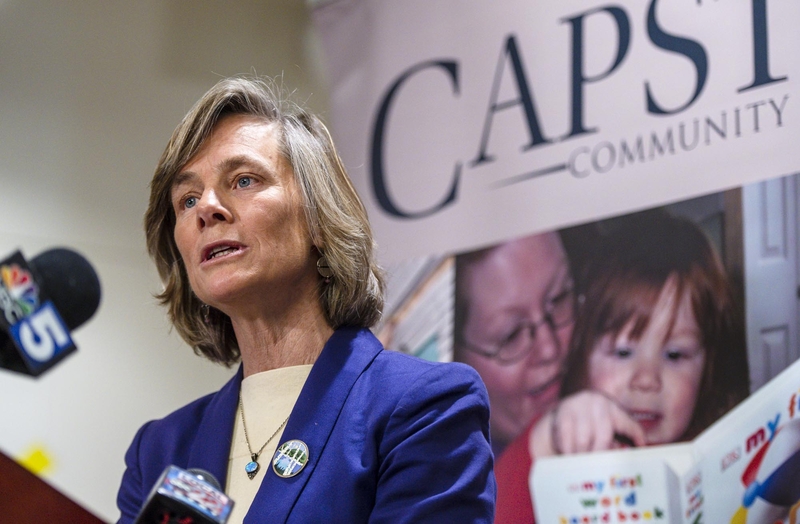
Capstone estimated it spent nearly $1.9 million in FEMA funding and, unable to fill all of its open case manager positions, sent the remaining $1.4 million back to the federal agency. The program secured more than $550,000 for survivors.
When another round of deadly flooding hit the state exactly one year later, the state approached Capstone about running another program, and Capstone said “they did not believe they had the capacity,” Farnham said.
After the July 2024 floods, while state leaders pushed to reach survivors faster, the program was slower from the beginning. FEMA approved funding on January 24, 2025, seven months after the flood, and case managers didn’t reach survivors for months.
Then, the state hired Guidehouse, a for-profit global consulting firm that Farnham said had helped Vermont run more than 300 programs, including during the coronavirus pandemic. The firm had for years contracted with other states such as New York to manage federal disaster grants.
Guidehouse subcontracted with the New England Annual Conference of the United Methodist Church, which hired case managers. The program was called Disaster Recovery – A United Methodist Ministries, or DRUMM.
The state realized Guidehouse was charging more than it had expected. FEMA warned Vermont that too much of its funding was going to the contractor instead of services for survivors.
In response, Farnham and his team met with Guidehouse to discuss adjustments “so that we can get more money to disaster survivors,” he told lawmakers in a November 2025 hearing.
Even so, Hackett, the former state employee, said she felt that more of the resources the state spent on Guidehouse could have been used to help storm survivors.
Guidehouse did not respond to multiple requests for comment.
A looming deadline
One of the 2024 program’s biggest challenges was finding the survivors who needed help.
Farnham said that the state had raised awareness about the case management program through “broad-based communications” such as press conferences and community events, through community recovery groups and through contacting people who called a 2-1-1 hotline to report damage.
But many survivors did not know about the hotline, according to the after-action report. Many of those who did reach the line did not know that they also had to apply to FEMA to get aid – and, if rejected, to appeal.
FEMA also provides states a list of disaster survivors who file for federal aid, and state officials had access to that list. Federal rules limit access to prevent widely sharing individuals’ personal information.
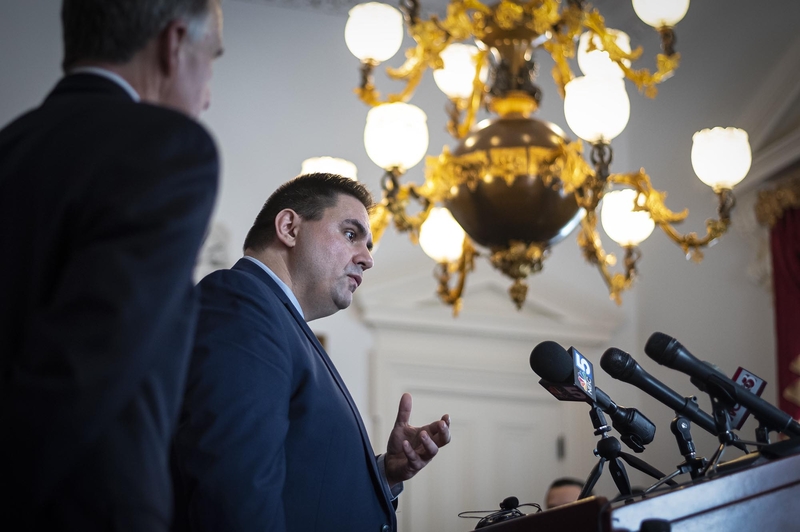
State officials decided to rely on 2-1-1 data and “not utilize the [FEMA data] as the primary source of data for outreach,” said Gosselin, Emergency Management Director for the Vermont Agency of Human Services.
Ultimately, those damage reports missed many Vermonters who needed help.
After the 2024 flood, FEMA had authorized three people working on the program to see its survivor data: two state employees and the executive director of DRUMM, which was conducting the outreach. In the fall of 2025, DRUMM’s director took medical retirement. The state could not authorize another worker to access the data until the federal government shutdown ended in November, Gosselin said.
But, in an email, a FEMA spokesperson told VTDigger that Vermont could have authorized up to five people to “ensure continuous access” to its list.
“FEMA wants these services delivered,” said Hackett, the former state employee. “That’s why they granted the award.”
Hackett said it was frustrating that state officials didn’t try harder to use the FEMA information. Their approach, she said, was, “‘Well, we can’t use what you’ve given us because you’re so unhelpful, and we’re just going to make our own tool.’”
Meanwhile, many Vermonters who had waited more than a year for help faced dire situations.
In September 2024, the state’s recovery office intervened when they learned that a 72-year-old disabled veteran, whose home was flooded in 2023 and 2024, had been “sleeping in a construction trailer with no running water, without power, has no way to cook or refrigerate food items,” according to an email from Kristen Gadbois, who worked for the state’s recovery office. “Essentially, he has been homeless for over a year,” she wrote.
Finally, in November, 2025, case managers gained access to FEMA’s data. State officials used the list as a back-up “just to make sure we didn’t miss anybody,” Gosselin said.
They saw that around 1,700 households who had applied for FEMA aid were not on the 2-1-1 list and still needed to be contacted.
Meanwhile a FEMA deadline loomed. Survivors who had been denied aid would need to appeal no later than February 21, 2026.
Case managers kicked into overdrive through a massive outreach to make people aware of state support and getting applicants to file FEMA appeals before the deadline.
Farnham called that outreach “redundant,” and said it was “another layer at the end to try to make sure we helped as many people as possible.”
“We had been communicating constantly over the course of that 17 months,” he said. “So to say that we haven’t contacted those households — did we pick up the phone and call every one of them individually? No, but you can’t have that direct communication be the only way you get the word out, right?”
But one former employee said that, without the November outreach, the program would not have been able to contact many survivors. It was the only reason the state’s program opened most of its cases, they said.
The former employee spoke on condition of anonymity due to concerns about retribution.
‘I cannot compromise my integrity’
By design, case management programs take a long time to start up. By the time they’re active, much of the work is focused on people, often with low incomes, who are stuck, and “do not have the capacity to start on their own repairs,” Scharf said.
In 2025, case managers rushed to reach those people.
“We will be triaging our outreach efforts,” Misty Grassley, executive director of the case management program, wrote in an email, which VTDigger obtained through a public records request.
Survivors with “critical needs” were to be assigned case managers immediately. These people were “lacking a safe, sanitary, and secure environment — for example, if the structure is unstable, there is no heat, the survivor is disabled, and/or they are exposed to mold and have compromised immune systems,” Grassley wrote in the email. Others could wait as long as 4 to 6 weeks before they heard from a case manager again.
Read more of The Coming Storm series in partnership with FRONTLINE (PBS)
Case managers “reached up to 800 households during the holidays,” Gosselin said.
Kurt Thoma, who was a construction coordinator for DRUMM, helped storm survivors access resources they were not aware existed. One of those survivors was in a “dire” situation, “and without immediate foundation repairs, a portion of her home would have collapsed,” Thoma wrote in a text message.
He helped her appeal her FEMA claim and apply for assistance from the Vermont Community Foundation. She received a total of $50,000, enough “to repair her damaged foundation and save her home” he said.
VTDigger could not independently verify those details.
In total, after the scramble to reach people, case managers secured about $673,000 in financial support from FEMA and philanthropic funds for 70 households — more than Capstone had secured for the 404 households it helped.
But Allissa Vigil, a former emergency management support specialist in the state’s Agency of Human Services, was frustrated that the program didn’t accomplish more. She resigned on February 4, 2026, pointing to the program’s leadership – “internal conditions rather than external factors,” she wrote in a resignation letter.
She wrote, “My first and foremost priority and loyalty is to the community, and I cannot compromise my integrity any longer.”
‘Exhausted and literally dirty’
In its outreach, the state relied heavily on volunteers and community groups, who had fanned across Vermont to help survivors long before the state launched its case management programs.
Vermont officials say these community efforts are a key part of the state’s support network.
In 2023, Orleans County resident Meghan Wayland quickly realized few storm survivors were reporting their flood damage. Without adequate reporting, the county might not qualify for a disaster declaration – which meant residents would not be able to apply for assistance from FEMA.
After floodwaters recede, damage can be harder to find, said Wayland. Often, it was “in people’s basements, which are literally underground. So then, the disaster is living underground, hidden away. It’s behind a door. Someone has to go in and look.”
Wayland drove long distances to knock on doors, documenting damage and encouraging people to report it. After Orleans County received its disaster declaration, FEMA officials sat down with Wayland at breakfast to persuade them to start a nonprofit “long term recovery group” (LTRG). Wayland showed up “exhausted and literally dirty,” they said, and ultimately agreed.
After flooding in 2024, Prem Linskey noticed that many of his neighbors were “living in homes that, landslides are creeping up, erosion’s creeping up, foundation’s cracking,” he started an LTRG that served Richmond, where he lived, and two neighboring towns. There was “such a big need,” he said.
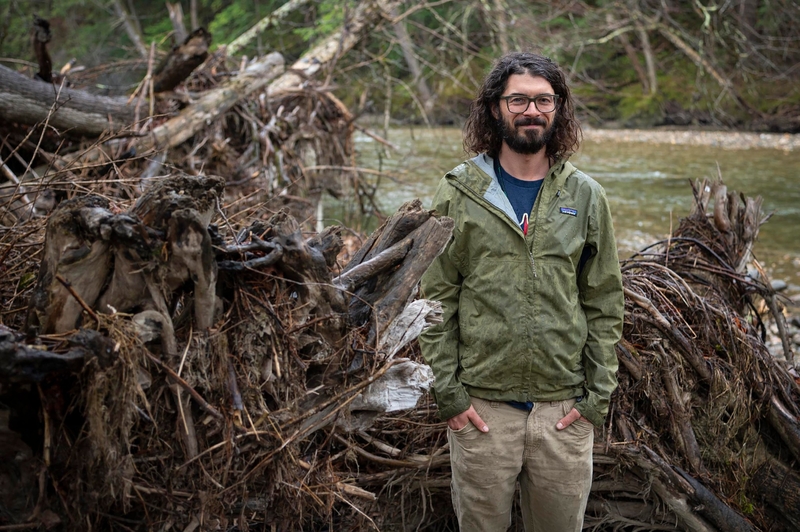
As the deadline to appeal for FEMA aid loomed, he received frantic emails from state case managers, and became increasingly worried. “These are people in my community that aren’t going to get their appeals in on time,” Linskey remembered thinking.
Alongside the state, long term recovery groups also have case managers, but the groups are created and run by community members.5 Some serve a single town while others serve multiple counties. Some areas don’t have one, which means not every Vermonter can access their support.
The state does not typically fund LTRGs. The Vermont Community Foundation, which manages much of the state’s philanthropic disaster aid, is a major source of funding. (VCF is also a financial supporter of VTDigger.) Many LTRG members are volunteers who also work full-time jobs.
As state case managers prepared to contact 1,700 households in November 2025, they requested help from LTRGs.
In November 2025, Mike Dacey, the head of an LTRG in Waterbury, told state officials in an email, which VTDigger reviewed, that his group could handle a large number of cases, but requested that the state pay for the work “associated with this increased case load.”
Gosselin responded that the state didn’t have money to pay recovery groups.45 The state’s case managers would handle all of the cases if the recovery groups didn’t have capacity, he said.
But in the background, case managers were overwhelmed. Between November and the February FEMA appeals deadline, they made several attempts to contact each of the 1,700 households.
Recovery groups had asked the state for money before, including after the 2023 floods. One recovery group leader told lawmakers survivors were receiving “slow, chaotic support” due to “a severe lack of state support and resources.”
If a region “can be served by an LTRG, it should be,” and the case management program should fill the gaps, said Farnham, the state’s chief recovery officer. He said that ongoing state funding was possible but “not super likely.” Since the floods in 2023, LTRGs have handled hundreds of cases.
Before the program ended in October 2026, case managers reached out to 2,222 households and opened 99 cases, according to Ashley Roy, public information officer with the Vermont Agency of Human Services. About one-third were unresponsive or withdrew from the program after their case work began, and therefore they “received limited assistance,” Roy said.
In its application to FEMA, the state proposed 11 full-time service positions, but Guidehouse staffed seven through its subcontractor, including three fewer case managers. Over the course of the program, the state paid about $475,000 for Guidehouse, Farnham told VTDigger, and DRUMM salaries cost $872,000.
By March 2026, the state had phased out Guidehouse and taken over the administration of the case management program, Farnham said.
In the end, the state did not use $1 million of the $2.9 million that FEMA provided Vermont to operate the case management program after the 2024 flood. It plans to return those funds to the federal government, according to state officials.
A FEMA spokesperson told VTDigger: “FEMA worked closely with our state partners to ensure all program requirements were met before the grant successfully concluded.”
‘The kindness of strangers’
When Farrar, the storm survivor in Cavendish, opened a letter from FEMA in September 2023, she couldn’t believe what she saw.
FEMA’s housing inspector verified that her mobile home was “not safe to live in.” She and her family needed more than $25,000 to make repairs — money they didn’t have.
But FEMA had approved just $5,319 in aid.


“The amount of money you got is based on the damage FEMA’s housing inspector saw,” FEMA’s letter states. “This money is meant to help you make your home safe, sanitary, and functional. It is not meant to fully restore your home to its pre-disaster condition.”
The town had also told the Farrar family that, in order to stay on their property, they would need to raise their home out of the floodplain, which could cost tens of thousands of dollars on top of the other repair bills. Farrar wasn’t aware of any funding that could help them.
“The federal government was like a joke in all this,” she said. “Like, to give us $5,000 when we’re looking at almost $60,000 worth of damage — to give us $5,000, it’s kind of a slap in the face.”
The United States uses a “limited intervention” recovery model, which means the federal government is “intentionally limiting how involved it is in individual and household recovery,” said Samantha Montano, associate professor of emergency management at Massachusetts Maritime Academy.
Disaster survivors often expect robust support, she said, but most federal and state policies are meant to fill in gaps after people use their insurance, savings and local charities to rebuild.
But the total amount of money that survivors get after a disaster — from sources like insurance and FEMA — “very often does not add up to be enough to cover your expenses related to recovery,” Montano said. In 2025, almost half of adults in the U.S. in 2025 did not have enough savings to cover three months of expenses in an emergency.
“Our recovery system in the U.S. does not make sense,” Montano said. “It does not work.”
Survivors and experts say this system has left people financially strained. Some lose their financial footing in the months and years after a disaster, according to emergency management experts.
“Just yesterday, I spoke to three families that reached out to us for support,” Henshaw, with the recovery group in Lamoille County, told lawmakers in April 2024, nine months after the first round of flooding in Vermont. “To date, all three families have either maxed out credit cards or significantly tapped into their household savings,” she said.
She noted that mold damage had caused one of the families to develop “persistent coughs,” one had a failed septic, and the other had contaminated fuel in their oil tanks.
“There are dozens more like this throughout Lamoille,” she said.
Some of the communities hardest-hit by the floods were among the state’s most financially challenged. In 2023 and 2024, floods affected more than a dozen mobile home parks across the state, destroying nearly all of the homes in some. Minter saw lines at Capstone’s food shelf grow, she said.
After Hurricane Helene in 2024, disaster aid often didn’t arrive when survivors needed it most, and their financial hardships snowballed, said Andrew Rumbach, a senior fellow at the Urban Institute studying disaster recovery.
In 2019, a different set of researchers studied the impacts of disasters on more than 25,000 survivors and found that natural disasters have substantial negative impacts on “credit scores, debt in collections, bankruptcy, credit card debt, and mortgage delinquency and foreclosures,” and that financial strain worsened over time.
Survivors in the study struggled more following medium-sized disasters, which researchers suggested may reflect less recovery funding for such events.
After flash floods in July 2024 eroded the foundation on Susan Grimaldi’s house in Plainfield, she had to abandon her home of 48 years. She had paid off her mortgage and had been enjoying her career as a pastel painter. One storm suddenly pushed her “into a place of need,” she said. “This is not typical for me.”
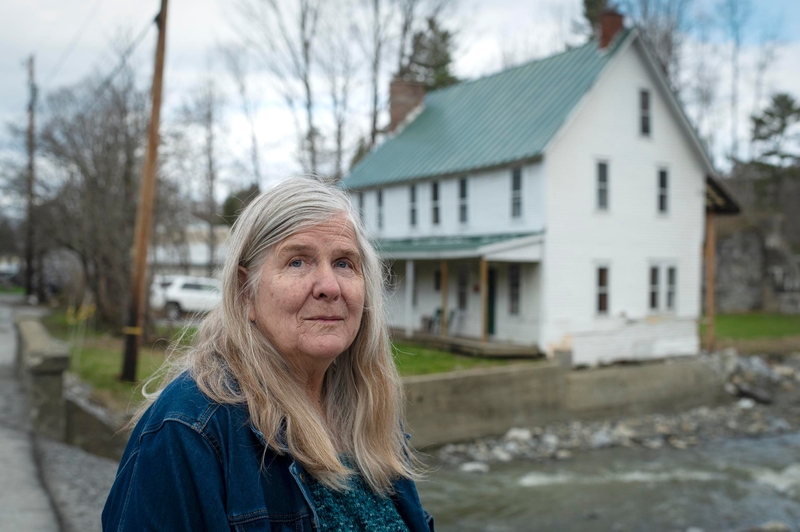
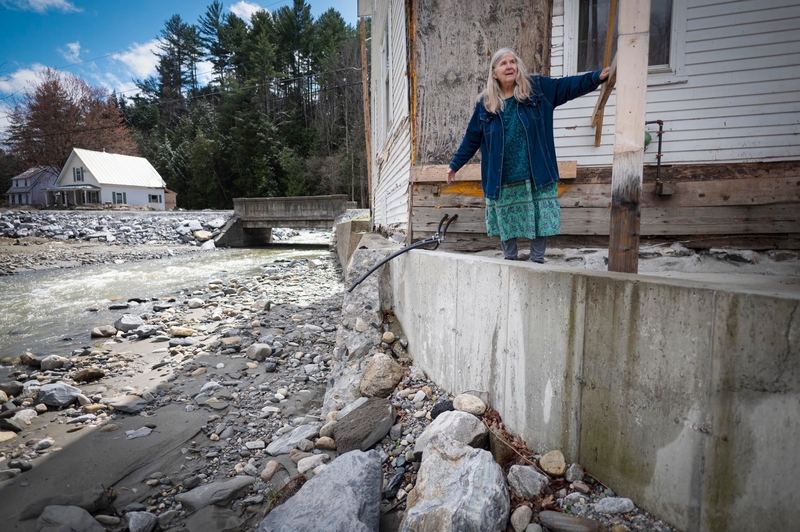
Grimaldi applied for a FEMA buyout, and a town-appointed buyout coordinator helped her navigate her application. In the meantime, she couldn’t afford housing. She did not have a case manager from the state or local support to help her secure more aid.
An acquaintance offered an apartment for a discounted rent. While she was waiting to move in, she stayed in temporary housing, where, on her first night, she fell and broke her arm. She took out a loan to pay for her living expenses.
“I was in my stride when all this occurred, at one of the peaks of my whole life,” she said. “And then I’m down to feeling like nothing and nowhere, and who am I? Totally dependent on the kindness of strangers.”
In September 2026, after more than two years of waiting, she learned that FEMA had approved her buyout application which brought “disbelief, then relief” she said. But it could take another year before she gets the money.
The coming storm
In October, state researchers with the University of Vermont published a report showing that climate change is accelerating. Compared to rainfall in 1900, the state now has 40% more days of heavy rain – defined as more than one inch in 24 hours – each year.
FEMA officials say that states must be prepared to take on more disaster recovery responsibilities, including the costs.
Vermont officials say they’re ready for the future.
“We’ve got experience under our belt now, when it comes to individual assistance recovery,” Gosselin said. In Vermont, Gosselin said, state officials “know what they want, based on their lessons learned.”
The state is working to ensure that its case management program is deployed more quickly after future storms, Farnham said. Officials are working with FEMA on “what we hope would be a pre-approved application template” for the next case management program, which would “dramatically shorten the approval timeline,” he said.
They are also creating a new master document that would guide the state’s approach to individual recovery, said Gosselin.
“A big lesson learned is the need for a recovery plan to help out households,” Gosselin said. “That plan will include things like coordinating with the volunteer efforts, coordinating with volunteer recovery groups.”
Farnham said the state would continue to use FEMA’s survivor data as a back-up and prioritize the data from the state’s 2-1-1 system. People on FEMA’s list have already signed up to work with the government, he said, but “there’s a whole other population that we’re constantly trying to reach that isn’t coming forward but still needs help.”
Former employees stressed that the state would need to do much more to reach storm victims.
Minter recommended that the state have a pre-arranged agreement with case managers who could be deployed as soon as flooding hits so that “volunteers don’t have to be depended on.”
Wayland said long term recovery groups are asking the state for more support while preparing to go it alone, “understanding that the state apparatus may fail.”
“We could train each other to repair roofs. We can find windows on the side of the road and replace windows. We can scrounge and scrounge and scrounge, and we’re gonna have to,” Wayland said.
“But I’m worried about a future in which we have, again, the same level, or greater, of catastrophic disaster. When will there be nothing left to scrounge? When will the disaster overwhelm our capacity to scrounge?”
This story was reported with support from FRONTLINE’s Local Journalism Initiative, which is funded by the John S. and James L. Knight Foundation.
Read the entire series and beyond: Sign up for VTDigger’s Daily Digger newsletter to receive in-depth reporting and the stories that matter to Vermont.
Read the story on VTDigger here: State help for flood survivors was disorganized and slow to arrive. For some, it never came..
Montpelier, VT