State employees may see health insurance premium rise amid ‘challenging’ budget forecast
Sep 02, 2026 | 6:01 am ET
Description
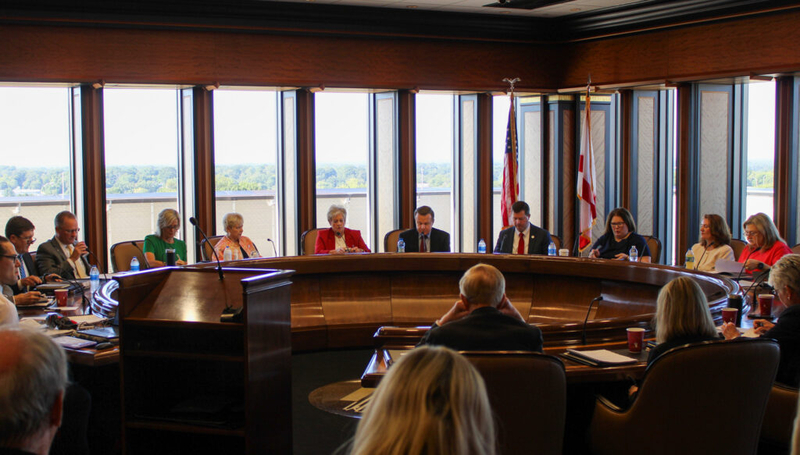
The Public Education Employee Health Insurance Plan board unanimously approved a plan to ask the Legislature for a $222 million increase for fiscal year 2028 at its quarterly meeting on Sept. 1, 2026, in the RSA tower in Montgomery, Alabama. The State Employees Insurance Board also plans to ask for increased funding. (Anna Barrett/Alabama Reflector)
The two boards overseeing health insurance for Alabama’s state and public education employees Tuesday approved plans to ask the Legislature for more funding amid growing healthcare costs and expected difficulties with the state budget.
The Public Education Employee Health Insurance Plan board unanimously approved a plan to ask the Legislature for a $222 million increase for fiscal year 2028 Wednesday morning. The Legislature this spring approved a $1,048 per member per month rate this spring for FY27, which begins on Oct. 1. The board will request a $1,226 per member per month rate for FY28.
The State Employees Insurance Board on Tuesday afternoon approved a recommendation to increase all benefit plans’ premiums by $20. If approved by the full board, it will be the first across-the-board increase in 11 years, according to SEIB CEO Stephanie Azar.
“There are difficult decisions that must be made, and even with any changes discussed today, in my opinion, SEIB will still be a very rich benefit plan,” Azar said. “I am very aware of how difficult the decisions are in front of you.”
Diane Scott, chief financial officer for PEEHIP, said rising healthcare costs led to the request. Prior to the current fiscal year, which ends on Sept. 30, PEEHIP’s state rate was stable at $800 for nine years. It increased to $904 in FY26 in lieu of a pay raise for teachers, and to $1,048 for FY27 in addition to a 2% pay raise for educators.
Alabama state employees could see health benefit changes amid ‘difficult choices’
“Based upon projections, which reflect increased trends in utilization and claims costs, PEEHIP will require funding of $1,226 per active per month, should the Legislature fund the additional amounts needed and no changes made to the PEEHIP plan,” Scott said.
Scott said the board will likely need to withdraw up to $200 million from the Alabama Retired Education Employees’ Healthcare Trust Fund to meet the coverage needs of the program’s members. It covers “actives,” or current employees at public schools, their dependents and retirees. There are more than 106,000 active members, she said, but all calculations are done using about 104,000 active members for “conservatism.”
“I need some conservatism in there somewhere because we really don’t know what’s going to happen in the future,” Scott said.
PEEHIP board approves retiree trust withdrawal to close FY27 benefit gap
State Finance Director Bill Poole told the board that it may be difficult for the Legislature to grant the board’s funding request, noting that healthcare costs were creating “significant headwinds.”
“I just want to point out to the board . . . to I think anticipate and prepare and think ahead for the reality that I think exists, which is tightening budgets on the ETF side and a very, very challenging budget next year on the General Fund side that I think could quite frankly lead to potential agency reductions in costs,” Poole said.
During the 2026 legislative session, lawmakers expressed similar concerns but were able to grant the state employee’s budget request, but compromised with PEEHIP. The SEIB is funded by the General Fund Budget, while PEEHIP is funded by the Education Trust Fund (ETF).
The board approved a withdrawal of up to $200 million to fund the rest of its members’ benefits in June.
On Tuesday, the board unanimously approved a withdrawal of $25 million from the retiree trust for FY26 in order to stay in compliance with its own rules and have about 8% of the year’s expenses in surplus.
“I really wouldn’t have enough to pay all of the costs that I have incurred through September the 30th, which gives me a growing concern and potential issue with the office,” Scott said.
As of Monday, the trust was valued at $2.955 billion, she said.
Poole warned that the board may have to rely on withdrawing funds from the trust fund or make program changes. Prior to withdrawals in 2025 and 2026, the last withdrawals were in 2015 for $92 million and 2016 for $32 million to address funding shortfalls.
“I don’t think that revenues into the ETF is suddenly going to increase, and so consequently, either the board is going to have to continue to rely on the trust or make some difficult decisions,” he said. “I don’t think we know what those decision points are exactly right now, but I think they’re on the horizon, and this is true for the SEIB program.”
Neah Scott, legislative counsel for PEEHIP, recognized that the board’s request may not be granted, but it will make decisions as needed. She said that could mean withdrawing more from the trust or adjusting benefit plans.
“I recognize it’s a very large ask in a year when we’re going to have a lot less revenue,” she said in an interview after the meeting. “I think they ask for the full amount, and then in June we’ll come in and say, ‘here’s what the legislature gave us or didn’t give us. What do we do now?’”
‘Necessary’ changes to benefits for state employees
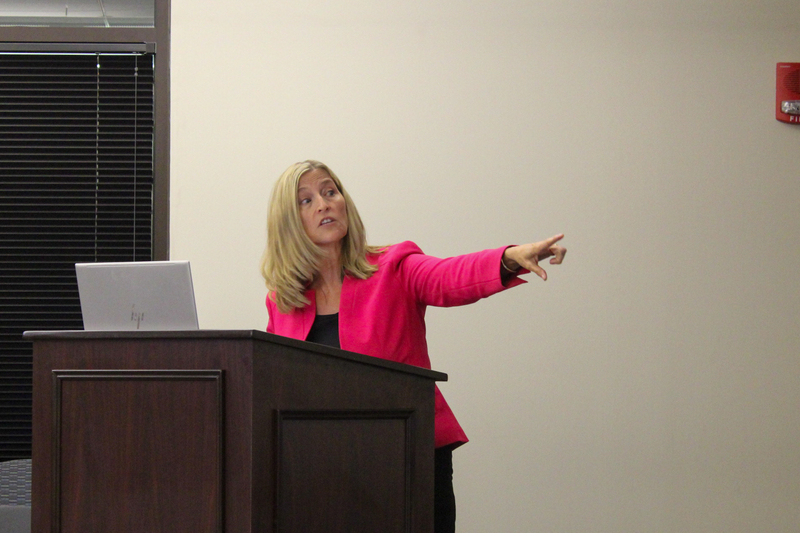
Besides raising premiums, the SEIB’s other recommendations included:
- $5 increase on single Standalone Coverage for Dental, Cancer and Vision ($15 to $20)
- $6 increase on single Standalone Coverage for Dental, Cancer and Vision ($24 to $30)
- Tier 2 60- and 90-day prescription drug costs: from 30, 60 and 90-day prescriptions having 20% copay with minimum $45, maximum $85; to only 60 and 90-day prescriptions having 20% copay with minimum $90, maximum $170
- GLP-1 prescriptions: from having a 90-day supply to 30-day supply
- Medicare Part D prescription cost share increases
- Tier 1: 30-day copay $3 to $6; 90-day copay $12
- Tier 2: 30-day copay $23 to $40; 90-day copay $80
- Tier 3: 30-day copay $53 to $60; 90-day copay $120
- Tier 4: 30-day copay $53 to $60; limited to 30-day supply
Azar said the plan changes are estimated to save SEIB $17.4 million in the partial FY27, which would keep the program out of a deficit for the year. A full year of savings would be about $23.2 million.
The full board will have final say on all benefit plan changes on Sept. 10. Any changes will go into effect on Jan. 1. The program covers about 102,000 people.
“Even with the increased rate that the Legislature gave, we’re in the red,” Azar said. “This is really showing you how important and the necessity of making sure that you’re aware when making your decisions that any plan or premium changes that may occur today are necessary to begin January 1 of 2027.”
The board also approved Azar’s recommendation to ask the Legislature for a $75 per member per month increase for FY28, bringing the state rate to $1,250 per member per month. That is an estimated $480 million impact to the General Fund budget for SEIB’s roughly 32,000 active members.
“Maybe there’s better news than we anticipate. Maybe there’s worse, but projections for fiscal year ‘28 are not pleasant,” Poole said.
In 2025, SEIB changed member benefits, which included some increased deductibles and copays but no impact to premiums. The Legislature was able to fund SEIB’s FY27 request, a $1,175 per member per month rate. It was a $150 per member per month increase from the FY26 state rate.
Although the board approved the benefit changes, board member Connie Grier was not enthusiastic about increasing premiums for all tiers.
“We have state employees that are married to state employees, and that means that that household will see a $40 increase in their plan because we do not allow a state employee to be independent on another state employee’s policies,” she said.
Grier abstained from the recommendation.
Lindsey Ward, executive director of the Alabama Retired State Employees Association, said in a statement Tuesday afternoon that the across-the-board premium increase would be “unfair and painful” to retirees, who have not received a cost-of-living adjustment since 2007.
“All we are demanding is fairness and simple common sense, and this premium increase fails to meet either of those criteria,” Ward said. “Someone at SEIB needs to fire up their calculator, go back to the drawing board, and come up with a plan that doesn’t penalize the elderly for simply being elderly.”
Poole sits on the SEIB executive board as well, and told his peers that all health plans are facing financial strain.
“I think we’ve all known for a long time that this board is the face of the decisions because of the realities that exist. I think this is a moment of inflection of ‘Can we start to turn the ship in a positive direction, or do we wait until it’s only going to get harder and harder?’” Poole said. “In a difficult moment, we’re not alone.”
Carolyn Middleton, another board member, said she expects the Legislature to push back on SEIB’s request, like what happened with PEEHIP last spring.
“I feel like the Legislature expects the members to have skin in the game, ‘I’ll give you what you ask for, but your retirees and actives are going to have to pay some,’” she said. “That’s the part that gets hard.”
Faye Nelson, chair of board, said that while they may be expected to have “skin in the game,” they cannot sacrifice their coverage.
“Granted, we’re not going to please every state employee that’s impacted by it, but overall, we won’t hold a plan that’s going to be stable, that’s going to benefit those that come in, and that’s going to remain employed with our agency,” she said. “We’ve got to have something in place to attract them, and we don’t even know if we’re going to be able to add to this employee pool the way the funding is for the different agencies.”
The Legislature will make the final decision on the state rate request and other budget matters in its 2027 regular session, which begins in February.
The Key Points box was written by Editor Brian Lyman.
Montgomery