State Budget is a Mixed Bag for Social Services Amid Barrage of Federal Cuts
May 09, 2025 | 4:14 pm ET
Description
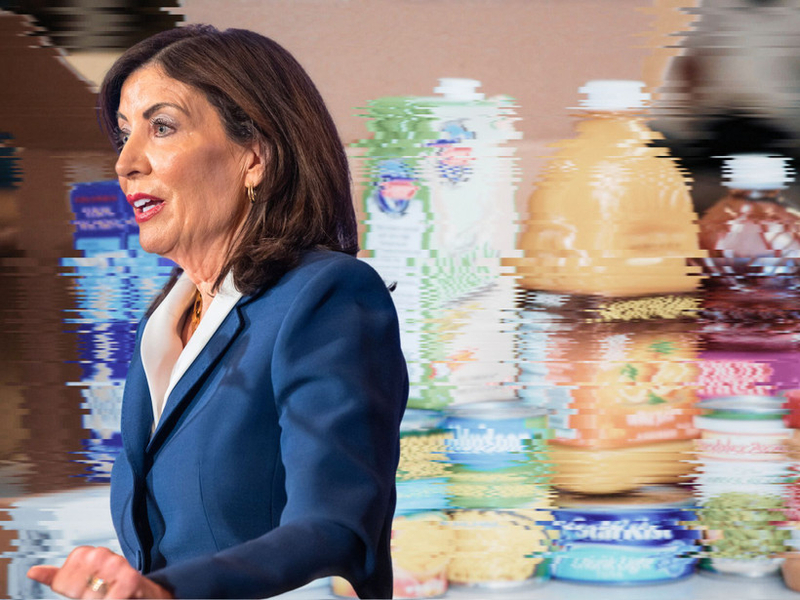
The final budget stops short of what legislators and advocates hoped for and appears to reflect more of Governor Hochul’s funding priorities.
As Washington has gutted federal support for a wide array of social services, New York state’s budget has seemingly moved forward in a vacuum.
That has been by design, according to Governor Kathy Hochul. Her office has been steadfast in its position that the state cannot afford to backfill federal cuts, especially those now being hashed out in Congress for behemoth programs like Medicaid.
While advocates were successful at getting legislators in both houses to back their calls for higher levels of state funding for a variety of programs, the final budget largely reflects the governor’s less robust proposals.
Senator James Skoufis was among several legislators who openly blasted Hochul during this year’s delayed budget season, calling her “all-powerful” and running “roughshod over a legislature that is effectively relegated to making suggestions and pleading for scraps.”
Nonprofits, which deliver the bulk of New York’s social services, were hoping for a sizable cost-of-living raise of 7.8 percent and had managed to get the Senate and Assembly on board. But the state settled on a modest 2.6 percent — a figure more in line with Hochul’s proposal of 2.1 percent and other annual raises implemented in recent years. The raise comes with the caveat that it goes towards recruiting and retaining support staff instead of boosting executive salaries.
New York Disability Advocates, a coalition of over 300 nonprofits, pushed for the higher rate as a way to reverse crippling turnover, fill stubborn vacancies, and address an entrenched wage gap in the nonprofit workforce.
Nonprofits have increasingly found themselves on the front lines of federal cuts under the Trump administration, which has abruptly cancelled a slew of grants and contracts. While some of the terminations have been temporarily blocked by courts, many organizations have struggled to stay afloat in the chaos and expressed concerns about their future beyond the current federal fiscal year, which ends on September 30.
Food banks are among those feeling the brunt of federal cuts enacted in March and are now down millions of pounds of food. Hunger relief advocates lobbied for increases to Nourish New York and the Hunger Prevention and Nutrition Assistance Program (HPNAP) — two state initiatives that could continue to keep food pantries stocked amid rising food insecurity and food prices, which are expected to worsen as tariffs take hold and mangle supply chains.
But funding levels for both programs remain largely unchanged. Nourish New York will see a modest increase of $750,000 for a total of $55 million, which falls short of the $75 million advocates and the legislature had requested. Funding for HPNAP will also remain flat at $57.8 million despite the $75 million ask from both houses.
Earlier this month, President Donald Trump released a 46-page budget proposal calling for significant spending reductions, including the elimination of the Low Income Home Energy Assistance Program (LIHEAP), which has helped Americans pay their utility bills for decades.
In April, all federal LIHEAP staff were suddenly laid off, sparking fears the program could be shelved entirely. New York is the largest recipient of LIHEAP funding. The program is so popular that funding routinely runs out due to high numbers of applicants.
Both the Assembly and Senate proposed a $200 million expansion of the Energy Affordability Program, a state-run program that also provides monthly utility discounts. Advocates worried about the fate of LIHEAP pointed to the expansion as a way to ensure New Yorkers could continue to get some relief from skyrocketing utility rates. But the effort was unsuccessful.
Advocates at the Public Utility Law Project of New York and AARP NY said they were “deeply disappointed” by the omission. “This sends the wrong message at the worst time. Household energy debt is reaching crisis levels statewide. Instead of rising to meet the moment, this budget turns away from it,” read a joint statement by both groups.
The legislature had much more success at brokering deals for chronically underfunded programs that Hochul had already prioritized.
The New York State Supportive Housing Program (NYSSHP) will be funded at $71.4 million, the largest funding increase the program has seen since its inception in 1987. The increase will go towards raising provider reimbursement rates by 40 percent for 20,000 housing units, which have fallen into disarray and are in desperate need of repairs.
Both the legislature and housing advocates had hoped for a higher $86 million investment as a way to build back a program that has seen a third of providers close their doors due to funding challenges.
The state is also investing in its growing aging population and will fund in-home senior services at $53 million. Counties across the state have racked up long wait lists statewide for a variety of programs like meal delivery, housekeeping, and other supportive services that allow the elderly to live independently and avoid expensive long-term care solutions like nursing homes, which make up a growing portion of the state’s Medicaid spending.
Bill Ferris of AARP NY called it a funding victory for seniors and caregivers across the state who are not eligible for Medicaid. He gave credit to the Hochul administration, which proposed the original $53 million figure. “This money is an investment to keep the frail elderly home, where they want to be.” The Senate had proposed a slightly higher funding level of $63 million.
This year’s budget did deliver a small surprise that wasn’t on the governor’s wishlist. After years of failed talks, Hochul finally agreed to pilot a Housing Access Voucher Program long supported by housing advocates and the real estate industry alike. The pilot, which is inspired by the federal Section 8 program, would receive $50 million during the first year of a four-year period — a small portion of the $250 million allocation the Senate wanted.
The small investment could help offset what advocates worry will be a major disruption to New York’s rental sector as Washington prepares to slash programs like Section 8.
When it comes to Medicaid, the state’s final budget largely reflects Hochul’s proposal, which will raise reimbursement rates for a variety of providers including primary care facilities in high-need areas. The legislature was successful in restoring funding for the Vital Access Provider Assurance Program, which supports distressed safety net hospitals and had been a proposed cut by Hochul.
It’s still unclear how exactly Congress plans to slash Medicaid, but any changes could throw a major wrench into the state’s plans.
Any major federal cuts to Medicaid would likely account for the single largest disruption to New York’s enacted budget. According to the Fiscal Policy Institute, $74 billion of the $91 billion in federal funds that New York receives is tied to Medicaid.
While Hochul has insisted the state budget isn’t the place to backfill federal spending, her office will now have more authority to implement mid-year budget cuts in response to federal rollbacks.
Albany