State board says hands are tied over lowering employee drug prices
Aug 06, 2026 | 6:00 am ET

Description
Photo courtesy of Spotlight Delaware
Why Should Delaware Care?
Delaware’s state employee health plan is one of the most expensive items each year in its multi-billion-dollar budget. A state board examined its relationship with pharmaceutical benefit managers, which essentially are middlemen between drug manufacturers and pharmacies, in an attempt to bring down drug costs to taxpayers and policy holders.
Officials released a report last week saying their hands are largely tied when it comes to forcing pharmacy middlemen into offering better prescription drug prices for state employees.
The report comes after lawmakers unanimously passed a resolution last year compelling the State Employees Benefits Committee (SEBC) to examine its relationship with pharmaceutical benefit managers (PBMs) — companies that negotiate drug prices between drug manufacturers and pharmacies — and take a more aggressive stance against them.
Lawmakers said the SEBC, which oversees the health insurance plan for state employees, should require PBMs to bid at lower prices for drugs, more readily share their data with the state, as well as hand over pricing contracts signed with pharmaceutical companies.
But the SEBC responded with an 18-page report last week, challenging its ability to enforce the lawmakers’ most assertive transparency and contract requirements. Board members also argued in their report that pushing too hard on the PBMs could cause the state to lose access to rebates on drugs they already purchase.
“Efforts to increase transparency must be balanced with these legal and market realities, which may limit the scope of feasible disclosure,” the report said.
More broadly, the report also signals a blow to lawmakers’ work throughout the 2026 legislative session to bring down healthcare costs at a time when Delawareans are already feeling a pinch.
The prime sponsor of last year’s resolution, Sen. Ray Seigfried (D-Claymont), rebuffed the SEBC’s report, saying it does not go far enough.
“The report reflects in tone and tenor the unwillingness to look beyond the current process, and it fails to address hidden cost-driving prescription drug spending for Delaware taxpayers,” Seigfried said in an interview on Wednesday.
The chair of the SEBC, Delaware Surgeon General Neil Hockstein, did not respond to a request for comment on Wednesday.
What’s in the report?
In the report commissioned by the legislature, the SEBC was tasked with implementing nine strategies meant to rein in PBMs and costs incurred to the state by increasing drug prices.
The report, however, said the SEBC would be unable to implement some of the changes immediately because of ongoing negotiations to contract with a new PBM.
As for resolution’s most demanding provisions, the SEBC said it is limited in the amount of information it can compel PBMs to share. For example, one of the requirements says the SEBC “should own and control all necessary pharmaceutical data for transparency and cost containment.”
But in its report, the SEBC said contractual limitations allow the PBMs to maintain “proprietary rights” to that data, leaving the state to only be able to access “summary-level” information. The lack of comprehensive data, they write, would limit the state’s ability to determine the true cost of drugs to the state.
Seigfried, however, said the state and federal government should do more to change those contracting and transparency rules.
“PBMs have been hiding behind all of these things for decades, and I think it’s time that we grab control over this whole thing,” he said.
Another strategy from the report said the state should explore an “interstate compact” to better gain leverage and circumvent PBMs entirely by negotiating pieces directly with drug manufacturers. But the report offers a qualifier to that suggestion, saying it may cost the state its already negotiated savings through rebates.
“In addition, manufacturers may impose conditions that reduce the anticipated savings, particularly if the compact lacks sufficient scale,” the report said.
As for rebates, Seigfried claimed PBMs will often have multiple different types of agreements with differing rebate levels. And because of the limited information surrounding contracts, he said the state does not know how impactful its rebates actually are.

In January, the Delaware Department of Justice sued a handful of PBMs, as well as insulin and GLP-1 manufacturers for what the office said was a scheme to “distort the market for diabetic treatments to their benefit at the expense of Delaware diabetics.”
The lawsuit, filed by Attorney General Kathy Jennings’ office in the Delaware Court of Chancery, targeted both pharmaceutical manufacturers like Novo Nordisk and Eli Lilly, as well as the pharmaceutical middlemen.
Many PBMs are owned by major pharmacy and insurance companies like CVS, Cigna or the UnitedHealth group, and control a large section of the market, leaving few options for states and insurance companies to negotiate lower prices.
In response to the lawsuit, PBMs argued they act as a “key counterweight” to an also concentrated and powerful pharmaceutical market that would otherwise have “monopoly power to set and raise drug prices.”
Weight-loss drug snafu
Earlier this year, as members of the SEBC tried to contain the growing cost of paying for pharmaceuticals, they implemented a $200 copay on one of its most utilized drugs, GLP-1s.
Delaware state employees who for years enjoyed a relatively cheap price for blockbuster GLP-1 drugs saw their copays rise nearly seven-fold. The new copays did not apply to employees using the drugs for diabetes.
Under the state’s new coverage guidelines, state employees using drugs for weight-loss purposes will now have to pay a $200 copay for a 30-day supply. Before the change, a monthly supply was $32.
Those sums impacted more than 100,000 state employees, retirees, and their family members who are covered by the Delaware General Health Insurance Plan.
The change came as state officials have had to reconcile the rising cost of covering GLP-1 medications with supporting an increased number of state employees who use the drug for its weight-loss properties.
Delaware passed the elevated copay for weight-loss prescriptions with a plan to broadcast the change and promote cost-saving programs run by Novo Nordisk, the Danish manufacturer that makes two of the world’s most popular GLP-1s utilized by state employees.
Drugs like Ozempic, Wegovy, Mounjaro and Zepbound that were originally intended to treat type 2 diabetes have exploded in popularity in America as they have proven to aid weight loss, which results in both short-term and long-term health benefits.
But the drugs are expensive – a 30-day supply of Ozempic retails for about $1,000 without manufacturer rebates – and were among the largest pharmaceutical expenditures for the state insurance plan.
Get Involved
the State Employee Benefits Committee is set to next meet at 10 a.m. Monday, Aug. 24, at the Delaware Department of Human Resources offices, located at 841 Silver Lake Blvd., Suite 100 in Dover. More information, including about virtual attendance can be found here.
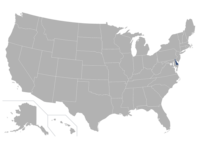
Dover